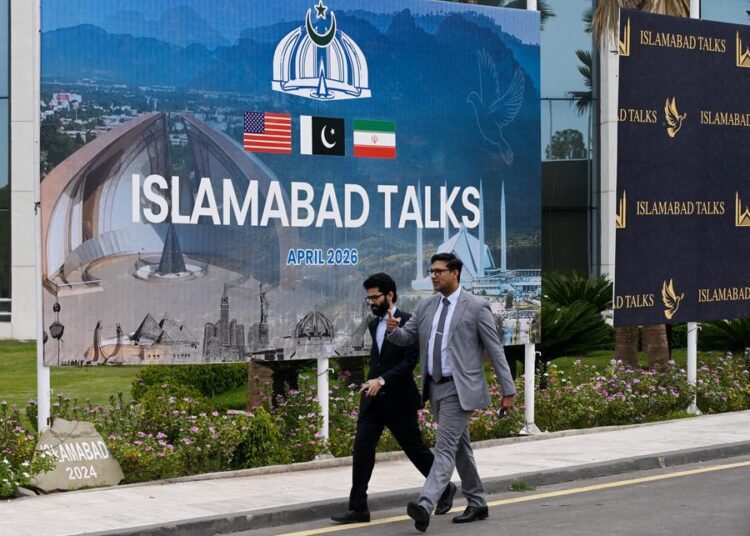
Pakistan’s Information Minister has said that the country is yet to receive a formal response from Iran on whether it would send a delegation for a second round of talks with the United States.
Minister Attaullah Tarar posted on X, “Formal response from Iranian side about confirmation of delegation to attend Islamabad Peace Talks is still awaited,” saying that a decision was “critical” as just hours remained until the two-week ceasefire struck between the warring sides expires.
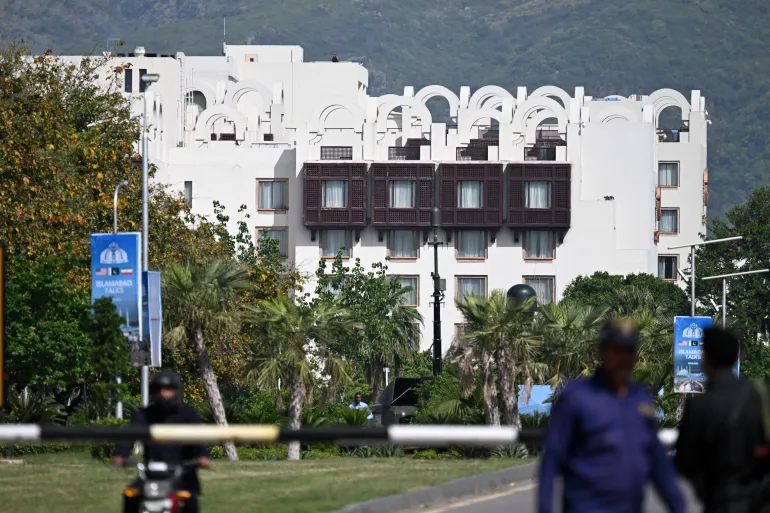
Pakistan is racing against time and the odds to try to convince Tehran to join talks with the US aimed at ending their war, now in its eighth week. While Pakistani officials close to the mediation efforts remain cautiously hopeful that Iran might send a negotiating team for the talks by Wednesday, a series of escalatory steps taken by the US over the past 48 hours had by Tuesday evening injected a dose of scepticism into Islamabad’s peacemaking efforts.
“The situation as it stands at 1930 PST 1. Formal response from Iranian side about confirmation of delegation to attend Islamabad Peace Talks is still awaited. 2. Pakistan as the mediator is in constant touch with Iranians and pursuing the path of diplomacy and dialogue. 3. Ceasefire ends at 4:50 am PST, 22 April. Decision from Iran to attend the talks before the end of two weeks ceasefire is critical. 4. Pakistan has made sincere efforts to convince the Iranian leadership to participate in the second round of talks and these efforts continue.”
Attaullah Tarar
Pakistan and other mediators work behind the scenes to bring Tehran back into the room before a two-week ceasefire expires on Wednesday evening US time; early Thursday morning in the Middle East.
US President, Donald Trump extended the original deadline by 24 hours, saying the truce now ends “Wednesday evening Washington time,” which would be early morning Thursday in Islamabad, and described a further extension as “highly unlikely.” It was initially supposed to end on Tuesday evening in the US, or Wednesday morning in the Middle East. Whether Iran’s delegation attends remains the central question.
US Vice President, JD Vance is expected to depart from the US on Tuesday evening Pakistan time; morning in the US, and arrive in Islamabad late morning on Wednesday. Trump’s Special Envoy Steve Witkoff and son-in-law Jared Kushner are expected to join Vance. The three officials had led the US delegation during the first round of direct talks with Iran in Islamabad on April 11. However, it is unclear who they are coming to meet.
Iran Insists No Plans To Return To Negotiating Table
Iran continues to publicly insist that it has no plans to return to the negotiating table.
Earlier today, Iran’s Ambassador to Pakistan, Reza Amiri Moghadam, posted on social media, paraphrasing Jane Austen’s Pride and Prejudice, that it was “a truth universally acknowledged” that “a single country in possession of a large civilisation will not negotiate under threat and force,” calling it “a substantial, Islamic and theological principle.”
Iran’s Ministry of Foreign Affairs also said that it had no plans to re-engage diplomatically with Washington for now. Mohammad Bagher Ghalibaf, Iran’s parliament Speaker and the Head of its negotiating team, was more direct. In a post on X early today, he accused Trump of seeking to turn the negotiating table “into a table of surrender or to justify renewed warmongering.” “We do not accept negotiations under the shadow of threats,” Ghalibaf wrote, adding that Iran had “prepared to reveal new cards on the battlefield” over the previous two weeks.
Iran’s judiciary Chief, Gholamhossein Mohseni Ejei, said separately that Tehran must “maintain 100% readiness” given a “strong possibility” of further US attacks.
These public statements follow the latest flashpoint between the two rivals, who have been at war since the US-Israeli attacks on Iran on February 28.
Trump has set firm public red lines. He has demanded Iran end uranium enrichment and surrender its existing stockpile of enriched uranium. He has said the US will not lift the Hormuz blockade until Tehran agrees to negotiate.
According to Analysts, the statements from Tehran reflect a domestic political dynamic underpinning Iran’s public posture. The Islamic Revolutionary Guard Corps (IRGC) has been pushing Iran’s negotiating team to adopt a firmer line, they said, conditioning any return to talks on a full end to the US naval blockade.
READ ALSO: Ghana’s 2025 Fiscal Performance Reflects Revenue Shortfalls and Spending Discipline