

A recent high-stakes engagement between the Ghana Investment Promotion Centre (GIPC) and the U.S. Chamber of Commerce in Washington, D.C., has marked a pivotal calibration of the bilateral economic relationship between Ghana and the U.S.
Led by GIPC Chief Executive Officer Mr. Simon Madjie, the mission sought to move the narrative beyond the symbolic gestures of last year’s NASDAQ visit by President John Dramani Mahama toward a granular, “win-win” investment architecture. The meeting focused on the targeted effort to secure capital for Ghana’s emerging high-tech and green energy sectors.
According to the GIPC, by framing Ghana as the primary entry point for American firms looking to navigate the African Continental Free Trade Area (AfCFTA), Mr. Simon Madjie repositioned the country as a strategic hub for high-growth industries rather than just a source of raw materials.
“Discussions focused on investment opportunities in energy security, renewable energy and electric vehicles, digital infrastructure, 5G, the digital economy, the 1 Million Coders programme, and the National AI Strategy”
Ghana Investment Promotion Centre
The Washington dialogue served as the logical extension of the “open for business” doctrine promoted by the current administration. However, the 2026 approach is distinctly more technical as Mr. Madjie’s presentation to the U.S.-Africa Business Center emphasized how the nation’s investment priorities have evolved.
The focus is no longer just on attracting any capital, but on attracting smart capital that aligns with the National AI Strategy and the 1 Million Coders programme. This suggests a desire to build a resilient, future-proof economy that can sustain itself in a global market increasingly defined by carbon neutrality and digital connectivity.
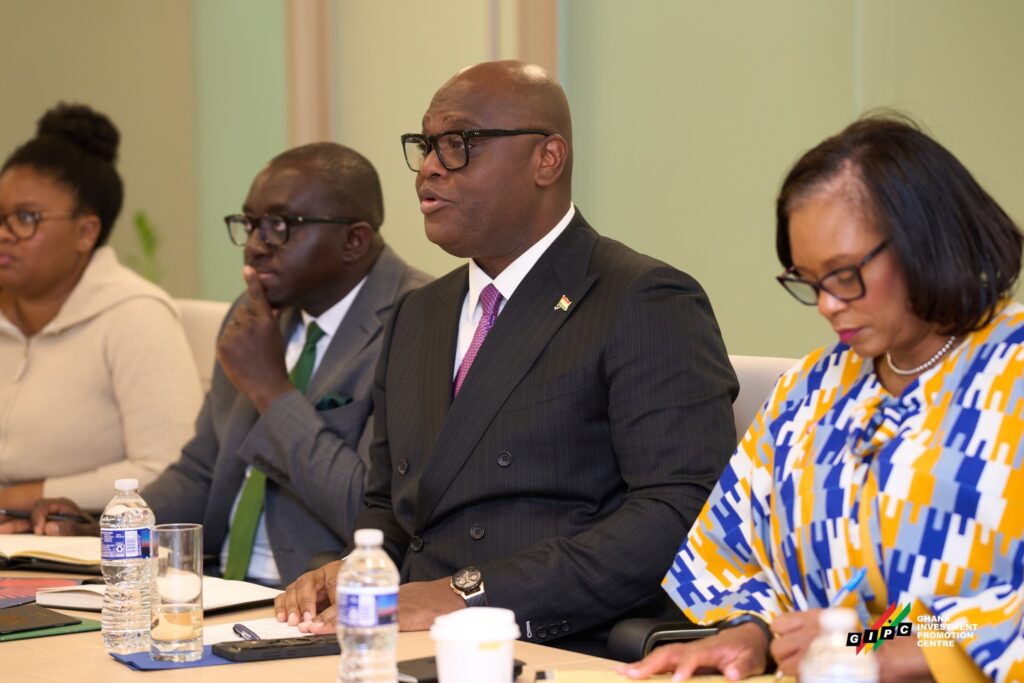
One of the most significant messages of the GIPC’s Washington offensive was the focus on the digital economy. The GIPC boss pitched the 1 Million Coders programme to market Ghana’s human capital as a competitive asset for global tech firms.
He explained that the programme aims to create a talent pipeline that can support the operations of American tech giants like Microsoft and Google, while simultaneously fostering a local ecosystem of innovation. The goal is to transform Ghana into a “digital gateway” where American technology and Ghanaian talent collaborate to serve the broader West African market.
Energy and EV Infrastructure
Parallel to the digital push was an aggressive focus on the Green Energy transition, as the GIPC is actively seeking partnerships in renewable energy and electric vehicle (EV) infrastructure. The Centre noted that this was a tactical economic move since global automotive supply chains shift toward electrification.
Ghana is positioning itself to be more than a passive consumer of these technologies. The ambition is to attract U.S. investment into the local manufacturing and assembly of EVs, leveraging the country’s strategic mineral reserves required for battery production.
Mr. Madjie highlighted how this would integrate Ghana into the global green supply chain, moving it up the value ladder from mining to high-tech manufacturing. The strength of the CEO’s pitch relied heavily on the “anchor firm” effect as he presented the Centre’s credible track record to new investors.
“Mr Madjie noted that over 120 U.S. companies currently operate in Ghana across oil and gas, mining (including Newmont), manufacturing (including Coca-Cola), and technology (including Microsoft and ATC), reinforcing Ghana’s position as a key investment hub”
Ghana Investment Promotion Authority
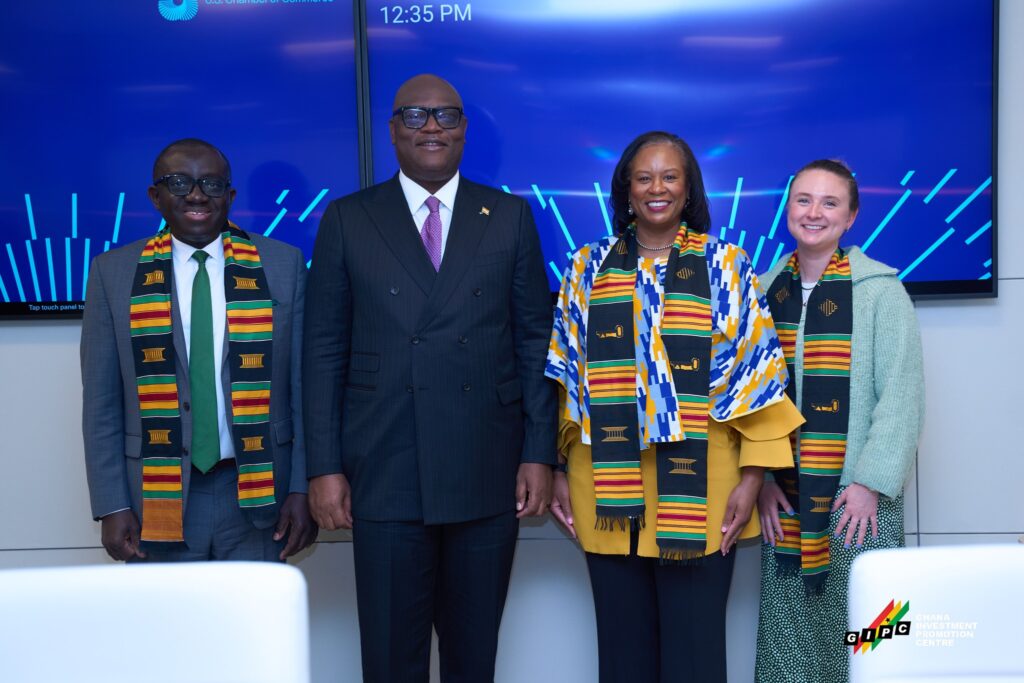
These existing operations served as a de-risking mechanism for potential entrants who may be wary of the complexities of the African market, demonstrating that the Ghanaian regulatory environment is capable of supporting multi-billion-dollar investments over the long term.
However, since the 2026 vision seeks to expand the variety of these corporate footprints, the GIPC encouraged the U.S. Chamber of Commerce to look beyond traditional sectors like mining and oil and gas. The emphasis on energy security and manufacturing reflects a desire to diversify the nature of American investment in Ghana.
The objective is to build an integrated economy where U.S. manufacturing expertise can help process Ghanaian raw materials, thereby creating jobs and increasing the domestic value-added. This “win-win” scenario was the cornerstone of the GIPC’s message: American capital gains a secure and profitable foothold in Africa, while Ghana gains the infrastructure and expertise needed for industrialization.
The most compelling part of the GIPC’s Washington engagement was the strategic use of the African Continental Free Trade Area (AfCFTA). With the secretariat based in Accra, Ghana’s unique position to offer U.S. businesses a duty-free corridor into a market of 1.3 billion people was strongly projected.
Mr. Madjie’s vision treated Ghana not as a terminal destination but as a continental headquarters.
For American businesses, this significantly lowers the barriers to entry into Africa. Instead of navigating 54 different regulatory frameworks, a company can establish a base in Ghana and leverage its trade agreements with the U.S., UK, EU, and ECOWAS to scale across the continent.
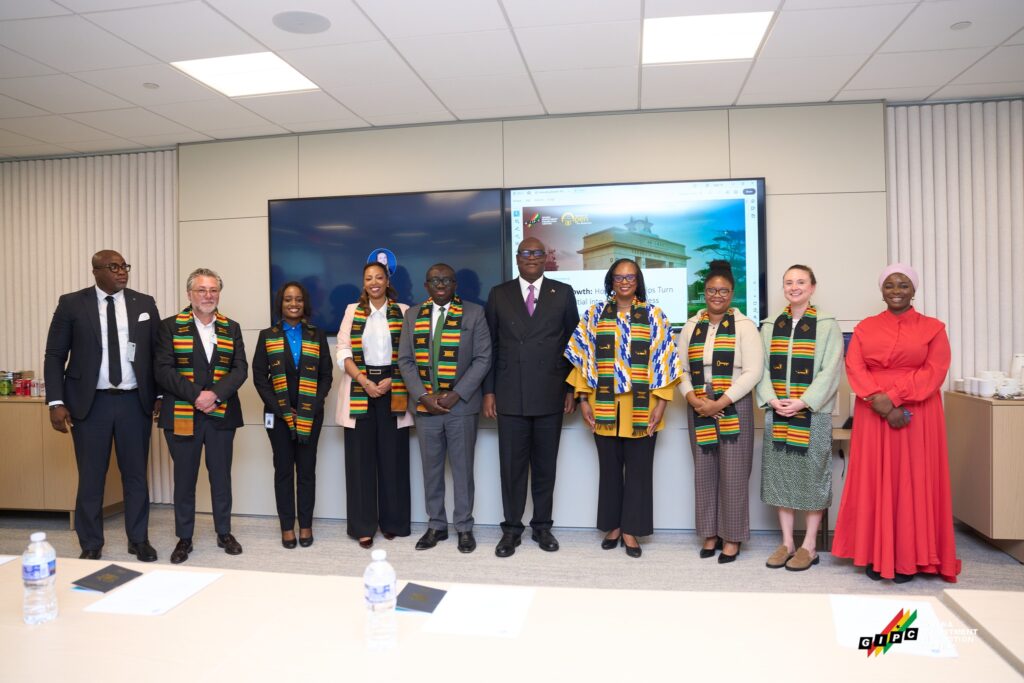
The commitment from the U.S. Chamber of Commerce, as articulated by Madam Kendra Gaither during the engagement, reinforced the perception of Ghana as a stable and reliable partner. The GIPC leaned into this reputation, marketing the country’s legal and institutional stability as its most valuable export.
The Washington mission concluded with a renewed sense of purpose for the GIPC. The engagement successfully transitioned the bilateral conversation from the symbolic open-for-business slogans to a concrete roadmap for industrial collaboration.
READ ALSO: Lands Minister Reaffirms Commitment to Position GGSA as Premier Mining Industry Institution