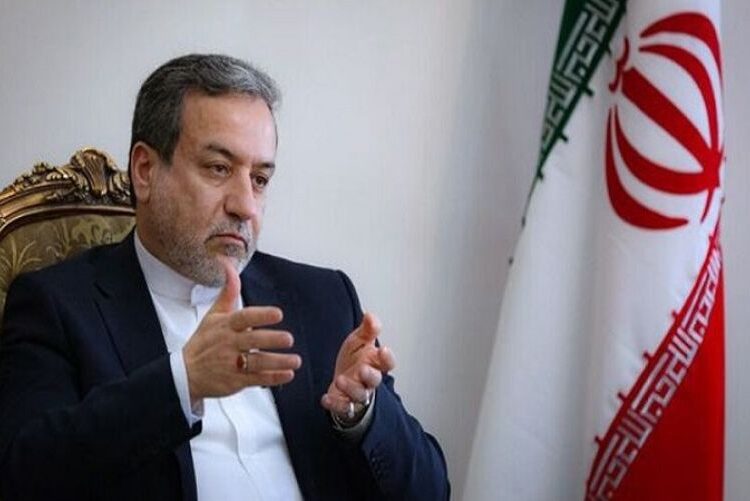
Iran’s top diplomat and Pakistani officials have discussed details of the ceasefire in the war with the United States and Israel, part of an effort by Islamabad to get Tehran to send a delegation for a second round of negotiations with Washington.
According to a statement from Iranian Foreign Minister Abbas Araghchi, in their call, he, his Pakistani counterpart Ishaq Dar and Pakistan’s Army Chief Field Marshal Asim Munir, talked over “regional developments and issues related to the ceasefire.”
Later, Pakistan’s Foreign Ministry said that “both sides exchanged views on regional developments, the ceasefire, and ongoing diplomatic efforts being pursued by Islamabad in the context of US-Iran engagement.” It added that Dar “underscored the importance of sustained dialogue and engagement to address outstanding issues, in order to advance regional peace and stability at the earliest.”
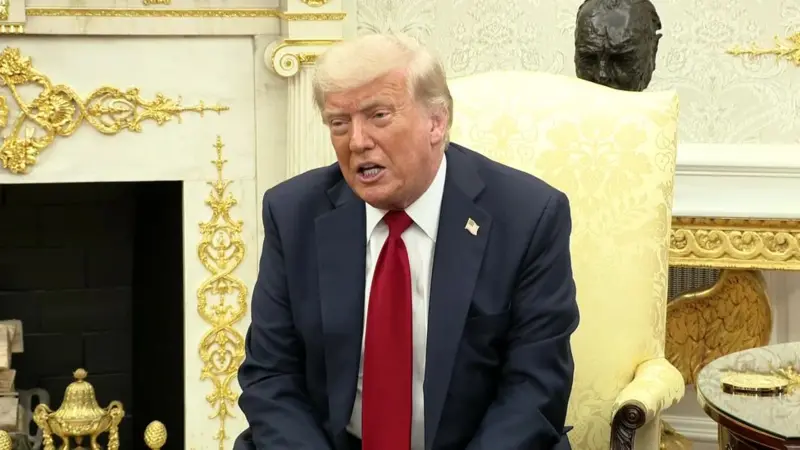
Pakistan has been trying to get American and Iranian officials back to the table but talks that had been hoped for earlier this week didn’t materialize. US President Donald Trump announced an indefinite extension of the ceasefire with Iran at Pakistan’s request earlier this week as it sought more time for diplomatic outreach.
Trump’s indefinite extension of the ceasefire with Iran hasn’t lowered tensions in the Strait of Hormuz, the strategic waterway though which a fifth of the world’s oil and natural gas is shipped during peacetime. Iran has kept its stranglehold on traffic through the strait, attacking three ships earlier this week, while the US has maintained its blockade of Iranian ports and ordered the military to “shoot and kill” small boats that could be placing mines.
According to shipping data, only five ships, including one Iranian oil products tanker, have passed through the Strait of Hormuz over the past 24 hours.
Shipping traffic passing through the crucial waterway during a fragile ceasefire between Washington and Tehran represents a fraction of the average 140 daily passages before the US-Israel war on Iran began at the end of February.
Jakob Larsen, Chief Safety and Security officer at shipping association BIMCO, said, “For most shipping companies, they will need a stable ceasefire and assurances from both sides of the conflict that the Strait of Hormuz is safe to transit.”
“In the meantime, shipping will be restricted to using routes close to Iran and Oman. Due to their confined nature, these routes cannot safely accommodate the normal volumes of shipping through the Strait of Hormuz.”
Jakob Larsen
The Iranian-flagged oil products tanker Niki, which is subject to US sanctions, was among the few vessels that sailed out of the strait with no destination listed, Kpler analysis and tracking data on the MarineTraffic platform showed. The closure of the strait has disrupted a fifth of the world’s oil and liquefied natural gas supplies and triggered a global energy crisis.
Washington now has three aircraft carriers in the region after the USS George H.W. Bush arrived in the Indian Ocean this week. The USS Abraham Lincoln is in the Arabian Sea and the USS Gerald R. Ford is in the Red Sea.
It is the first time since 2003 that three American carriers have been operating in the region simultaneously. US Central Command said that the force includes 200 aircraft and 15,000 sailors and Marines.
EU Says Nuclear Experts Must Be Present During Talks With Iran
Meanwhile, EU Foreign Policy Chief Kaja Kallas said that if nuclear experts are not at talks with Iran, then any agreement reached will be weaker than the 2015 Joint Comprehensive Plan of Action (JCPOA), also known as the Iran nuclear deal.
Speaking ahead of an informal summit of EU leaders in Cyprus, Kallas said that if the talks are only about the nuclear and there are no nuclear experts around the table, “then we will end up with an agreement that is weaker than the JCPOA was.”
“And (if) the problems in the region, missile programmes, their support to proxies, also hybrid and cyber activities in Europe are not addressed, we will end up with a more dangerous Iran.”
Kaja Kallas
Under the JCPOA, Iran agreed to restrict its nuclear activity, including limiting uranium enrichment and stockpiles, in exchange for relief from international sanctions. Donald Trump tore up the deal in 2018 during his first term as President.
READ ALSO: Mining Companies Bear Full Responsibility for Concession Safety & Stewardship – MinCom