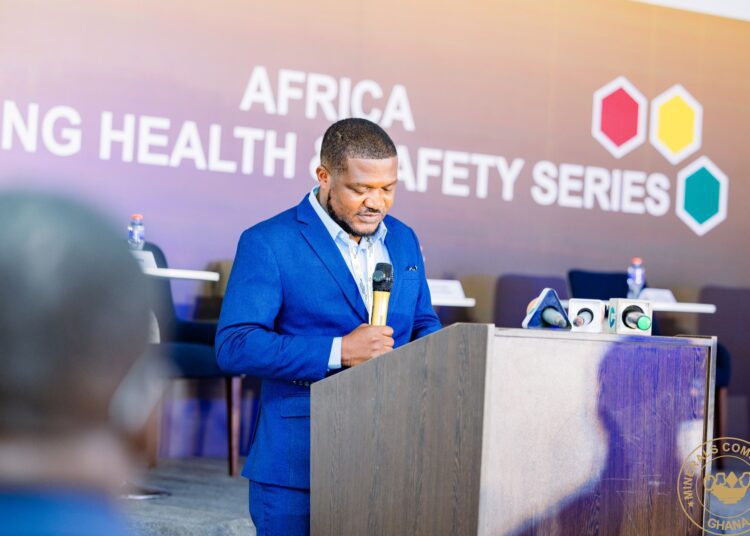
Minerals Commission of Ghana has issued a stern, unequivocal directive to the extractives sector, declaring that mining firms must assume absolute responsibility for the safety, health, and environmental stewardship across their entire operational concessions.
As the regulatory body tasked with oversight, the Commission has made it clear that “Ghana must mine with its eyes fully open to the irreplaceable value of human life,” emphasizing that negligence is no longer a tolerable risk in the modern investment climate.
For mining operators, this warning serves as a foundational shift in the “licence to operate,” where a transparent and verifiable safety record has transitioned from a best practice to an essential, non-negotiable requirement for continued existence within the industry.
“We also affirm that HSE standards do not dilute at the boundary of a contract licence holder, and the mining company bears full responsibility for every actor on their concession, and the Commission will apply the full weight of the law without exception. On environmental stewardship, we are resolute: abandoned pits and unmonitored tailings dams are not the inevitable by-products of mining they are the consequences of irresponsibility.”
Minerals Commission of Ghana
This regulatory assertion expands upon the critical reality that a single catastrophic failure does more than cause immediate human tragedy; it threatens the long-term viability of the national mining sector by risking insurance coverage and eroding shareholder confidence.
The Commission is moving to dismantle the idea that HSE standards can be diluted at the boundaries of a contract licence, affirming that the primary holder remains fully accountable for every actor present on their land.
By championing shared data platforms where the lessons from a “near miss” at one site become a preemptive safeguard for all others the Commission is forcing a systemic cultural transformation.
This environment is no longer just about meeting minimum compliance standards; it is about adopting high-tech interventions like “proximity detection systems, real-time gas sensors, and wearable health monitoring technology” as the new baseline for industrial operations.
Technological Integration as a Safety Mandate
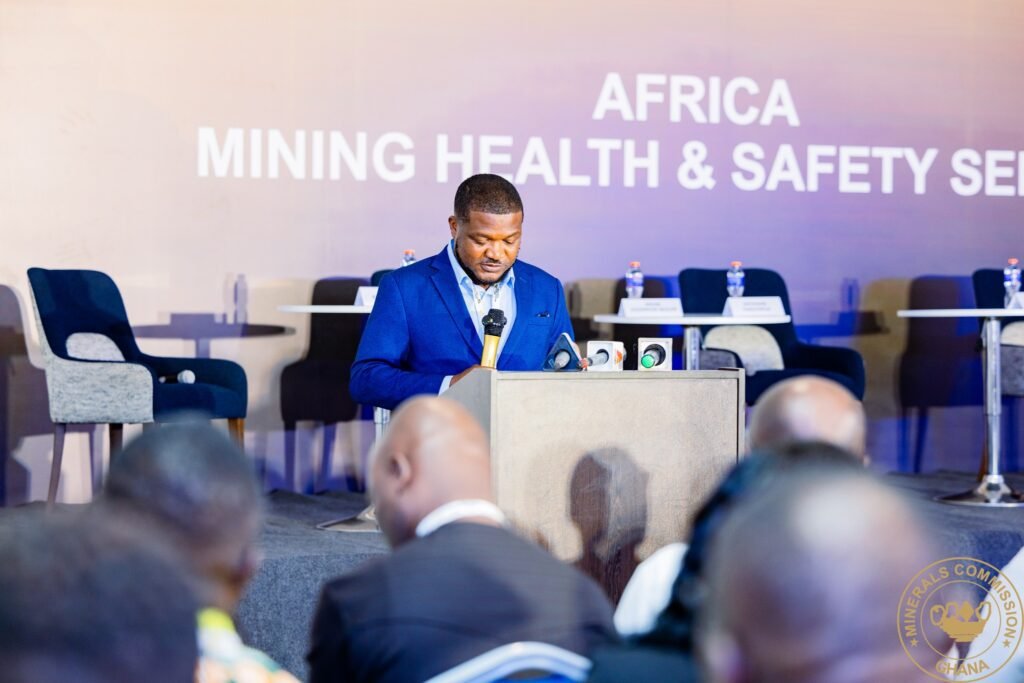
The warning from the Minerals Commission acts as a catalyst, compelling mining companies to pivot away from reactive safety measures toward a proactive, technology-driven model of risk management.
By mandating advanced tools such as proximity detection, the Commission is effectively closing the “visibility gap” in mining operations, where heavy machinery and blind spots have historically been major sources of fatal accidents.
For operators, this means that investing in these systems is no longer an optional capital expenditure but a regulatory requirement to prevent pinning, striking, and crushing incidents.
Furthermore, the integration of wearable health monitoring and real-time gas sensors allows companies to track the physiological status of their workforce in environments where heat stress, noise-induced hearing loss, and toxic dust exposure represent primary occupational hazards.
These technologies transform “silent” health risks into measurable data points, enabling immediate intervention before a hazard leads to permanent injury or long-term illness.
Shared Intelligence and ESG Performance

A cornerstone of the Commission’s directive is the move toward shared data platforms, a strategic shift that promotes collective accountability across the mining industry.
By breaking down the silos that have traditionally kept safety and environmental data proprietary, the Commission ensures that the industry learns at the speed of innovation rather than the speed of incident investigation.
This move is deeply aligned with global Environmental, Social, and Governance (ESG) standards, which modern investors now use to evaluate the risk profiles of mining companies.
Companies that actively participate in these data-sharing initiatives signal to the global market that they prioritize structural integrity and transparency.
As a result, firms that align with this “one source of truth” approach will find themselves more attractive to capital providers who are increasingly wary of operations with erratic safety records, thereby directly linking regulatory compliance to financial and operational resilience.
Stewardship Beyond the Life of the Mine
Finally, the Commission has drawn a hard line regarding environmental closure and land rehabilitation, clarifying that abandoned pits and unmonitored tailings dams are not “inevitable by-products” but clear evidence of corporate negligence.
Responsible mining now necessitates “closure planning from day one,” a mandate that requires companies to view land reclamation as an intrinsic part of the project lifecycle rather than a final, neglected phase.
This directive acknowledges that the communities surrounding these mines are not mere bystanders but critical stakeholders whose water, land, and livelihoods are tied to the mining company’s performance.
By forcing companies to ensure that land is rehabilitated to support thriving communities long after the ore is exhausted, the Commission is protecting Ghana’s long-term environmental and economic health, ensuring that the legacy of mining is one of growth rather than ecological decay.
READ ALSO: GoldBod, Zimbabwe Partner to Drive ASM Formalization