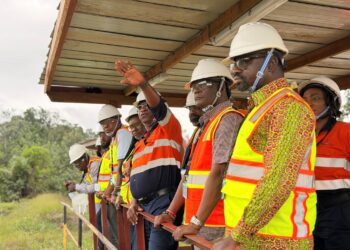
Ghana Chamber of Mines has expressed its satisfaction with the recent assurances from the Minister for Lands and Natural Resources, Emmanuel Armah-Kofi Buah, clarifying that the government maintains no blanket policy of nationalising mining assets in the country.
This critical intervention by the Ministry aims to quell growing industry anxieties sparked by recent debates over resource nationalism and the future of long-term mining lease renewals, reaffirming that the state remains committed to fostering a stable, investor-friendly environment.
“It is important to hear the government’s position on a lot of these things that have been said. It is reassuring to hear the Minister talk about the fact that government’s policy is not about nationalisation, but about still attracting investors who will come into this country and ensure that once they get their return on investment, they also leave value, build capacity and transfer knowledge.”
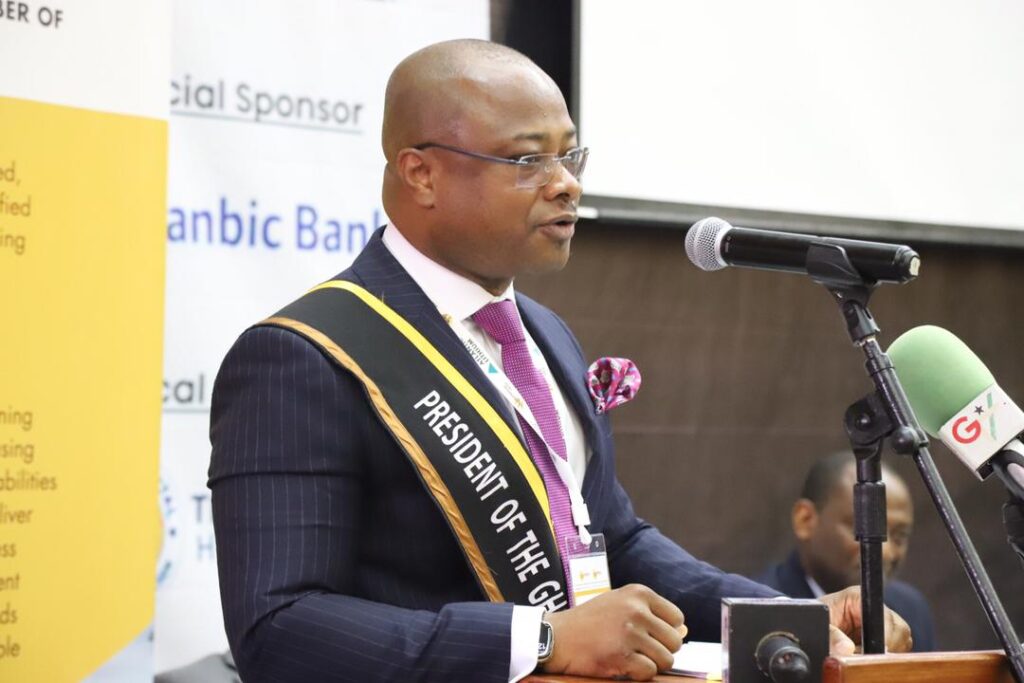
Chief Executive Officer of the Ghana Chamber of Mines, Ing. Ken Ashigbey.
The assurance provides much-needed relief to stakeholders who have been closely monitoring the government’s recent actions regarding mineral concessions.

By explicitly ruling out a blanket takeover of multinational mining operations, Minister Buah has reinforced the government’s dedication to attracting foreign direct investment while simultaneously championing its broader economic agenda.
The policy shift instead focuses on “win-win” partnerships, where the government seeks to ensure that mining activities deliver tangible value to Ghana through robust capacity building, active knowledge transfer, and the promotion of local participation within the mining value chain.
Strengthening Investor Confidence Through Policy Stability
The clarity provided by the Minister is a vital step in mitigating the perceived sovereign risk that has preoccupied global investors in recent months.
In a sector where projects often require multi-billion-dollar capital outlays and decades of operational lead time, policy certainty serves as the bedrock of investor confidence.
Ing. Ashigbey has consistently maintained that “policy certainty remains critical for attracting both local and foreign investors,” noting that any ambiguity regarding the security of tenure or fears of sudden, non-commercial regulatory shifts can discourage the very capital flows necessary to sustain Ghana’s mining output.

By pivoting away from the rhetoric of state-led seizure and towards a framework of contractual and regulatory consistency, the government is signalling that it respects the sanctity of agreements.
This commitment is particularly important as the nation navigates the complexities of an IMF-supported economic recovery, where macroeconomic stability and credible regulatory frameworks are essential for attracting lower-cost capital and positioning the nation for long-term growth.
Cultivating Local Champions in the Mining Ecosystem
The Chamber of Mines remains a staunch advocate for a partnership-driven model, arguing that Ghana’s mining sector thrives most effectively through deep collaboration between multinational corporations and indigenous firms.
Ing. Ashigbey stressed that the objective should not be to replace foreign expertise but to integrate local players into the global supply chain, allowing them to gain the technical proficiency required to eventually become multinationals themselves.
“We also believe that indigenous Ghanaian investors can coexist and partner with foreign and multinational investors,” Ashigbey noted, adding that “the local champions we are creating today are tomorrow’s multinationals.“

By shifting the focus from nationalisation to empowerment, the government’s strategy aims to foster an ecosystem where local companies, particularly in contract mining and technical services, can grow through private initiative and collaboration rather than restrictive regulatory mandates.
Ensuring Long-Term Industry Resilience
The path forward, as articulated by both the Ministry and the Chamber, relies on the continuous refinement of local content and contract mining regulations.
This collaborative approach has already yielded success in the energy sector, which serves as a blueprint for the mining industry.
By moving away from “business as usual” where lease renewals were once viewed as automatic to a more rigorous, development-oriented review process, the government is ensuring that its mineral resources act as a catalyst for sustainable development.
This transition requires that mining entities present comprehensive development plans that clearly outline their contributions to infrastructure, job creation, and technology transfer.
For the Chamber of Mines, the focus remains on keeping the dialogue open to ensure that while the state pushes for higher local value, it does so in a manner that maintains Ghana’s competitive edge as a premier global mining destination.
READ ALSO: Guterres Calls for Renewed Commitment to UN Charter