United Nations Secretary-General António Guterres has called for a renewed global commitment to the UN Charter, warning that rising geopolitical tensions, escalating conflicts and weakening respect for international law are placing the post-war international order under growing strain.
According to the UN Chief, the Charter is “a survival guide for humanity,” stressing that it was born out of the devastation of two world wars and built on the principle that the force of law must prevail over the law of force.
António Guterres noted that, the UN charter was designed to ensure that international disputes are resolved peacefully and that all states, large and small, act in accordance with international law.
He added that for decades, the Charter has helped prevent the outbreak of a third world war. However, he warned that the world is now facing “a dangerous erosion of respect for international law,” as geopolitical divisions deepen and cooperation within the United Nations becomes increasingly fragile.
In addition, United Nations Secretary-General António Guterres highlighted that the Security Council too often fails to act with unity and purpose at a time when conflicts are proliferating and intensifying across different regions.
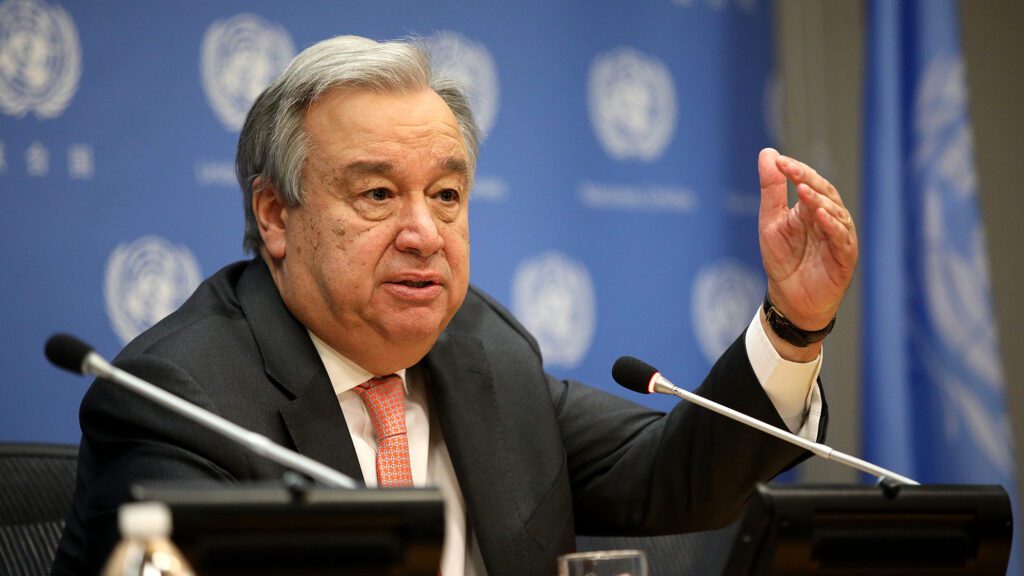
He also highlighted the fast-expanding global arms competition and cautioned that there is intense pressure on human rights everywhere. “When human rights fall, everything else tumbles,” he stated, adding that the consequences are being felt across societies already struggling with instability and inequality.
The UN Chief highlighted that progress towards the Sustainable Development Goals is slipping further out of reach, while the climate crisis continues to accelerate, compounding global challenges. “These challenges are interconnected, and they are testing the resilience of the Charter itself,” Guterres stressed, urging world leaders to summon the political will needed to uphold its principles and strengthen multilateral cooperation.
Chinese Foreign Minister Wang Yi expressed similar concerns and cautioned that there is unprecedented pressure on international stability. He said that peace and progress were at a crucial juncture, and that the world was a “giant ship of human civilisation” heading into perilous waters.
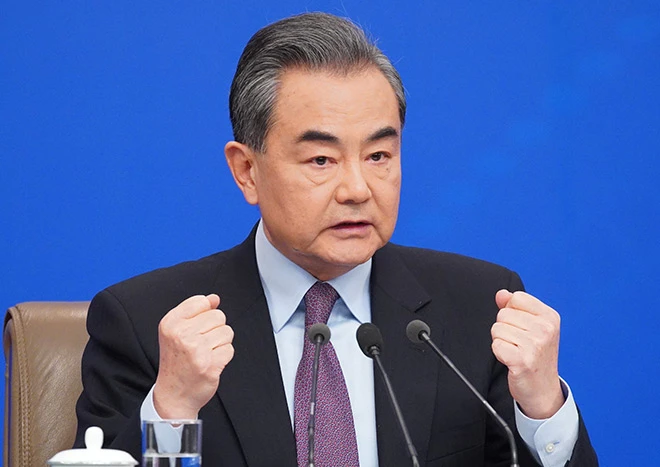
Wang stated that the current challenges are testing the international community’s commitment to safeguarding peace, its resolve to uphold justice, and its courage to pursue necessary reforms.
He further called on countries to act together to defend and strengthen the United Nations, stressing that the UN Charter must be reinvigorated to ensure stronger global leadership.
Moreover, Wang Yi contended that the fundamental reason for the current state of world instability is not because the Charter has grown antiquated but rather that its tenets and the larger international order are not being completely upheld.
He called the Charter the “biggest common denominator of the post-war international community” and exhorted nations to align their actions with its original principles.
Wang also emphasised the need to bolster the power of the Security Council, which he regarded as the most legitimate body in the international security system, and warned against exalting previous acts of aggression. He also advocated for greater respect for international rules.
In order to ensure that the Council’s judgements are unbiased, inclusive, and objective while avoiding the imposition of divisive policies, Wang suggested revisions to strengthen the Council’s procedures.
Additionally, he called on the permanent members of the Council to improve communication and develop a more comprehensive agreement on matters of international security.
Global Leaders Reaffirm UN Charter as Foundation of International Order Amid Calls for Stronger Multilateralism
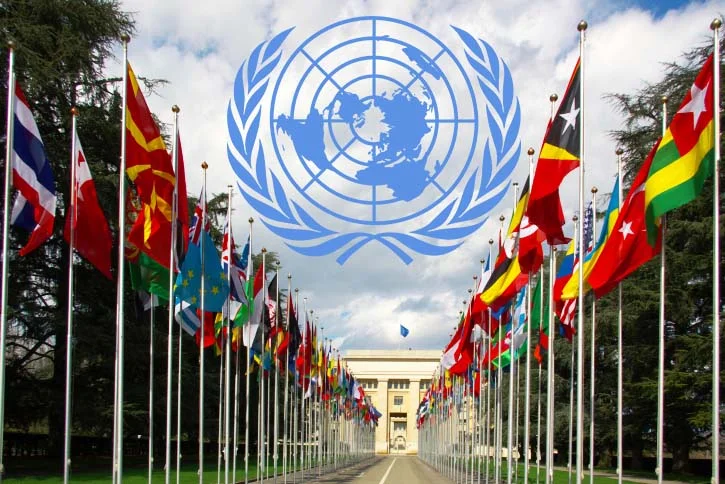
International leaders have renewed calls for full adherence to the United Nations Charter, stressing its continued relevance as the bedrock of global peace, security, and cooperation, even as concerns grow over the selective application of international law and weakening multilateral institutions.
Speaking at a high-level forum, Rosa Yolanda Villavicencio Mapy, Colombia’s Minister for Foreign Affairs, reaffirmed that the principles of the UN Charter remain central to maintaining international peace and security. She expressed concern over what she described as the selective application of international law, warning that global stability depends on prioritising cooperation and solidarity over confrontation and division.
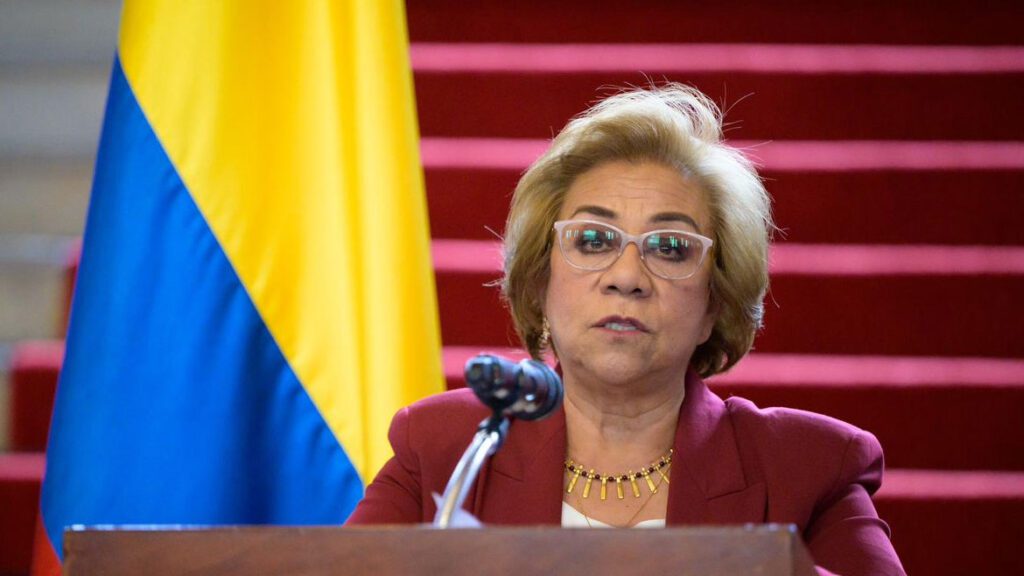
According to Colombia’s Minister for Foreign Affairs, rule of law must remain the cornerstone of the multilateral system, insisting that “all power is subject to the law” and describing the Charter as an essential guide for the international community.
She also called for reforms within the United Nations Security Council, urging greater transparency and accountability in its operations.
Villavicencio Mapy pointed out that instead of avoiding the Security Council when national interests are at risk, member states continue to entrust it with the duties for which it was created. She reiterated Colombia’s steadfast dedication to successful multilateralism and the United Nations’ pivotal role in influencing global governance and guaranteeing coordinated responses to global issues.
Echoing similar sentiments, Mohammad Ishaq Dar, Pakistan’s Deputy Prime Minister and Foreign Minister, described the UN Charter as the “moral foundation of the international order.”
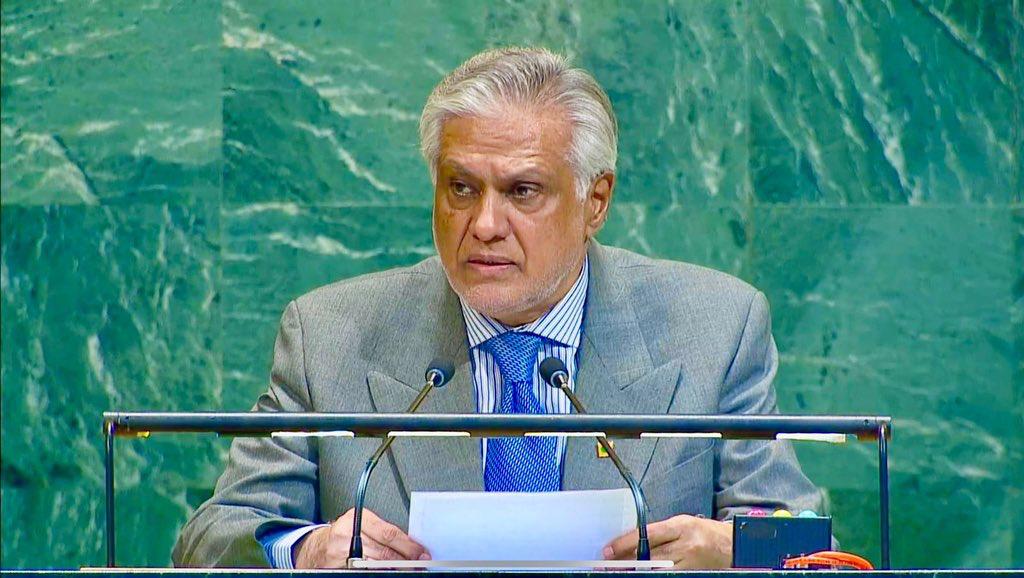
He said its principles are sacrosanct and serve as the guiding framework for Pakistan’s foreign policy and its contributions to international peace and security.
Dar emphasised Pakistan’s longstanding participation in UN peacekeeping operations as well as its support of decolonisation, self-determination, and the avoidance of conflict. Additionally, he emphasised Pakistan’s dedication to peaceful conflict resolution, contending that diplomacy should never be viewed as a last choice but rather as a fundamental obligation of governments under the Charter.
READ ALSO: Audit Uncovers GH¢580m Financial Irregularities in 13th All-African Games