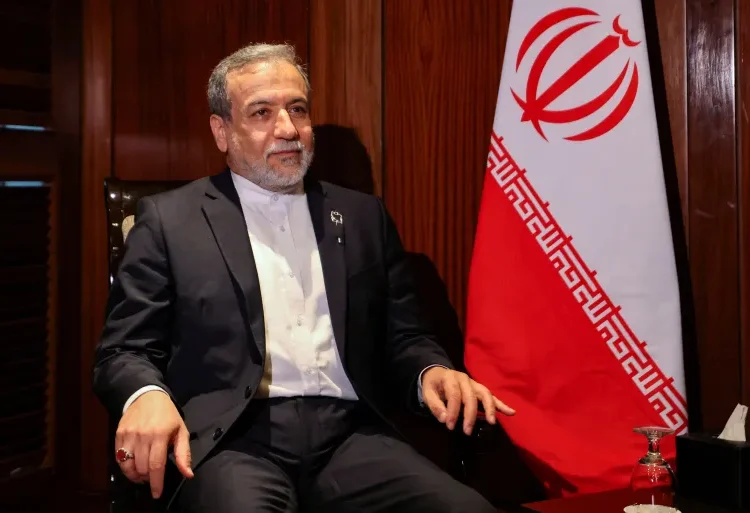
Iran’s Foreign Minister, Abbas Araghchi has hailed mediation efforts by Pakistan’s Field Marshal Asim Munir, Commander of the Pakistani army, following a morning meeting.
The two leaders discussed “the latest developments related to the ceasefire” between the US and Iran “and cooperation to strengthen peace and stability in the West Asia region.”
Araghchi commended “the Pakistani government, especially Field Marshal Asim Munir, for establishing the ceasefire and ending the war” and shared Iran’s views and considerations on the matter.
Iran Foreign Minister Abbas Araghchi met late Friday with Pakistan Foreign Minister Ishaq Dar and Army Chief Field Marshal Asim Munir shortly after arriving in Pakistan’s capital Islamabad, officials said.
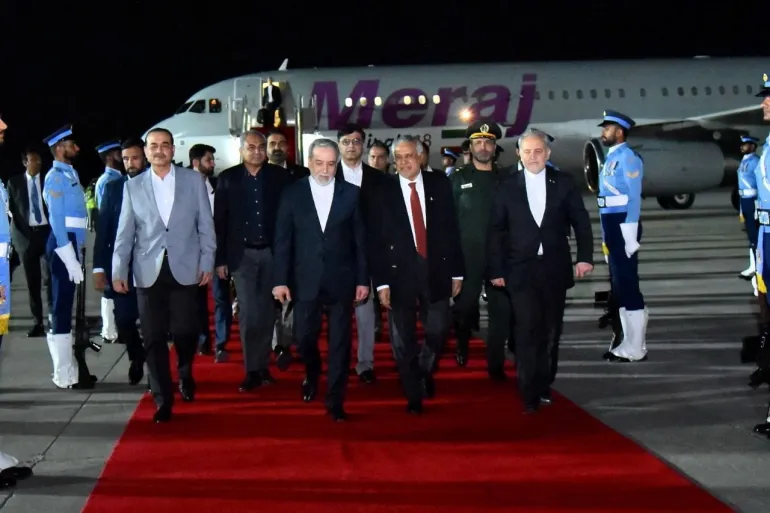
On Saturday morning Araghchi met again with Munir and Pakistan’s Interior Minister Mohsin Naqvi, officials said.
Iran’s top diplomat and Pakistan’s army chief discussed efforts to launch a new round of talks with the United States. Araghchi iterated on Telegram that he met with Pakistan’s Field Marshal Asim Munir this morning in Islamabad, Pakistan’s capital, and explained Iran’s views on ending the war between the Islamic Republic and the US. Araghchi didn’t offer further details, but said Tehran will continue engaging in the Pakistani-led mediation efforts “until a result is achieved.”
Pakistan’s Foreign Ministry disclosed in a statement that during the meeting, Foreign Minister Ishaq Dar “reiterated that Pakistan is facilitating Iran-US talks for achieving peace and stability in the region and beyond. Pakistan will continue with its efforts in this regard.”
According to the statement, Ishaq Dar also “underlined that Pakistan’s official policy statements on Iran-US facilitation process are only those issued by official sources,” adding that any comments made by unnamed Pakistani officials or sources “do not reflect Pakistan’s official position.”
Araghchi’s visit comes as Pakistan also is preparing to receive US envoys, although officials have not specified when Steve Witkoff and Jared Kushner are due in Islamabad.
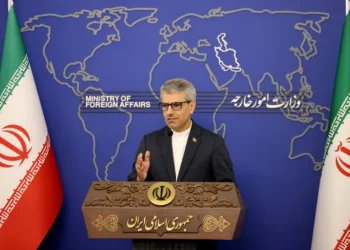
The White House said that US envoys Steve Witkoff and Jared Kushner will travel to Islamabad, Pakistan, today for talks with Iran, but a Spokesperson for the Iranian Foreign Ministry said “no meeting is planned to take place between Iran and the US”, and Tehran’s “observations would be conveyed by Pakistan.”
Pakistan’s capital Islamabad appeared to be in a near-lockdown Saturday morning, hours after the Iran Foreign Minister arrived on a closely watched visit as Pakistan attempts to ease tensions between the United States and Iran. The weeklong security restrictions have disrupted daily life, with hundreds of thousands of residents struggling to commute even short distances. Checkpoints, road closures and diversions have become routine sights, particularly around sensitive zones.
The usually busy arteries leading to the airport and the heavily fortified Red Zone were largely deserted early Saturday, with movement tightly restricted. Soldiers and police were at key intersections while helicopters circled overhead. The measures were reinforced over the past 24 hours on the city’s outskirts with additional forces stationed along key airport access routes. Soldiers were visible on rooftops overlooking major approach roads, particularly near the airport where the Iranian delegation arrived late Friday.
Egyptian and Pakistani Foreign Ministers late Friday discussed efforts to launch a new round of talks between the United States and Iran. Badr Abdelatty of Egypt spoke by phone with his Pakistani counterpart Mohammad Ishaq Dar. The Egyptian foreign ministry said the diplomats affirmed that negotiations are the best way to end the war.
Iranians Urged To Reduce Electricity Use
Meanwhile, Iran’s President urged people to reduce their use of electricity after American and Israeli strikes damaged the county’s energy infrastructure.
According to the Iranian state television, President Masoud Pezeshkian said that the government aims to “control consumption” of electricity,
“The enemies are attacking our infrastructure and surrounding us so that people become dissatisfied and the current satisfaction turns into dissatisfaction; people must not allow the grounds for dissatisfaction to arise. We need consumption control; at home, instead of 10 lights, 2 lights should be on – what’s the problem with that?”
Masoud Pezeshkian
He said the US and Israel “destroyed our infrastructure,” and noted that the US imposed a blockade on Iran’s ports.
Also, commercial flights resumed Saturday at Imam Khomeini International Airport in Tehran for the first time since the war with the United States and Israel started about two months ago.
Iran’s state-run television reported the airport has flights to Istanbul in Turkey, Oman’s capital Muscat and the Saudi city of Medina. Flightradar24, a flight tracking platform, showed at least three Istanbul-bound flights departed Saturday morning. Iran partly reopened its airspace earlier this month during a ceasefire with the US.
READ ALSO: Energy Chamber Flags ‘Investment Stagnation’ in Ghana’s Petroleum Offshore-Production