France’s Ecological Transition Minister, Monique Barbut, has warned that efforts to curb global methane emissions cannot succeed through isolated national or sectoral action, as international officials, energy executives, and climate experts gathered in Paris to intensify coordination ahead of the UN’s COP31 climate summit in November.
Speaking at a high-level meeting convened under France’s presidency of the Group of Seven (G7) industrialised nations, Barbut stressed that methane reduction requires sustained cooperation across governments, industry, and international institutions.
“I sincerely hope that the discussions we will have today will enable us to join our forces to accelerate the implementation of effective solutions to reduce methane emissions.”
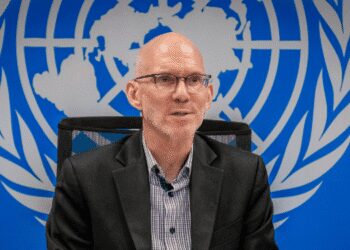
Monique Barbut
According to reports, methane is the second-largest contributor to global warming after carbon dioxide, but it is far more potent in the short term, trapping around 80 times more heat over 20 years.
Under the Global Methane Pledge, launched at COP26 in Glasgow in 2021, nearly 160 countries committed to reducing global methane emissions by 30% by 2030 compared with 2020 levels.
However, officials acknowledge that the world remains significantly off track, with implementation gaps widening across key emitting sectors.
Around 60% of methane emissions are linked to human activity, with the fossil fuel industry, oil, gas and coal accounting for roughly 35% of those emissions. Much of this output comes from infrastructure leaks, venting, and flaring during production and transport.
Moreover, the International Energy Agency has also warned that methane emissions from fossil fuel operations remain near record highs, despite the availability of proven and cost-effective mitigation technologies.
According to European Union’s Energy Commissioner, Dan Jorgensen, “we could have three times more gas on the market if we eliminated this waste.”
“This shows that methane abatement and energy security are not competing priorities. Methane is the single fastest lever we have to limit near-term warming. We can no longer wait to pull this lever.”
Dan Jorgensen
British Energy Minister, Ed Miliband also stated that, “Reducing methane emissions remains one of the best things we can do to slow global warming while cleaning up our air, improving public health, and increasing our energy security.”
IEA Warns of Untapped Gas Gains as Methane Emissions Remain Near Record Highs
Methane emissions from fossil fuel operations remained at exceptionally high levels in 2025, with little sign of a sustained global decline, according to the International Energy Agency (IEA), even as governments and companies continue to announce new climate commitments.
In its latest Global Methane Tracker 2026, the agency said emissions have largely plateaued near record highs, exposing a widening gap between ambition and real-world implementation. While methane reduction pledges now cover more than half of global oil and gas production, the report suggests that progress on the ground has been limited.
The IEA said a substantial proportion of emissions could be reduced using technologies that are already available and widely understood. It estimates that around 70% of methane emissions from fossil fuels are technically abatable, particularly in upstream oil and gas operations, which account for the largest share of emissions.
According to the report, more than 35 million tonnes of methane emissions could be eliminated at no net cost under current energy price conditions. With energy markets remaining volatile, further reductions could become even more economically viable.
Beyond its climate impact, the agency highlighted the growing importance of methane reduction for energy security. It estimates that targeted abatement efforts could make nearly 100 billion cubic metres of natural gas available to global markets each year, while eliminating routine flaring could unlock an additional 100 billion cubic metres.
Such volumes would represent a significant boost to global gas supply at a time when markets are under pressure from geopolitical tensions and supply disruptions.
The report also points to advances in satellite monitoring, which are improving the ability of governments and operators to detect and respond to methane leaks. Enhanced data-sharing frameworks are expected to strengthen transparency and accountability across the sector.
However, the IEA warned that progress remains uneven, with a small number of major producing countries responsible for the majority of emissions. Without stronger regulatory enforcement and broader adoption of mitigation measures, it said global targets are likely to remain out of reach.
Per the International Energy Agency, methane reduction remains one of the fastest and most cost-effective ways to limit near-term global warming, but they also stressed that meaningful progress will depend on translating commitments into sustained and measurable action.
READ ALSO: Education Minister Cautions BECE Candidates And Invigilators Against Malpractice