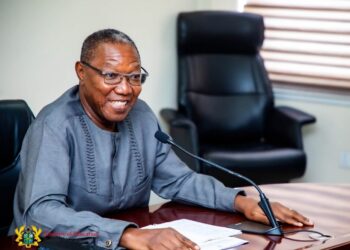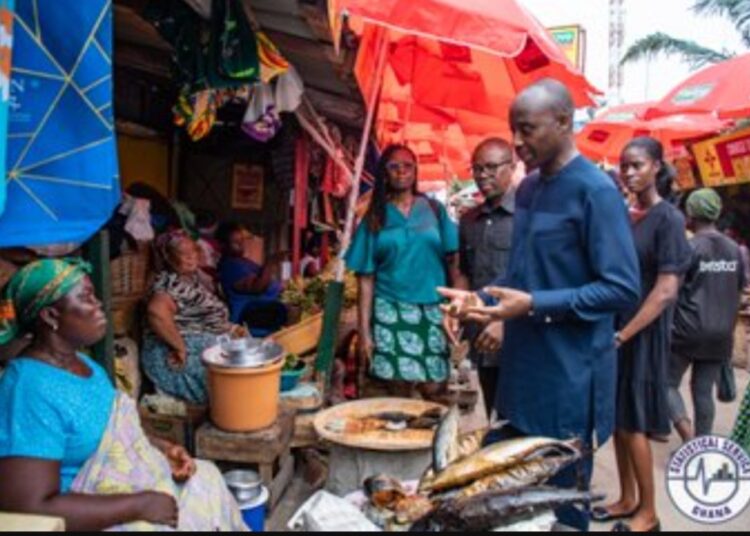
Government Statistician Dr. Alhassan Iddrisu has underscored the importance of credible, field-driven data in shaping national development following a working visit to the Greater Accra Regional Office of the Ghana Statistical Service and the busy Makola Market.
The visit, which combined internal staff engagement with on-the-ground observation, offered what the Statistician-General described as a “powerful reminder of where real data begins,” highlighting the critical role of frontline data collectors in producing the statistics that inform national policy.
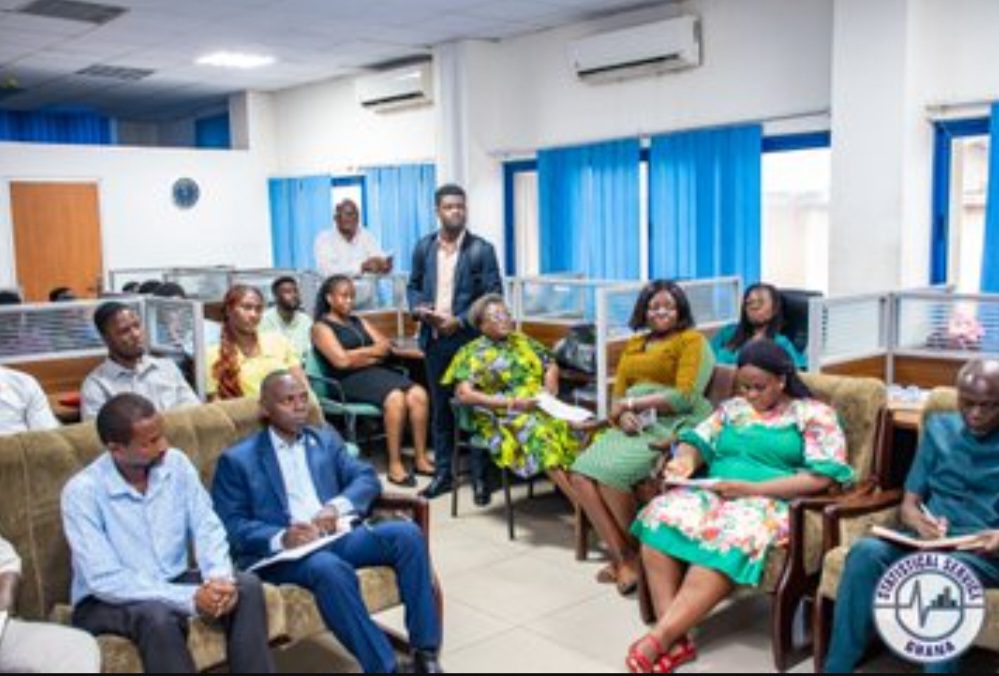
Spending time with regional staff, Dr. Iddrisu said he deliberately approached the engagement as a listening exercise rather than a routine inspection.“I came to listen,” he noted, emphasising the need to understand the realities faced by officers who gather and process data daily.

At the regional office, discussions focused on operational challenges, system gaps, and the practical constraints that affect the quality and timeliness of data collection. According to him, these conversations were candid and necessary, revealing both the strengths of the system and the areas requiring urgent improvement.
The Ghana Statistical Service plays a central role in collecting and producing data used for economic planning, policy formulation, and national development tracking. Dr. Iddrisu stressed that the quality of decisions taken at the national level depends directly on the accuracy and reliability of the data collected in communities, markets, and households across the country.
“Strong data leads to better decisions. Weak data leads to guesswork,” he said, drawing a clear link between statistical work and real-life outcomes. He added that data generated by the Service informs government policies, guides the allocation of resources, and ultimately impacts livelihoods.
“What you collect shapes policy, guides resources, and affects lives.”
Dr. Alhassan Iddrisu, Ghana Statistical Service Boss.
This perspective aligns with the broader mandate of the Ghana Statistical Service, which focuses on producing credible and timely statistics to support evidence-based decision-making across sectors.
Makola Market Experience Brings Data to Life
A key highlight of the visit was Dr. Iddrisu’s interaction with “market readers” at Makola Market, where price data is routinely collected to inform inflation measurements and economic indicators. Standing among traders and observing live data collection, he described the experience as transformative.
According to him, the exercise revealed the human stories behind statistical figures, showing how each data point reflects real economic pressures, resilience, and daily adjustments made by traders. He noted that such interactions are essential for understanding the context behind the numbers and ensuring that statistical outputs accurately reflect lived realities.Behind every figure, he emphasised, is a deeper narrative.
“Behind every data point is a real story of resilience, pressure, and constant adjustment.”
Dr. Alhassan Iddrisu.
Staff Recognition and Institutional Expectations
Dr. Iddrisu also used the visit to commend the efforts of the Greater Accra Regional team, singling out Regional Statistician Mr. Fritz Adom and his colleagues for their professionalism and dedication.
“Your commitment, professionalism, and pride in your work are evident,” he said. He added that the team’s work has far-reaching implications beyond the region, contributing to national datasets that inform decisions across government and industry.
However, while acknowledging their efforts, he was equally clear about expectations moving forward. He stressed the need for higher standards, discipline, and accountability within the Service.
“If we want better data, we must match it with higher standards, discipline, and accountability in how we work.”
Dr. Alhassan Iddrisu.
Looking ahead, Dr. Iddrisu assured staff that the Service would address operational challenges, including tools, systems, and logistical support, to improve efficiency and data quality. “We will fix what needs fixing; tools, systems, and support,” he stated.
Sustained Engagement and Accountability
At the same time, he made it clear that institutional improvements must be matched by individual responsibility and commitment .“But we will also demand more from ourselves. Because this work matters.” His remarks reflect a broader reform agenda aimed at modernising Ghana’s statistical system and strengthening its credibility as a foundation for national development.

The visit forms part of what Dr. Iddrisu described as an ongoing effort to maintain close engagement with staff across the country. He indicated that similar visits would continue as part of a strategy to strengthen internal accountability and improve data systems.“This visit is one of many. We will keep showing up, keep listening, and keep holding ourselves to the highest standard.”
He concluded with a reminder of the broader purpose of the Service’s work, linking it directly to national expectations and development goals.“The work demands it, and Ghana deserves it.” As Ghana continues to rely on data to navigate economic and social challenges, the emphasis on accuracy, discipline, and field engagement signals a renewed push to ensure that statistics remain not just numbers, but a true reflection of the nation’s reality.
READ ALSO: Cairo Condemns Attack on Khartoum Airport