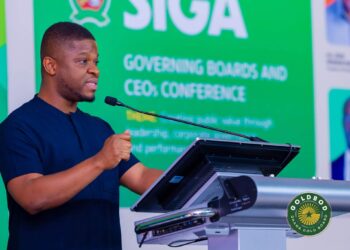
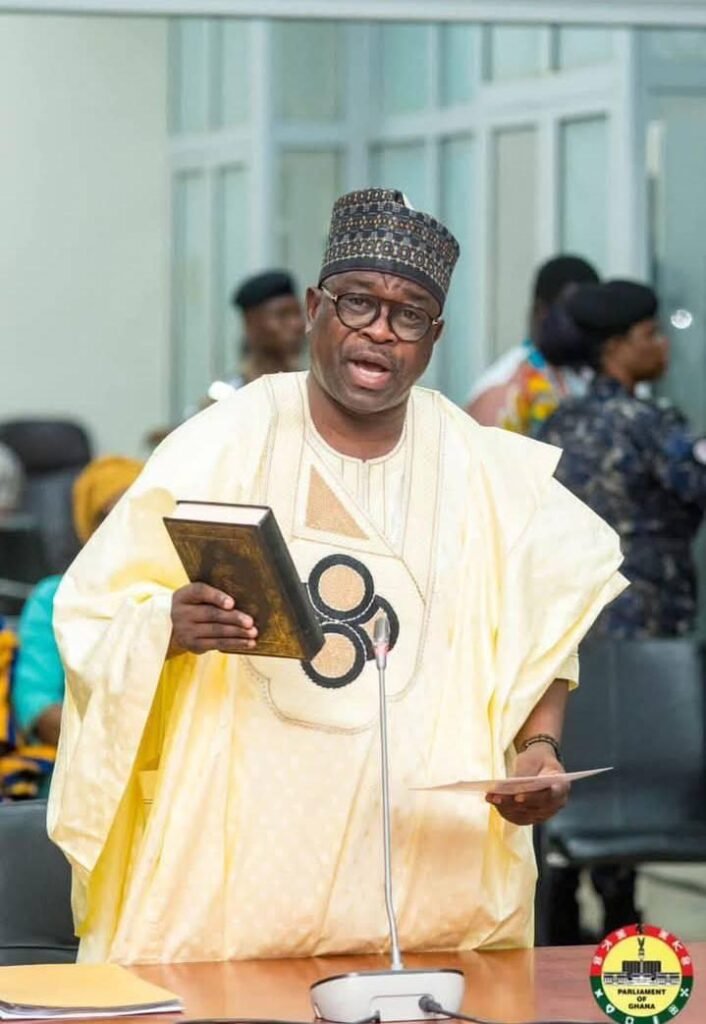
Hon. Baba Seidu Salifu, the Minister of State for Climate Change and Sustainability, has asserted that the strategic integration of climate-resilient infrastructure is the fundamental pillar required to safeguard Ghana’s future energy security and industrial growth.
Speaking during the recent Accountability Series, the Minister underscored that the government’s proposed initiatives spanning renewable energy, sustainable agriculture, and early warning systems are being positioned to attract global capital through a robust national project pipeline.
By aligning these priorities with international financial partners and development finance institutions, the State is actively working to ensure that the nation’s energy framework can withstand the increasing volatility of global climate patterns while providing the reliable power necessary for economic expansion.
“Our approach is clear: climate action must support Ghana’s research agenda on industrial transformation, creating new economic opportunities, and strengthening long-term energy security. It must power development rather than solo development. This strategy ensures our national priorities are positioned strategically within global climate finance channels.”
Hon. Baba Seidu Salifu
While on this strategic vision, the Office of the Minister spearheaded efforts to facilitate Ghana’s energy transition by integrating climate considerations into cornerstone national projects, such as the “Big Bush” infrastructure agenda and the 24-hour economy programme.
This holistic approach ensures that climate action is not an isolated environmental goal but a core driver of industrial development.
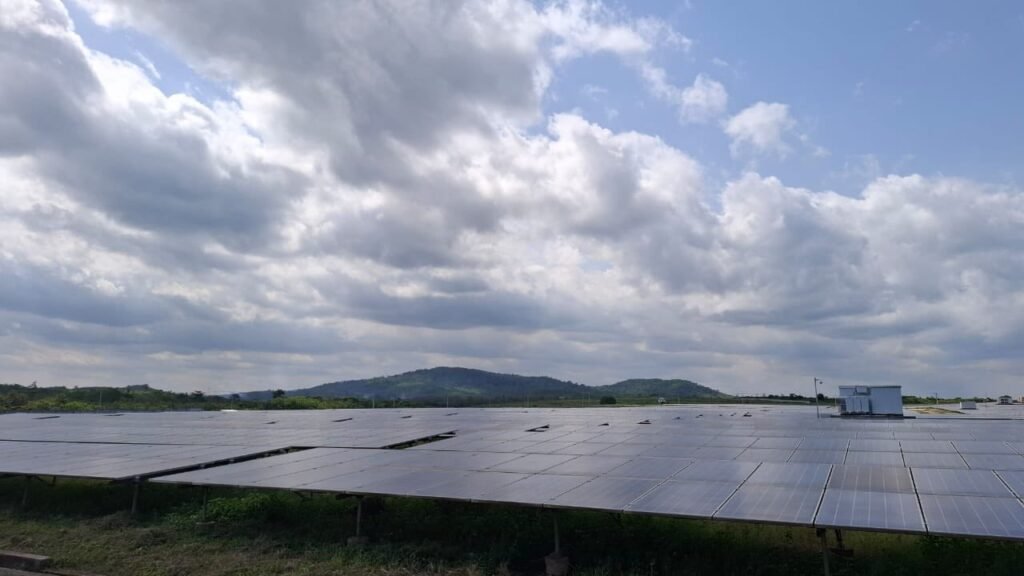
By expanding solar rooftop deployment and fostering distributed renewable energy systems, the Ministry aims to decentralize the power grid, making it less vulnerable to localized disruptions.
Strengthening the National Grid through Decentralized Renewables
The push for climate-resilient infrastructure is anchored in the expansion of distributed renewable energy systems.
Unlike traditional, centralized power models that are highly susceptible to climate-induced physical risks, a decentralized solar framework offers a buffer against grid instability.
By supporting national efforts to “expand solar rooftop deployment,” the government is reducing the pressure on the national utility provider while empowering businesses to operate within a more predictable energy cost environment.
This transition is essential for the 24-hour economy initiative, as it provides the continuous, sustainable power required for around-the-clock industrial operations.
Green Industrial Zones and Economic Transformation

A key component of the Ministry’s agenda is the development of green industrial zones designed to attract “strong-term climate investment.”
These zones serve as hubs for electric mobility and advanced manufacturing, where infrastructure is built specifically to withstand extreme weather events while maintaining low carbon footprints.
By “promoting the development of green industrial zones,” Ghana is creating a competitive advantage in the sub-region, signaling to global investment platforms that the country is ready for high-tech, climate-aligned industrialization.
This infrastructure development is not merely about environmental compliance; it is about building the physical foundations for a modern, resilient economy that can compete on a global scale.
Integrating Early Warning Systems into Energy Planning

To ensure long-term energy security, the proposed project pipeline emphasizes the necessity of early warning systems as part of the broader infrastructure framework.
These systems provide the critical data needed to manage renewable resources effectively, such as predicting solar yields and protecting transmission lines from environmental hazards.
By “facilitating technology transfer” and strengthening partnerships, the Office is ensuring that Ghana’s energy agenda is backed by the latest in climate science.
This proactive stance allows the nation to mobilize resources efficiently, ensuring that infrastructure remains functional and productive throughout its lifecycle, thereby securing the energy needs of future generations.
READ ALSO: Minority Leader Slams EOCO Over Fmr. Buffer Stock CEO and Wife’s Re-Arrest