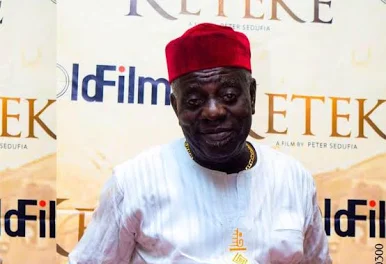
In a candid and timely intervention that has ignited fresh conversations across Ghana’s creative sectors, veteran actor Fred Amugi has declared that the country’s film industry is not suffering from a lack of funds but is rather crippled by deep-seated disunity.
Speaking in a recent interview, the seasoned performer, known for his decades-long contribution to Ghanaian cinema and theatre, cut through the familiar narrative of insufficient funding. “Funding is not the problem, disunity is. If we can unite as an industry, the money will come,” Amugi stated emphatically.
His remarks come at a critical juncture for Ghanaian filmmaking.
While global cinema continues to leverage advanced technologies, robust distribution networks, and international co-productions to record impressive box office returns, local practitioners often remain trapped in cycles of complaint about capital and infrastructure.
Amugi argues that these challenges, though real, have become convenient excuses that mask a more fundamental issue: the lack of collaboration among actors, producers, directors, writers, and other creatives.
Ghana boasts an abundance of raw talent. From established stars to emerging voices, the human resource pool is rich.
Yet, as Amugi observes, without structured unity, this potential remains fragmented. Individual efforts rarely scale into sustainable productions capable of competing regionally or globally.
Distribution bottlenecks and inconsistent quality further compound the problem, limiting audience reach and investor confidence.
The veteran’s diagnosis resonates with longstanding industry observers. Past attempts at guild formation and industry associations have frequently been undermined by leadership tussles and factionalism.
In 2024, Amugi himself highlighted power struggles within the Actors Guild of Ghana as a major impediment to progress.
His latest comments build on that theme, shifting focus toward actionable unity rather than perpetual external blame.
Amugi’s perspective carries significant weight. With a career spanning theatre roots in the late 1960s to modern screen roles, he embodies institutional memory.
He has consistently advocated for discipline, professionalism, and a return to foundational craft often crediting stage acting with sharpening his skills.
His call is not a dismissal of genuine financial hurdles but a strategic re-prioritisation: fix internal fractures first to unlock investment doors.
Broader Implications
The entertainment industry, particularly film and television, holds substantial potential for job creation, cultural export, and economic diversification.
Successful local productions can generate revenue streams through cinemas, streaming platforms, diaspora markets, and ancillary merchandise.
Yet repeated fragmentation has prevented Ghana from fully capitalising on its soft power.
Industry stakeholders have begun echoing Amugi’s sentiments on social media and in follow-up discussions. Calls for stronger guild leadership, joint ventures, and knowledge-sharing initiatives are gaining traction.
Experts note that unity could facilitate collective bargaining with government for targeted incentives, easier access to credit facilities, and partnerships with international studios.
It could also improve training standards and quality controlkey ingredients for consistent, marketable content.
A Call to Action
Amugi’s message is clear: the path forward demands introspection and collective responsibility.
Rather than waiting passively for government intervention or massive external funding, practitioners must build internal structures that signal readiness to investors.
As Ghana positions itself within Africa’s growing creative economy where Nollywood and others have carved significant niches Amugi’s intervention serves as both diagnosis and prescription.
The industry is not broke; it is momentarily stuck. Unity, he insists, is the key to releasing the brakes.
With major events like the Telecel Ghana Music Awards dominating headlines this week, Amugi’s timely reminder underscores a broader truth: sustainable growth in any creative sector requires more than talent and money, it demands cohesion and shared vision.
The coming weeks will reveal whether his words catalyse real dialogue and reform, or merely add to the archive of passionate but unheeded industry calls.
READ ALSO: Climate Change Minister Highlights Strategic Pathways for Managing Energy Transitions