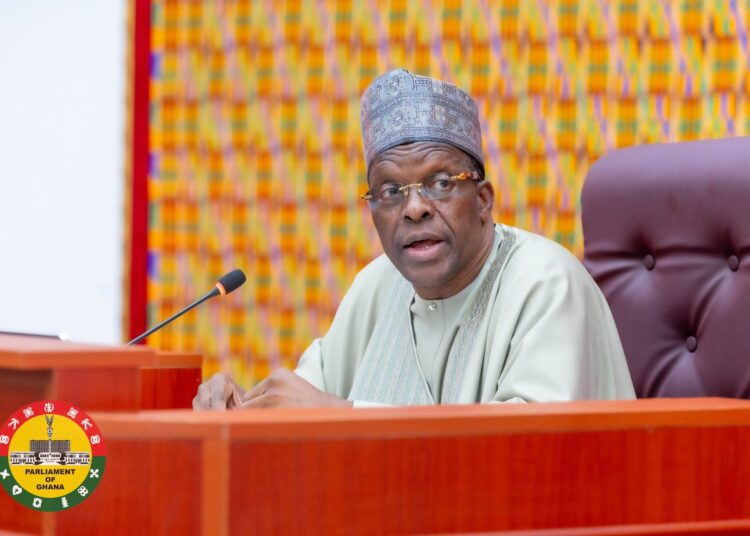
Ghana’s Parliament resumes sitting today, Thursday, May 21, 2026, officially commencing the Second Meeting of the Second Session of the Ninth Parliament of the Fourth Republic after a two-month recess.
The return of lawmakers follows a formal notification issued by Speaker of Parliament Alban Bagbin, signaling the beginning of what is expected to be a busy legislative period.
The new session is expected to focus heavily on economic recovery, governance reforms, national security, energy transformation, and accountability measures.
Parliamentarians are expected to deliberate on a wide range of proposed bills and policy reforms aimed at strengthening public accountability, modernising institutions, and addressing emerging national challenges.
The new session also comes at a politically significant moment as both the Majority and Minority caucuses intensify oversight efforts ahead of growing national discussions on governance and public sector reforms.
Finance Minister to Present New Economic Policy
The new parliamentary session will feature a major economic policy presentation by Finance Minister Cassiel Ato Forson, who is expected to brief Parliament on the government’s new flagship economic programme known as the “New Economy” policy.

The proposed initiative is expected to focus strongly on job creation and productive sector expansion, particularly commercial agriculture. President John Dramani Mahama has already hinted that approximately one percent of Ghana’s Gross Domestic Product will be directed toward productive sectors under the policy framework.
The policy is expected to target youth employment, agribusiness expansion, industrial productivity, and domestic value addition. Government officials say the programme is intended to stimulate domestic production, create employment opportunities, and reduce dependence on imports as part of the broader Reset Agenda.
The Finance Minister is also expected to return to Parliament in early July to present the 2026 Mid-Year Budget Review, where government will provide updates on fiscal performance, revenue mobilisation, expenditure trends and implementation progress on key policy interventions introduced in the national budget.
Broad Legislative Programme Unveiled
Majority Chief Whip Rockson-Nelson Dafeamekpor has outlined an expansive legislative programme covering several sectors of the economy and public administration.
Among the major proposals expected before the House is a new Code of Conduct Bill focused on strengthening ethical standards and asset declaration requirements for public officials.
The proposed legislation is expected to contribute to broader accountability reforms by establishing clearer rules governing ethical conduct in public office.
Lawmakers are also expected to consider a consolidation of amendments to Constitutional Instrument 47, which governs High Court civil procedure. Legal analysts believe the amendments could improve efficiency within the judicial process and streamline civil litigation procedures.
Justice and Security Reforms Take Center Stage
The justice and security sectors are also expected to receive significant parliamentary attention during the session. The Ministry of the Interior is preparing to table a Community Service Bill designed to reduce prison congestion through the introduction of non-custodial sentencing measures for minor offences.
The proposed law seeks to provide alternative forms of punishment for selected offenders while reducing pressure on correctional facilities across the country.
Parliament is additionally expected to examine proposed amendments to the National Identity Register law as part of efforts to improve the management and administration of national identification systems.
Other measures under consideration include reforms to parole regulations and legislation aimed at improving coordination among national security agencies.
Observers say the reforms reflect ongoing attempts to modernise Ghana’s justice and security architecture while addressing long standing institutional challenges.
Energy Sector Reforms Expected
The energy sector is expected to dominate portions of the parliamentary agenda as government pushes forward with plans aimed at restructuring and expanding Ghana’s energy framework.
Among the key proposals expected before lawmakers is a review of the legal framework governing the National Petroleum Authority. Parliament will also consider measures intended to facilitate greater private sector participation in electricity distribution as part of broader energy sector reforms.
Another major proposal involves the planned establishment of a Nuclear Power Corporation, which government officials say forms part of long term efforts to diversify Ghana’s energy mix and strengthen power generation capacity.
Lawmakers are also expected to deliberate on legislation establishing a dedicated Renewable Energy Authority tasked with coordinating solar and wind energy development across the country.
The proposed reforms align with government’s broader green transition agenda and efforts to increase investment in sustainable energy infrastructure.
Transport and International Agreements
In the transport sector, Parliament is expected to consider the Maritime and Related Offences Bill following the presentation of a committee report. The legislation is intended to strengthen maritime regulation and address offences occurring within Ghana’s maritime domain.
Lawmakers will also review amendments to Road Traffic Regulations as authorities seek to improve road safety enforcement and transportation management. Additionally, Parliament is expected to examine bilateral air services agreements involving Luxembourg, Qatar, Saudi Arabia, and the United Arab Emirates.
Officials say the agreements are aimed at expanding international aviation cooperation and improving connectivity between Ghana and strategic global destinations.
Political Tensions Likely to Shape Proceedings
The resumption of Parliament is also expected to intensify political scrutiny and partisan debate within the House. The Minority caucus recently held strategic discussions with its flagbearer and former Vice President, Dr Mahamudu Bawumia, who urged members to demand accountability from the governing administration aggressively.
The opposition party caucus in Parliament, led by its leader Hon. Alexander Kwamena Afenyo-Markin, is expected to maintain strong pressure on government ministers and public institutions during committee proceedings and parliamentary debates.
At the same time, Majority Leader Hon. Mahama Ayariga has previously indicated that Parliament intends to strengthen oversight mechanisms through stricter accountability measures.
Among the reforms being considered are Senate style public committee hearings aimed at increasing transparency in the scrutiny of governance reforms and national policy implementation.
The combination of expanded legislative activity and heightened political oversight could make the current parliamentary session one of the most consequential since the beginning of the Ninth Parliament.
Parliament Faces High Public Expectations
As lawmakers return to the chamber, public attention is expected to focus heavily on Parliament’s ability to pass meaningful reforms while maintaining effective oversight of the executive branch.
With major bills spanning ethics, justice, security, energy and transportation already on the agenda, the coming weeks are likely to shape key aspects of Ghana’s governance and policy direction.
Citizens, civil society organisations and policy experts are expected to closely monitor debates and legislative outcomes as Parliament resumes work on issues affecting national development and institutional reform.
READ ALSO: Ghana Records $5.2bn Trade Surplus Amid Gold Rally