
Fresh concerns are emerging over the stability of Ghana’s financial sector as the International Monetary Fund (IMF) warns that unresolved weaknesses within the banking industry could threaten the country’s economic recovery.
Although Ghana’s banking sector has shown signs of improvement following years of reforms and clean-up exercises, the IMF says the danger is far from over. The latest warning focuses heavily on rising non-performing loans, weak supervision, and vulnerabilities within specialised deposit-taking institutions (SDIs).
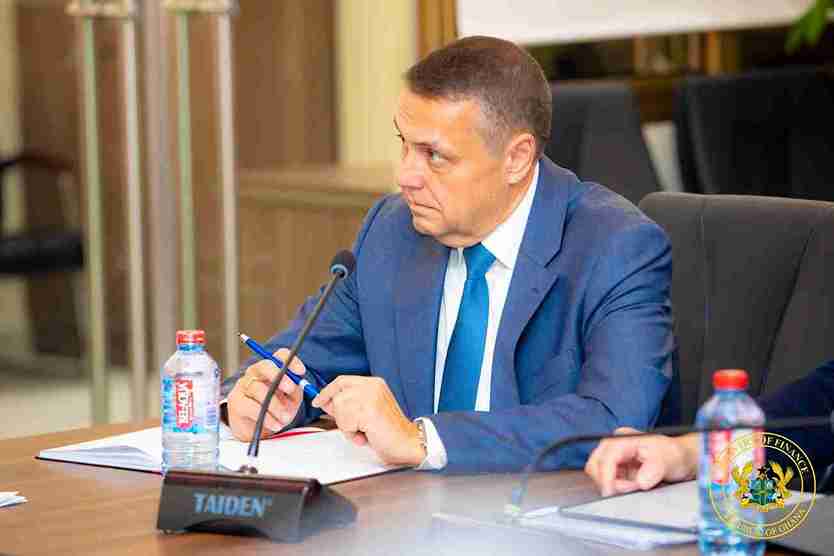
Speaking on the state of Ghana’s financial system, IMF Mission Chief Dr. Ruben Atoyan acknowledged that significant progress has been made under the Extended Credit Facility programme. However, he stressed that critical reforms remain unfinished. “Absolutely, the reforms need to be completed, that’s how we see that,” he stated.
The comments come at a time when confidence in Ghana’s financial sector is gradually recovering after the collapse of several banks and financial institutions during the financial sector clean-up exercise. Authorities have since introduced reforms aimed at strengthening capital buffers, improving regulation, and restoring investor trust.
Despite these measures, the IMF believes cracks still exist beneath the surface.
Non-Performing Loans Becoming a Major Worry
One of the biggest concerns raised by the IMF is the persistent rise in non-performing loans (NPLs), particularly within state-owned banks.
According to Dr. Atoyan, the increasing ratio of bad loans poses a significant risk to financial stability if left unchecked. He warned that although loan defaults are a common feature of banking systems worldwide, rising default ratios signal deeper stress within the sector.
“Where we do see risk, that NPLs are still fairly high, especially among the state-owned banks, and this needs to be addressed going forward.”
Dr. Ruben Atoyan
The IMF official further called for stronger regulatory intervention to tackle the issue before it spirals into a broader financial crisis. “This is something that we would like to be addressed by stronger supervisory action,” he said.
The rise in bad loans has become a growing concern in Ghana’s banking industry as businesses continue to struggle with high borrowing costs, inflationary pressures, and economic uncertainty. Financial analysts believe many borrowers are finding it difficult to meet repayment obligations due to declining purchasing power and slowing business activity.
Industry observers fear that if the NPL problem worsens, banks may become more cautious in lending, potentially slowing private sector growth and economic expansion.
SDIs Identified as Emerging Threat
Beyond traditional banks, the IMF also flagged specialised deposit-taking institutions as another major source of concern.
SDIs, which include savings and loans companies, microfinance institutions, finance houses, and rural banks, play a critical role in Ghana’s financial ecosystem by expanding access to financial services. However, weak oversight and operational vulnerabilities within the sector are now raising fresh alarm bells.
“Another sector, which needs to be addressed going forward, is specialised deposit-taking institutions (SDI), and this is a sector where the future challenges need to be addressed.”
Dr. Ruben Atoyan
The warning has triggered renewed debate about whether regulators are doing enough to monitor the activities of smaller financial institutions operating across the country.
Several SDIs were heavily affected during Ghana’s financial sector clean-up exercise, with many institutions collapsing due to poor corporate governance, weak liquidity, and unsustainable business models. Although reforms were introduced afterward, concerns remain about whether all structural weaknesses have truly been resolved.
Financial experts say the collapse of SDIs could have serious consequences because many ordinary Ghanaians, small businesses, and rural communities rely heavily on these institutions for savings and credit access.
IMF Pushes for Stronger Supervision
The IMF insists that Ghana must sustain its reform momentum to avoid another wave of instability within the financial sector.
According to Dr. Atoyan, stronger supervision and stricter enforcement of regulations will be crucial in protecting the gains achieved under the IMF-supported programme. “Overall, the strength of the banking sector has been improved drastically during the ECF arrangement,” he stated.
However, he cautioned that unfinished reforms continue to expose the system to future shocks.
The IMF is reportedly working closely with Ghanaian authorities to strengthen oversight mechanisms and address lingering weaknesses in the sector. Analysts say regulators may soon tighten compliance requirements for banks and SDIs as part of broader efforts to safeguard financial stability.
The warning also comes as Ghana seeks to maintain investor confidence while implementing difficult economic reforms under the IMF programme. A stable financial system remains critical to attracting investment, supporting businesses, and restoring long-term economic growth.
Pressure Mounts on Regulators
The IMF’s latest remarks are expected to place additional pressure on financial regulators, particularly the Bank of Ghana, to intensify monitoring and enforcement activities across the industry.
For many market watchers, the message from the IMF is clear. Ghana’s financial sector may be recovering, but dangerous vulnerabilities still remain.
If rising bad loans, weak supervision, and SDI risks are not addressed quickly, the country could face renewed financial turbulence at a time when economic stability remains fragile.
READ ALSO: GoldBod Partners GGSA For Responsible Small-Scale Mining In Ashanti Region