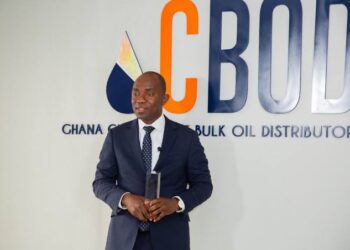

Minister for Energy and Green Transition, Hon. John Abdulai Jinapor, has assured the nation that the government’s ambitious 1,200-megawatt (MW) thermal power initiative is securely on track, promising a sweeping transformation of the domestic energy landscape.
Following an exhaustive briefing by the leadership of Ghana Thermal Power Ltd. the specialized state vehicle tasked with executing the project the Minister expressed absolute confidence in the implementation timeline.
The strategic state-owned infrastructure project is positioned as a primary countermeasure against generation deficits, with technical layouts and preparatory frameworks advancing steadily toward active construction phases.
“I engaged the Ghana Thermal Power Ltd., the special purpose vehicle established by government to drive the execution of the Government’s 1200MW thermal power initiative. The progress achieved thus far is a strong indication that this landmark initiative is firmly on course and will play a transformative role in the development of Ghana’s energy sector and the broader economy.”
Minister for Energy and Green Transition, Hon. John Abdulai Jinapor
Hon. John Abdulai Jinapor explained that the ongoing preparatory work signifies a decisive operational shift designed to secure reliable, sustainable, and long-term base-load power for the country.

Ghana Thermal Power Ltd. has intensified its architectural and resource mobilization frameworks to guarantee that the national grid absorbs this fresh capacity without technical friction.
Backed by synchronized planning between the energy and finance sectors, this milestone intervention stands out as a proactive deployment to build a highly resilient energy network.
Industrial Transformation and Grid Redundancy
The successful integration of the 1,200MW state-owned facility into the national grid is forecasted to fundamentally change the dynamics of industrial productivity across the country.
In recent years, peak domestic electricity consumption has escalated from 3,500MW to roughly 4,300MW, creating an urgent demand for what experts’ term “operational grid redundancy.”

By injecting a massive block of stable, gas-fired power into the network, the initiative will comfortably buffer the system against sudden peak surges or unforeseen generation anomalies.
Heavy manufacturing sectors, mining operations, and emerging digital hubs will benefit from a predictable power climate, removing the overhead costs associated with private auxiliary generators.
Furthermore, this expansion shifts the state back into direct electricity production, which helps balance the fiscal ecosystem of a market previously dominated by independent power producers.
Utilizing domestic natural gas resources from offshore fields channeled through the expanding Ghana Gas Processing Plant facilities allows the country to insulate its generation costs from volatile international light crude oil prices.
This local fuel strategy optimizes macroeconomic indicators by safeguarding external financial reserves and keeping wholesale electricity tariffs predictable for local manufacturing businesses.
Regional Integration and Economic Resurgence
Beyond satisfying the immediate requirements of local factories and household consumers, the 1,200MW initiative establishes Ghana as a primary energy hub within the West African Sub-region.
The extra output allows the state to dramatically ramp up bulk electricity exports to cross-border partners through the West African Power Pool (WAPP) network.
This strategic positioning creates a reliable stream of foreign exchange earnings, feeding critical revenue directly back into the national treasury.
The economic ripple effect also extends deep into local communities through direct employment opportunities in technical, civil engineering, and support sectors during the construction and operational cycles.
This massive infrastructural upgrade ultimately signals to global investors that the country possesses the necessary energy backbone to support complex, large-scale industrial projects.
With an unwavering commitment to sustainable energy security, this state-driven thermal initiative lays a dependable foundation for long-term economic independence and regional commercial leadership.
READ ALSO: Netflix Unveils Heartstopper Forever Movie as Emotional Series