
The International Energy Agency’s September 2026 Oil Market Report has delivered a stark assessment of a global oil market being reshaped by prolonged supply disruptions, weaker consumption and an increasingly uncertain geopolitical environment.
For Ghana, the significance goes beyond the global oil balance.
An economy that remains exposed to imported petroleum products, international crude and refined-product prices, shipping costs and foreign-exchange movements could face renewed pressure on fuel prices, transport costs and inflation if the disruption persists.
The IEA now expects global oil demand to decline by 2.5 million barrels per day in 2026, a substantially sharper contraction than its previous forecast of a 1.6 million-barrel-per-day decline. At the same time, global oil supply is projected to fall by 5.7 million barrels per day to 100.7 million barrels per day, with the agency no longer expecting supply recovery until 2027.
The numbers point to an unusual oil-market dynamic: supply is being hit much harder than consumption, while high prices and disrupted supply chains are beginning to destroy demand.
That distinction matters for Ghana because the immediate threat is not simply whether global crude prices rise.
It is whether prolonged disruption pushes up the cost of the refined products Ghana imports, tightens regional supply and increases the foreign-exchange resources required to keep the domestic petroleum market supplied.
Supply Disruption Becomes The Dominant Risk
The September report comes at a particularly difficult moment for international oil markets.
The IEA says global production fell by 1.6 million barrels per day in August alone to about 100.1 million barrels per day as security risks continued to constrain shipments through the Persian Gulf.
The continuing impasse in US-Iran negotiations is also delaying expectations of a normalisation of oil flows.
That disruption is occurring around some of the world’s most strategically important oil and shipping corridors.
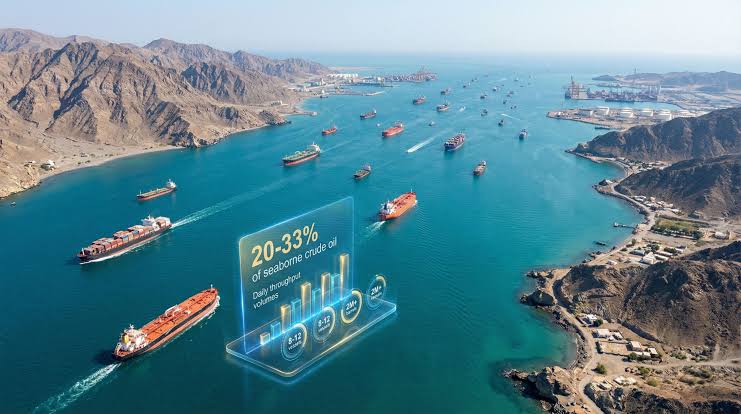
The Strait of Hormuz is particularly important because of the volume of crude and petroleum products that normally passes through it.
Recent attacks and security threats have sharply reduced tanker traffic, while instability around the Red Sea and Bab el-Mandeb has added another layer of risk to energy transportation.
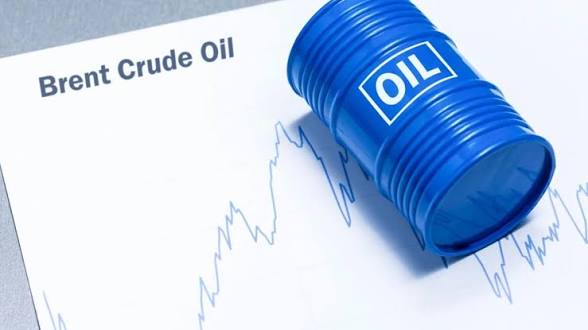
Brent crude consequently moved above US$100 per barrel this week, reaching levels not seen since May. On September 10, Brent settled at US$107.63 per barrel, while US West Texas Intermediate rose to US$102.48.
Although prices eased on September 11, Brent remained above US$100, with the market still pricing in significant geopolitical risk.
For Ghana, the concern is straightforward: a higher international oil price eventually works its way into the domestic petroleum price build-up.
Ghana’s Pump Prices Already Show The Transmission
Ghana’s recent petroleum pricing movements demonstrate how quickly international market conditions can become a domestic issue.
For the September 1–16 pricing window, the National Petroleum Authority raised the floor price for petrol from GH¢13.92 to GH¢14.53 per litre, representing an increase of about 4.38%. Diesel rose from GH¢15.19 to GH¢15.60, while LPG moved in the opposite direction, falling slightly to GH¢10.85 per kilogramme.
The increases came before the latest escalation that pushed Brent decisively above US$100.
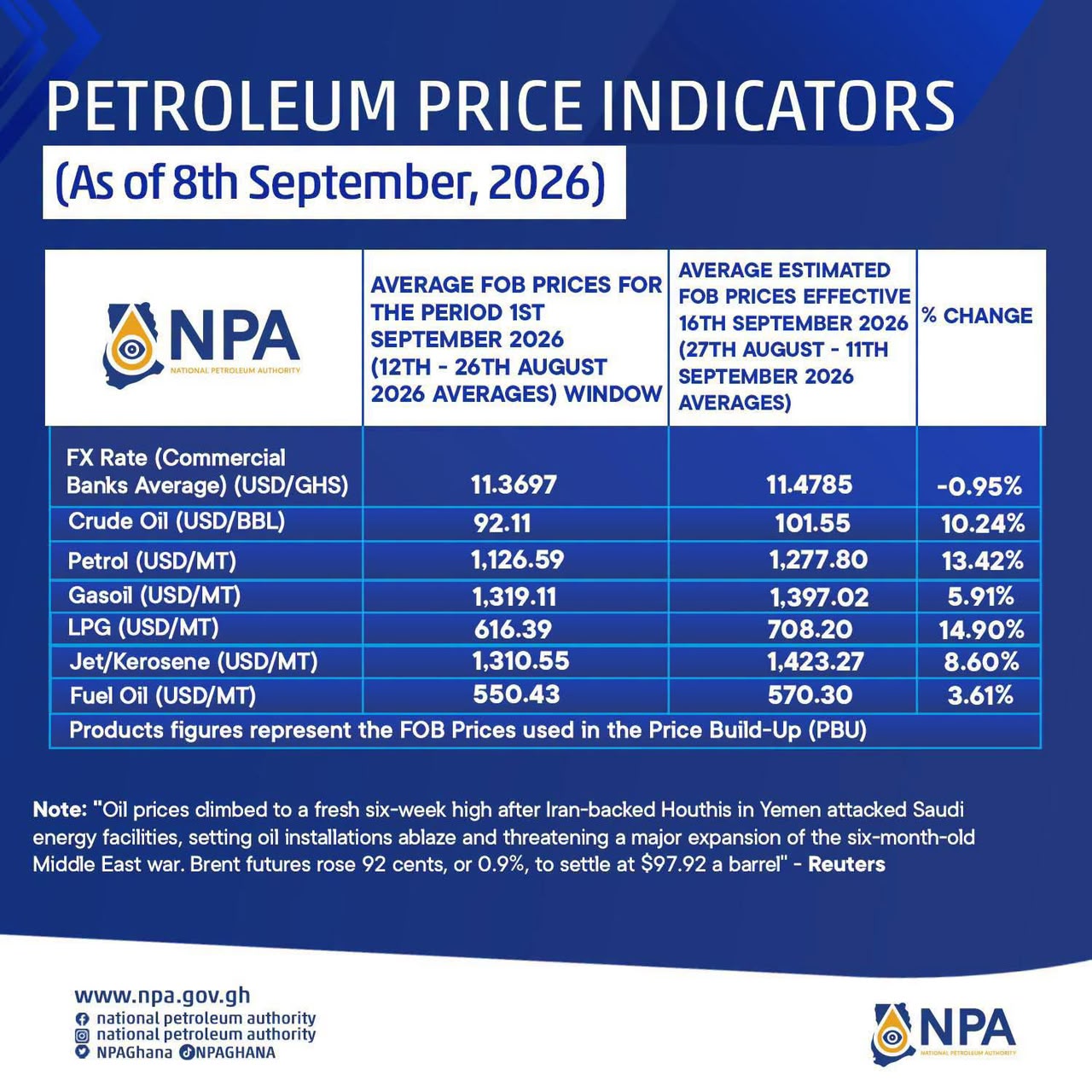
That creates an important risk for subsequent pricing windows.
If elevated crude prices persist, Ghana’s petroleum import costs could rise further, although the eventual movement at the pump will also depend on the exchange rate, refined-product prices, taxes and levies, margins and other components of the domestic price build-up.
This is why the current global oil shock should not be interpreted as an automatic one-for-one increase in Ghanaian fuel prices.
Instead, it creates upward pressure on the underlying cost structure.
And that pressure comes at a time when Ghana is already debating how much of global petroleum-price volatility should be transmitted to consumers and how much can be absorbed elsewhere in the value chain.
The Refining Question Becomes More Urgent
The IEA report also reinforces the strategic importance of Ghana’s efforts to expand domestic refining.
Ghana’s downstream petroleum market remains vulnerable because local demand cannot yet be met entirely through domestic refining.
Consequently, international refined-product markets remain important to the country’s supply security.
This is where developments at the Tema Oil Refinery become strategically relevant.
Ghana has been working to restore and expand TOR’s operational capacity, while discussions around new refining and petroleum infrastructure have increasingly focused on reducing import dependence and strengthening domestic supply resilience.
But the latest global market shock demonstrates that refining capacity should not be considered merely a commercial investment.
It is also an energy-security asset.
A stronger domestic refining system cannot eliminate Ghana’s exposure to crude prices, the refinery still needs crude feedstock, but it can potentially reduce dependence on imported finished products, provide greater flexibility in managing supply disruptions and retain more value within the domestic petroleum chain.
That becomes particularly important when refined-product markets are tighter than crude markets.
The IEA has highlighted significant pressure on diesel, jet fuel and gasoline markets as supply disruptions and depleted inventories push refining margins higher.
For Ghana, where diesel remains critical to transport, industry and power-sector operations, a refined-product shock could be more economically damaging than movements in crude alone.
Diesel Pressure Could Spill Beyond Transport
The diesel market deserves particular attention.
Diesel is not simply a transport fuel in Ghana. It supports commercial vehicles, logistics operations, construction equipment, agricultural machinery and a range of industrial activities.
It also matters to the electricity sector when thermal plants have to rely on liquid fuels.
This creates an important connection between the global oil market and Ghana’s electricity-cost challenge.
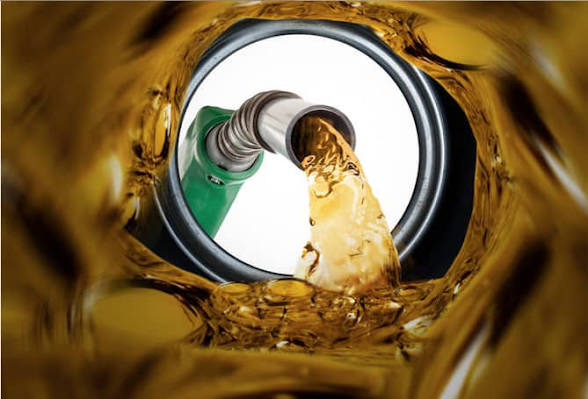
Ghana has been trying to reduce its dependence on expensive liquid fuels for thermal generation by increasing the availability and utilisation of natural gas.
Energy-sector officials have previously estimated that shifting generation from liquid fuels to gas could produce substantial annual savings.
That strategy becomes even more valuable when global oil prices are rising.
Every unit of electricity generation that can be moved away from expensive liquid fuels reduces the power sector’s exposure to international petroleum-price volatility.
In other words, Ghana’s gas-to-power agenda is not only an electricity-sector strategy. It is also a hedge against global oil-market shocks.
Oil Revenue Gains Do Not Cancel Fuel Costs
There is another side to the equation for Ghana.
As an oil-producing country, higher international crude prices can improve the value of Ghana’s upstream petroleum output and potentially increase government revenues from petroleum-related activities.
But the benefit should not be confused with immunity from the shock.
Ghana simultaneously sits on both sides of the international oil market.
The country is an oil producer, but it remains a consumer and importer of petroleum products.
Higher crude prices can therefore create additional upstream revenues while increasing the cost of imported fuels.
The net national benefit depends on the relative size and timing of those effects.
This is particularly important for fiscal policy. Government could receive additional petroleum-related revenues during a period of high prices, but households and businesses may simultaneously face higher fuel and transportation costs.
The policy question then becomes how effectively Ghana can convert potential upstream gains into measures that strengthen energy resilience without weakening fiscal discipline.
The IEA’s Demand Forecast Adds Another Warning
One of the most interesting elements of the September IEA outlook is that the agency is not simply forecasting tighter supply.
It is also forecasting a significant contraction in demand.
Global oil demand is expected to fall by 2.5 million barrels per day in 2026 before rebounding by 2.6 million barrels per day in 2027.
This suggests that high prices and disrupted economic activity are beginning to change consumption behaviour.

For Ghana, the implications are mixed.
Lower global oil demand could eventually moderate prices if supply conditions normalise.
But that relief may not arrive quickly, particularly while geopolitical risks continue to constrain physical supply.
More importantly, the current situation illustrates how energy shocks can become self-reinforcing.
Higher oil prices raise transportation and production costs. Those higher costs weaken economic activity. Weaker activity reduces fuel consumption.
Yet if supply remains constrained faster than demand falls, prices can remain elevated despite weakening consumption.
That is precisely the type of environment Ghana needs to monitor closely.
Energy Security Now A Broader Economic Question
The latest IEA report ultimately strengthens the case for Ghana to treat energy security as an economy-wide issue rather than a petroleum-sector concern.
Energy security encompasses the availability of fuel, the resilience of infrastructure, the diversity of supply sources, the affordability of energy and the ability of the economy to withstand external shocks.
Ghana’s response therefore cannot rely on one intervention.

Domestic refining, gas infrastructure, renewable-energy deployment, battery storage, stronger transmission and distribution systems, improved petroleum logistics and upstream investment all form part of the same resilience agenda.
The current oil shock also gives greater urgency to Ghana’s efforts to expand natural gas utilisation.
Gas can reduce the power sector’s exposure to liquid-fuel prices, while renewables can reduce dependence on thermal generation over time.
Battery storage can help integrate variable renewable generation and support peak demand, reducing the pressure on conventional generation assets.
This diversification matters because no single energy source can fully shield Ghana from external shocks.
Ghana Must Prepare For A More Volatile Oil Market
The September IEA report does not suggest that the world is permanently running out of oil.
Its message is more immediate and more complicated: global supply has become unusually vulnerable to geopolitical disruption, while inventories and spare capacity provide a less comfortable safety net than consumers might expect.
For Ghana, that should encourage preparation rather than panic.
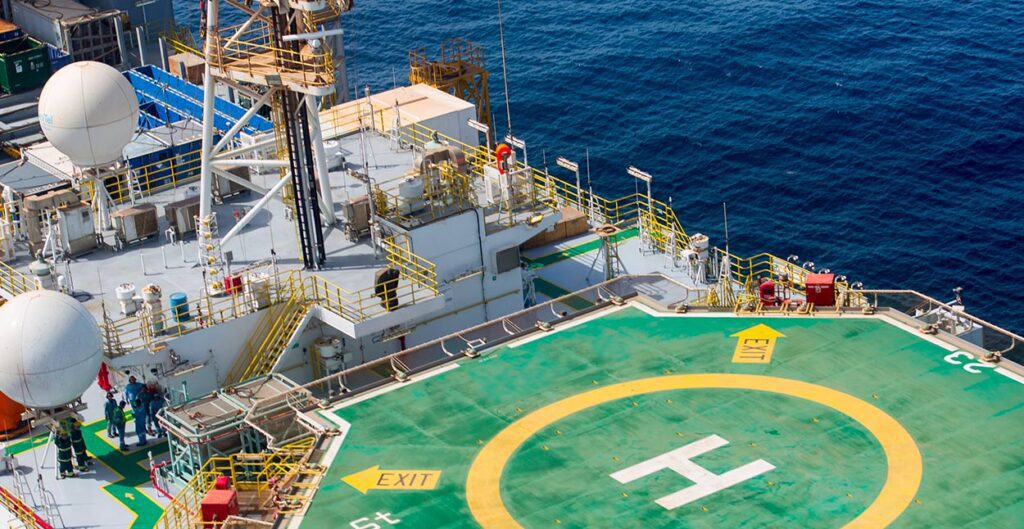
The country cannot influence the security situation around the Strait of Hormuz. It cannot determine Brent prices or global refinery margins.
But it can reduce the extent to which those external developments destabilise its domestic economy.
That means accelerating investments that reduce dependence on imported refined products, strengthening domestic refining, expanding gas availability for power generation, improving energy efficiency and building a more diversified electricity system.
It also means maintaining discipline in petroleum pricing so that global shocks are transmitted transparently and predictably to consumers rather than creating uncertainty across the downstream market.
The latest IEA numbers provide a warning, but they also clarify Ghana’s strategic direction.
A country that remains heavily exposed to imported fuels will continue to import global energy volatility.
A country that builds domestic processing capacity, expands alternative energy sources and strengthens infrastructure can begin to absorb those shocks rather than simply passing them through.
For Ghana, therefore, the significance of the September Oil Market Report is not only what it says about the price of oil.
It is what it says about the cost of remaining vulnerable to the global oil system.
READ ALSO: Ghana’s SOE CEOs Answer to Politicians Rather Than Boards, IMF Finds