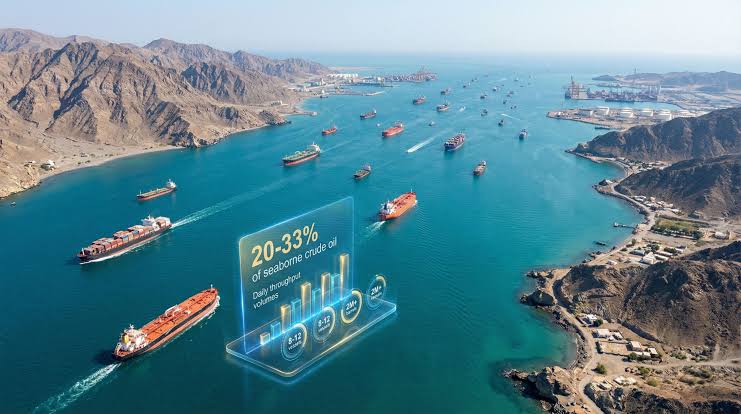
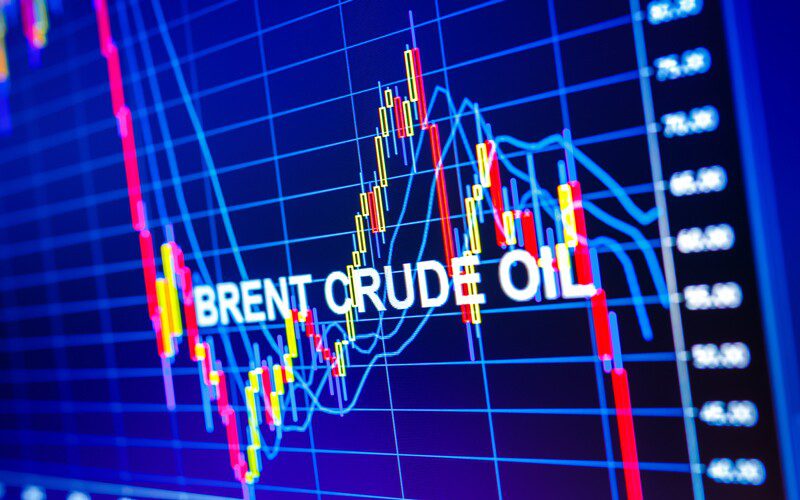
Global oil markets have entered another period of acute uncertainty, with Brent crude approaching US$100 per barrel on September 7 as renewed U.S.-Iran military tensions threaten oil shipments through the Strait of Hormuz.
For Ghana, the development is more than a geopolitical headline.
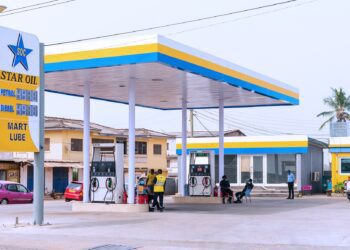
The country entered September with higher petrol and diesel prices after the Chamber of Oil Marketing Companies projected increases of 4.80% and 2.10%, respectively.
COMAC attributed the pressure largely to higher international crude and refined petroleum product prices.
The latest escalation therefore arrives at a sensitive point for Ghana’s downstream petroleum market, where international prices are already feeding into domestic pump prices.
Hormuz Risk Returns To The Global Oil Market
Brent crude rose to about US$97.17 per barrel on Monday, while West Texas Intermediate approached US$92.27.
The increase followed renewed attacks involving the United States and Iran, including U.S. strikes on Iranian oil tankers and retaliatory actions involving vessels linked to the conflict.
Tanker traffic through the Strait of Hormuz has fallen sharply, with Reuters reporting only about 10 vessels a day passing through the waterway, its lowest level since May.
The importance of Hormuz to Ghana lies in what happens when a major international energy chokepoint becomes unreliable.
The Strait normally carries a substantial share of global oil trade. Any sustained disruption raises not only crude prices but also freight, insurance and refined-product costs.
That distinction matters for Ghana because the country imports significant quantities of refined petroleum products.
Even when crude oil itself is not purchased directly from the affected region, Ghana remains exposed through international benchmark pricing.
Ghana Already Feels The Transmission Effect
The transmission from global oil markets to Ghanaian consumers is already visible.
COMAC’s September outlook projected petrol at approximately GH¢16.39 per litre and diesel at GH¢17.60 per litre, while the NPA raised its September price floors to GH¢14.53 for petrol and GH¢15.60 for diesel.
The actual pump price varies between Oil Marketing Companies because the NPA price floor is a regulatory minimum rather than a uniform national retail price.
For example, GOIL announced prices of GH¢15.43 per litre for petrol and GH¢17.26 for diesel from September 2, while maintaining those rates despite the expected upward pressure.
This illustrates an important feature of Ghana’s petroleum market: international shocks do not always appear immediately or uniformly at every filling station.
Competition, company margins, exchange-rate movements, inventory positions and pricing strategies can affect the speed and size of the pass-through.
But sustained increases in international petroleum prices eventually create pressure across the market.
The Cedi Is The Second Transmission Channel
Oil prices are only part of Ghana’s exposure.
The country effectively faces a two-sided risk when international petroleum prices rise: the cost of the commodity increases while demand for foreign exchange to finance imports can also increase.
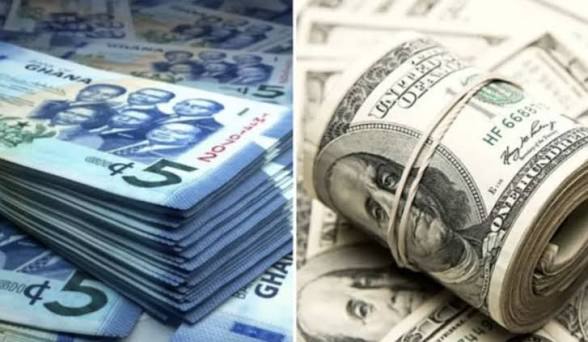
Reuters reported last week that the Ghanaian cedi was under renewed pressure, trading around GH¢11.30 to the U.S. dollar compared with GH¢11.20 the previous week, amid increased corporate demand for dollars and other foreign-exchange pressures.
That matters because petroleum products are priced internationally in U.S. dollars.
A stronger cedi can partially absorb an increase in global oil prices. A weaker cedi does the opposite.
Ghana therefore has less control over the international oil benchmark than it does over domestic policy variables such as taxes, levies, margins and strategic fuel stocks.
The Diesel Problem Is Particularly Important
Diesel deserves special attention because it is deeply connected to Ghana’s productive economy.
It is used by commercial transport operators, freight companies, construction firms, agriculture, mining and generators.
This means a diesel shock can travel through the economy even when households do not purchase diesel directly.
Higher diesel costs raise transportation expenses. Transport costs affect food distribution and logistics.
Businesses then face higher operating costs, while consumers can ultimately encounter higher prices.
Ghana’s government has already extended a GH¢2-per-litre reduction in the regulatory margin on diesel to moderate the impact of rising prices.
But the intervention also highlights the limits of short-term cushioning.
If global prices remain elevated, repeated interventions could place pressure on public revenues or delay the transmission of market costs rather than eliminate them.
The Bigger Question Is Ghana’s Energy Resilience
The current oil shock exposes a structural question for Ghana: how much protection does the economy have against international petroleum disruptions?
There are several layers to that resilience.
Ghana has petroleum stocks that provide a temporary buffer. Earlier this year, the NPA reported almost eight weeks of diesel cover and about seven weeks of petrol cover.
That provides breathing space during short-lived disruptions.
But stock cover cannot permanently shield the economy from a prolonged global price shock.
The more durable response lies in reducing Ghana’s exposure to imported energy costs.
That makes recent developments around domestic refining particularly relevant.
The Tema Oil Refinery has returned to processing Ghanaian crude from the Jubilee Field, a development that economist Prof. Festus Ebo Turkson previously described as a structural reform capable of strengthening Ghana’s resilience against external energy shocks.
Domestic refining does not make Ghana immune to global oil prices; the crude itself has an international opportunity value, while refining requires imported inputs and equipment, but it can potentially reduce some foreign-exchange and logistics vulnerabilities and retain more value within the domestic economy.
The same logic applies to Ghana’s gas strategy.
Projects such as the proposed second gas-processing plant and associated pipeline infrastructure are intended to reduce dependence on expensive liquid fuels in power generation.
That is particularly important when oil prices are rising sharply.
Africa Has A Wider Vulnerability
Ghana is not alone.
Across Africa, higher oil prices can worsen fuel-import bills, inflation and fiscal pressures, particularly in economies that depend heavily on imported refined products.
The current shock is also occurring alongside concerns about shipping costs and fuel-oil availability.
Reuters reported Monday that disruptions to global refining and tanker traffic could produce a third-quarter fuel-oil deficit of about 218,000 barrels per day, compared with only 6,000 bpd a year earlier.
That could have consequences for shipping and power generation beyond the direct cost of crude.
For Ghana, whose economy depends heavily on maritime trade, higher shipping costs could become another indirect channel through which the conflict affects domestic prices.
Ghana’s Best Defence Is Structural
The immediate question for Ghanaian consumers is how high fuel prices could go.
The more important policy question is how much of the next international energy shock Ghana can absorb without repeatedly relying on temporary interventions.
The answer lies in a combination of adequate strategic stocks, efficient domestic refining, stronger gas infrastructure, diversified energy supply, improved transport efficiency and disciplined management of petroleum-sector taxes and levies.
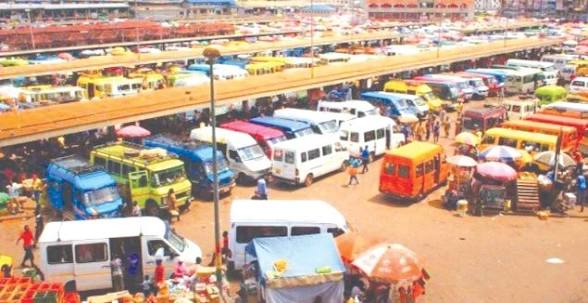
The current Hormuz crisis is therefore a reminder that energy security cannot be measured simply by whether fuel is available at a filling station.
It must also be measured by how vulnerable the economy is to the price, foreign-exchange and supply-chain consequences of events thousands of kilometres away.
With Brent now approaching US$100 per barrel and Goldman Sachs warning that oil could reach as high as US$120 if attacks on Middle Eastern shipping intensify, Ghana has little influence over the geopolitical trigger, but it can influence how exposed its economy remains to the consequences.
The lesson for Ghana is clear: the strongest response to an external energy shock is not simply another temporary price intervention, but an energy system designed to absorb shocks in the first place.
READ ALSO: Republic Bank, UPSA Forge Alliance for Banking Excellence