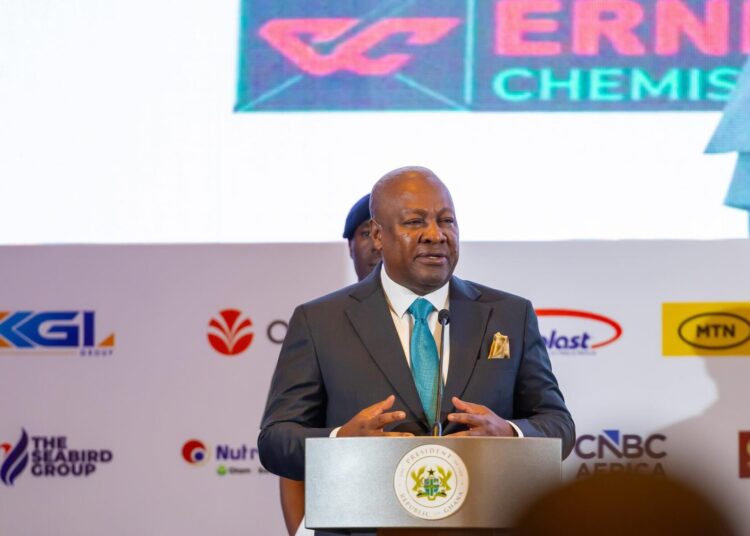
President John Dramani Mahama has called for a stronger partnership between government and the private sector to accelerate Ghana’s economic transformation, insisting that sustainable growth can only be achieved through collaboration, bold reforms, industrialisation, and investment in productive sectors of the economy.
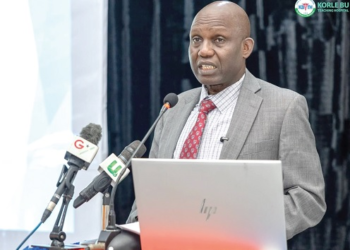
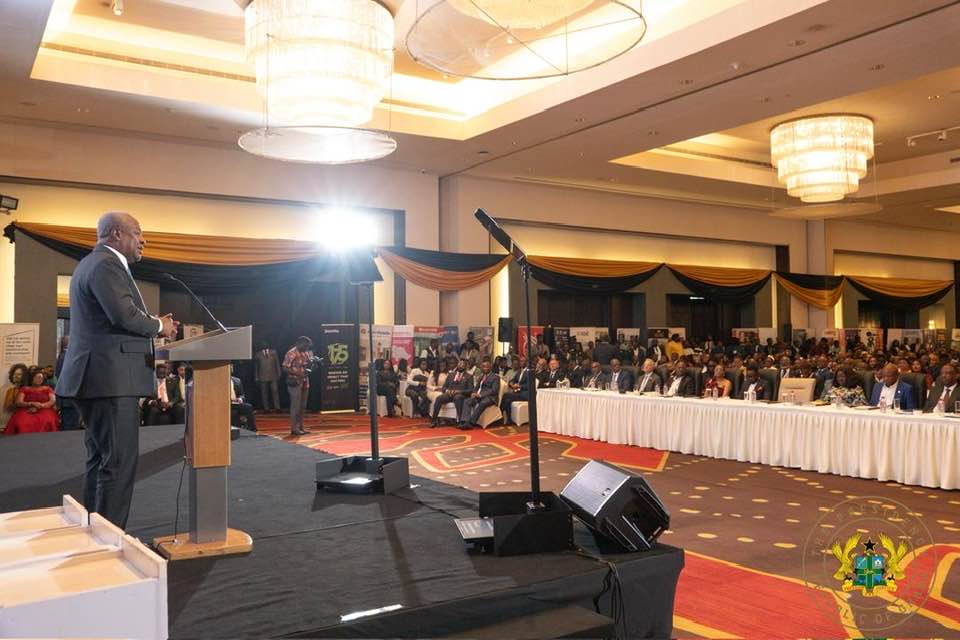
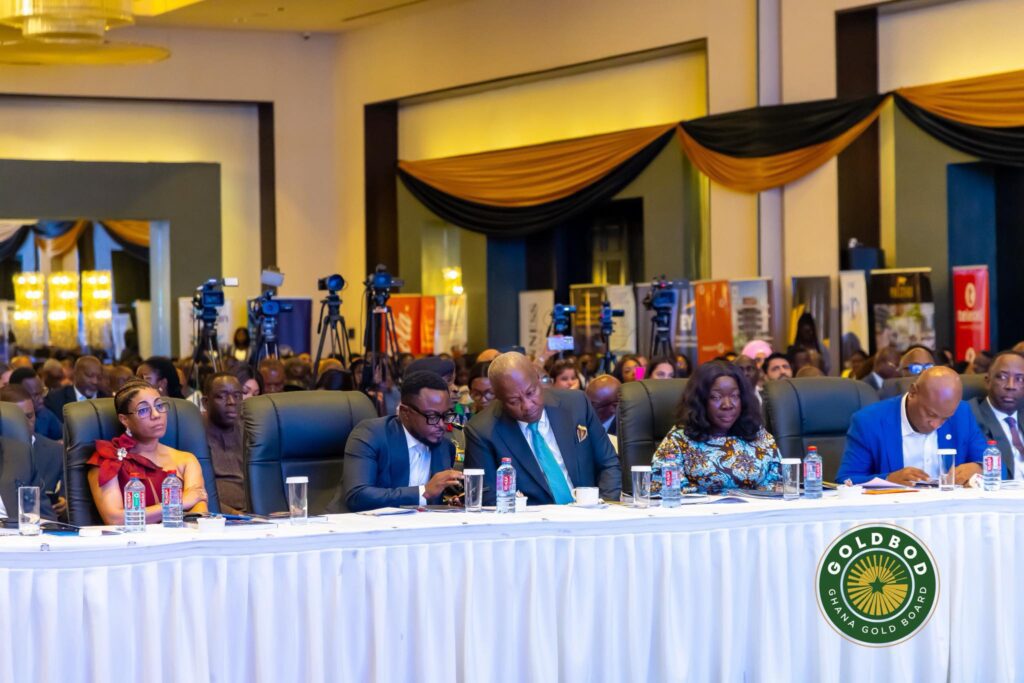
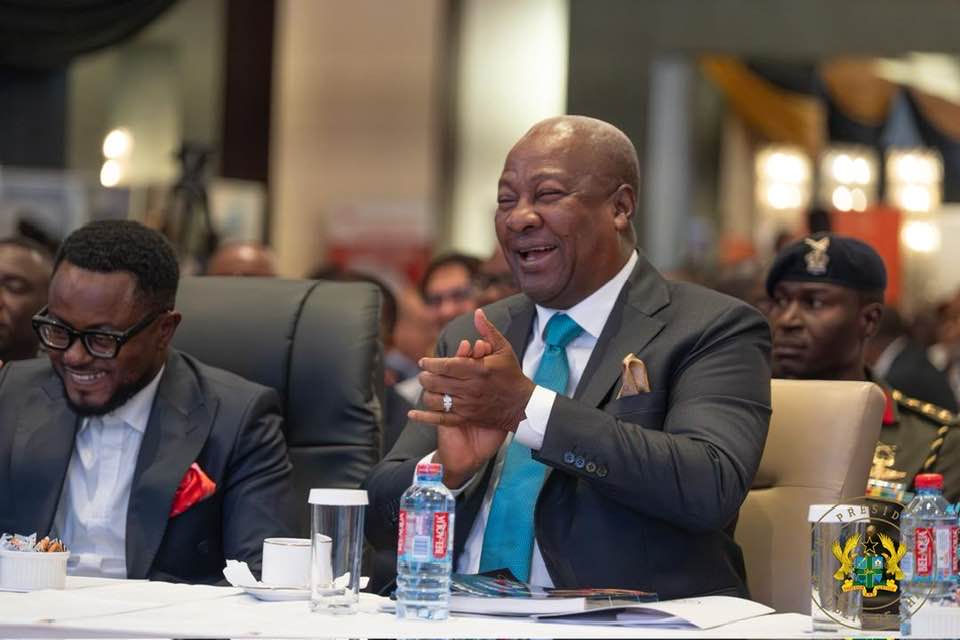
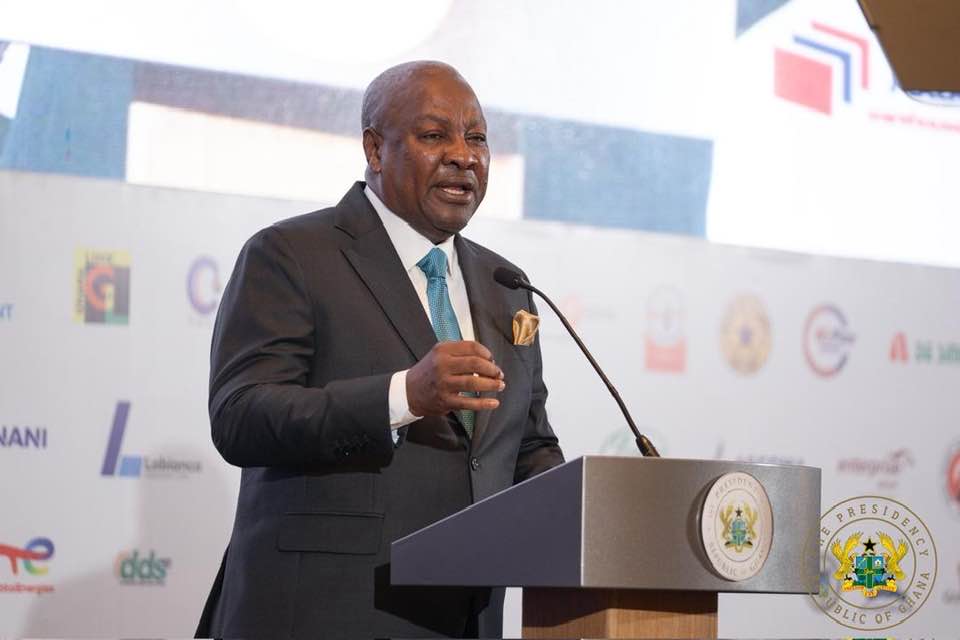
Speaking at the 10th Ghana CEO Summit, President Mahama described the gathering as a strategic national platform where policymakers, investors, innovators, development partners, and business leaders converge to shape ideas and strengthen confidence between the state and enterprise.
“Over the years, I have participated in the summit in different capacities, as President and as leader of the opposition. I continue to attend because Ghana’s economic transformation requires engagement between policymakers, business leaders, investors, innovators, development partners, and not the government alone”.
HE President John Dramani Mahama
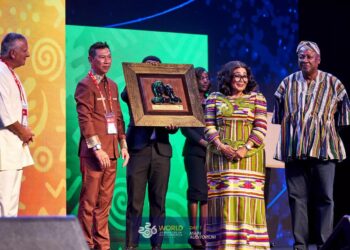
He commended the Ghana CEO Network for sustaining the initiative over the past decade, and particularly praised the organisation’s founder, NS De Graft, for creating a consistent platform for dialogue on national transformation.
According to President Mahama, the theme for this year’s summit, “Accelerating Ghana’s Economic Transformation, Driving Bold Reforms Through Leadership, Technology, and Industrialisation for Sustainable Growth,” speaks directly to the country’s present economic priorities.
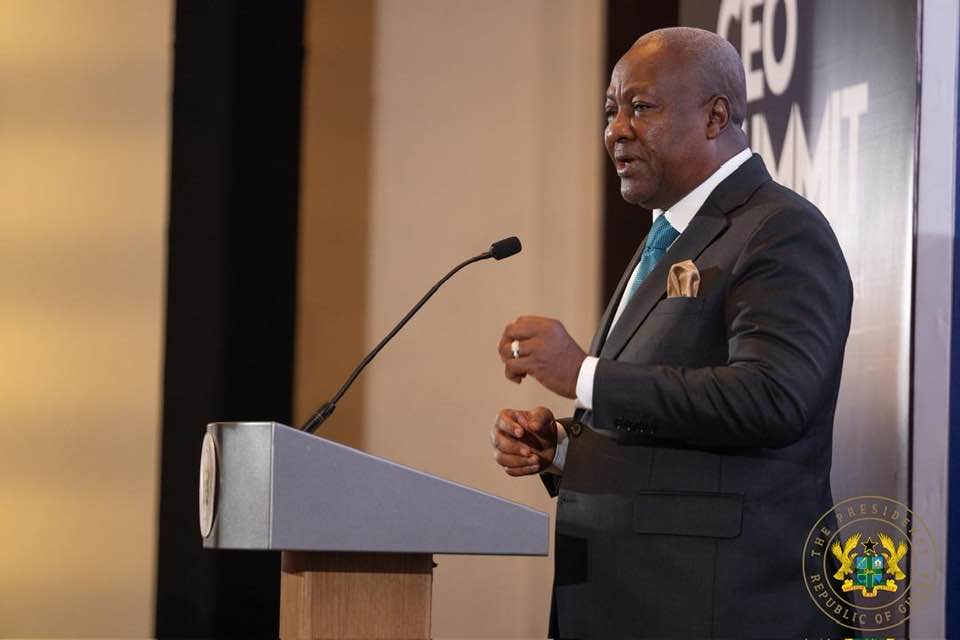
He noted that Ghana has spent considerable time discussing economic recovery, stability, and national reset, but stressed that stability alone cannot transform lives unless it translates into production, jobs, and rising incomes.
“We’ve taxed it long enough. It is time to take off,” the President stated, adding that economic transformation should be measured by its impact on the daily lives of ordinary Ghanaians rather than statistics alone.
Economic Stability and IMF Programme
President Mahama assured business leaders that the current economic stability being experienced by the country would be sustained into the future.
He disclosed that Ghana had recently completed the Extended Credit Facility Programme with the International Monetary Fund and had agreed to enter into the Policy Coordination Instrument arrangement for technical assistance.
He explained that the decision was intended to maintain policy credibility and fiscal discipline over the next thirty six months in support of economic stability and sustainable development.
The President said business leaders and investors should therefore have confidence in the country’s policy direction and long term economic prospects.
He stressed that stability must support production, while production must create jobs that improve incomes and restore confidence and dignity among citizens.
“A farmer must be able to produce with confidence that he has a reliable market and will get a fair return for his production. A factory owner must have access to raw materials, energy, finance, and equipment without avoidable uncertainty.”
HE President John Dramani Mahama
Call for Business Regulatory Reforms
President Mahama also highlighted the need for urgent reforms within the business regulatory environment, arguing that unnecessary bureaucracy and overlapping procedures continue to slow down productivity and investment.
He stated that no serious country can accelerate economic transformation when businesses spend excessive time navigating unclear procedures and avoidable delays.
“A business person should not waste productive time shuttling between public offices to obtain routine approvals. A serious investor should not receive conflicting signals from agencies of the same state.”
HE President John Dramani Mahama
According to him, reducing duplication, improving transparency, and ensuring faster service delivery are essential for businesses seeking to expand operations, create jobs, and compete effectively within export markets.
The President noted that government’s work on special economic zones is intended to support industrial growth and integrate local suppliers into larger production systems. He said industrial zones should not become isolated enclaves disconnected from the wider economy.
Rather, he explained, they must facilitate technology transfer, attract investment, strengthen exports, and create decent employment opportunities.
Strengthening Agribusiness and Industrial Value Chains
President Mahama further stressed the importance of strengthening agribusiness value chains as part of the country’s industrial transformation agenda.
He observed that farmers often struggle to find reliable buyers, while factories frequently face challenges securing the right quantity and quality of raw materials.
According to him, this disconnect weakens productivity, reduces incomes, and limits industrial growth. Closing this gap, he explained, remains central to the work of the Ministry of Trade, Agribusiness, and Industries.
He described agribusiness value chains as an ecosystem linking farmers, transporters, processors, exporters, packagers, and retailers into a coordinated structure capable of generating jobs, exports, and stronger local economies.
The President identified sectors such as cocoa, cashew, shea, oil palm, rice, poultry, textiles, pharmaceuticals, and light manufacturing as areas with strong potential for industrial expansion and value addition.
“We must move beyond just exporting raw materials and paying higher prices for finished imports. We have the people, we have the enterprise, and we certainly have the opportunity to retain more value within our economy.”
HE President John Dramani Mahama
24- Hour Economy and Productivity Agenda
President Mahama also used the occasion to explain the rationale behind the proposed 24-hour economy initiative, describing it as a productivity strategy rather than simply an extension of working hours into the night.
According to him, the policy seeks to improve the utilisation of Ghana’s productive capacities where businesses have access to labour, raw materials, energy, and market opportunities.
He explained that different businesses may require different forms of support, including additional shifts, improved logistics, stronger security systems, extended public services, digital infrastructure, and better transportation systems.
The President added that the success of the initiative would depend heavily on the role of chief executives and industry leaders through investments in machinery, technology management systems, workforce skills, and improved working conditions.
“Our clear objective is to help businesses grow, create quality jobs, and maximise our resources. When businesses thrive, government thrives, and the country prospers,” he noted.
Government and Private Sector Partnership
President Mahama described the Ghana CEO Summit as one of the country’s most influential platforms for dialogue between government and the private sector. He said Ghana’s future depends on a strong private sector working alongside a responsive and reform minded state.
He stressed that the true value of the summit would not lie merely in speeches and discussions, but in whether the ideas generated translate into better business conditions, increased investment, stronger production, and more decent jobs for Ghanaians.
According to him, citizens expect leadership that responds seriously to the pressures of daily life and creates systems that work efficiently. “The government is ready to work with the private sector to build a more productive, competitive, and inclusive economy,” he said.
President Mahama urged CEOs and investors to continue showing confidence in Ghana through investment, innovation, and long term commitment to local production and exports.
He concluded by calling for stronger cooperation between government and business to move the country “from dialogue to delivery, from policy to production, and from production to better lives for our people.”
The President also formally launched the CEO Government Compact 2026, describing it as a new framework for strengthening collaboration between the state and the business community.
READ ALSO: US Judge Declines to Block Trump Mail-In Voting Order