The Ghana Education Service (GES), under the direction of the Ministry of Education, has launched a nationwide Early Childhood Education (ECE) Harmonized Play-Based Kindergarten Training Programme aimed at transforming learning outcomes for more than 1.2 million kindergarten pupils across the country each year.
The initiative, which is being implemented with support from development partners, seeks to equip over 30,000 kindergarten teachers with the skills and knowledge required to deliver child-centred, play-based learning in classrooms nationwide.
Education authorities say the programme marks a significant step in strengthening foundational learning and ensuring that young children acquire essential cognitive, social, emotional and creative skills during their formative years.
“This landmark initiative reaffirms the Government’s commitment to strengthening foundational learning and ensuring that every Ghanaian child receives quality early childhood education that nurtures creativity, curiosity, critical thinking, and holistic development.”
Ghana Education Service (GES)
The nationwide programme is expected to standardise kindergarten teaching practices across the country and support the implementation of Ghana’s curriculum reforms, which place greater emphasis on learner-centred approaches rather than rote memorisation.

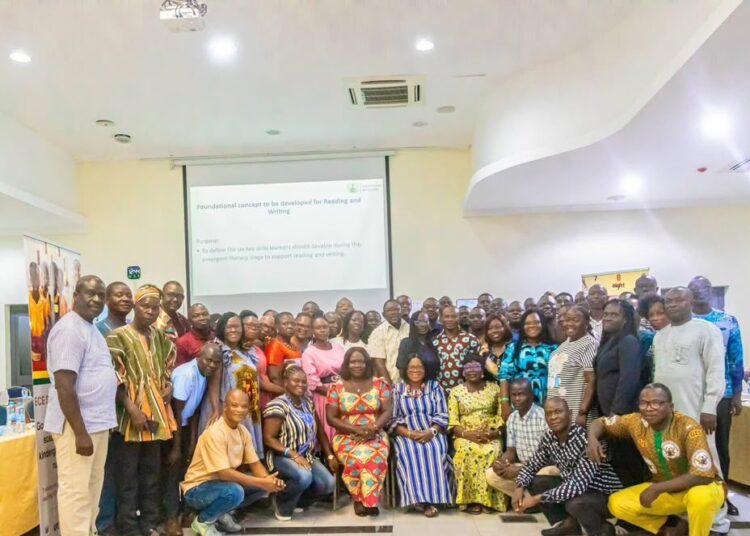
A key feature of the intervention is extensive training for education officers and teachers at all levels.
The programme includes the training of national officers, all 16 Regional Early Childhood Education Coordinators, all 261 District Early Childhood Education Coordinators, 261 Deputy Directors in charge of Supervision, 261 District Training Officers and more than 30,000 kindergarten teachers.
The large-scale capacity-building effort is designed to ensure that the play-based learning model is implemented effectively and consistently in schools throughout the country.
Why the Program Matters
The rollout comes amid growing global recognition of the importance of quality early childhood education in shaping lifelong learning outcomes.
According to research by organisations including the United Nations Children’s Fund (UNICEF) and the United Nations Educational, Scientific and Cultural Organization (UNESCO), children who receive quality early learning opportunities are more likely to perform better academically, remain in school longer and develop stronger social and problem-solving skills.
Educational experts have increasingly advocated for play-based learning, arguing that young children learn best when they are actively engaged in exploration, interaction and discovery rather than passive instruction.

The harmonized approach being introduced by GES is therefore designed to place children at the centre of the learning process. Through structured play activities, learners are encouraged to develop language, numeracy, communication, collaboration and critical-thinking skills in ways that are appropriate to their age and stage of development.
“Research and global best practice consistently demonstrate that children learn most effectively when they are actively engaged in meaningful, enjoyable and age-appropriate learning experiences”.
Ghana Education Service (GES)
The programme creates opportunities for children to explore their environment, work with peers, solve problems and express themselves creatively while building a strong foundation for future academic success.
Building on Previous Reforms
The latest intervention builds on Ghana’s ongoing efforts to improve foundational education. In recent years, the Ministry of Education and the Ghana Education Service have implemented curriculum reforms intended to shift classroom instruction from teacher-centred methods to approaches that encourage active participation by learners.
Education stakeholders have frequently identified early childhood education as one of the most critical stages in the learning journey, noting that investments made during a child’s earliest years often produce the greatest long-term educational and economic benefits.
Studies by international education bodies have shown that children who receive quality preschool education are more likely to develop stronger literacy and numeracy skills before entering primary school, reducing learning gaps and improving future performance.
By focusing on teacher preparation and classroom practice, the new programme seeks to ensure that these benefits reach children in every region and district of Ghana.

GES believes that empowering teachers with modern instructional approaches will help create more engaging learning environments and improve educational outcomes nationwide.
“By equipping educators with the knowledge and skills required to deliver effective play-based learning, GES is taking a significant step towards transforming early childhood education and shaping the future of Ghana’s young learners,”
Ghana Education Service (GES)
The Service also expressed appreciation to development partners, education officers, teachers and other stakeholders whose collaboration has supported efforts to improve learning opportunities for children across the country.
The initiative was one of the most extensive early childhood training programmes undertaken in recent years and its success could have far-reaching implications for foundational learning across Ghana.
With more than a million young learners expected to benefit annually, the programme represents a major investment in the country’s future one classroom, one teacher and one child at a time.
READ ALSO: 56% of Voters Back Younger Presidential Candidates