A United Nations investigative mission has warned that Sudan’s warring parties are increasingly relying on arbitrary detention, torture and enforced disappearances as tools of control, deepening what it describes as a catastrophic protection crisis for civilians as the conflict stretches into its fourth year.
In an update presented to the UN Human Rights Council, the Fact-Finding Mission on Sudan stated that both the Sudanese Armed Forces (SAF) and the Rapid Support Forces (RSF), along with their allied groups, continue to commit widespread violations of international human rights law and international humanitarian law, with patterns of abuse that may amount to war crimes and crimes against humanity.
According to Mohamed Chande Othman, Chair of the Mission,“civilians continue to bear the overwhelming burden of this conflict.”
“They are subjected not only to direct attacks and violence but also to a growing system of repression, arbitrary detention and fear that has penetrated every aspect of life.
“Unless reversed, these patterns will further erode protection and deepen Sudan’s human rights catastrophe.”
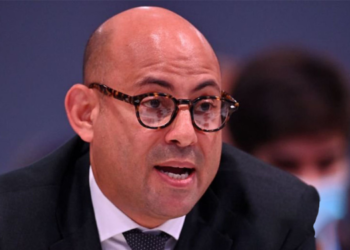
Mohammed Chande Othman
The Mission’s findings paint a picture of a country where movement, identity and even survival are increasingly conditioned by loyalty to armed actors, with civilians caught between two entrenched military powers that treat perceived affiliation as grounds for arrest, punishment or worse.
Experts also indicates that the escalation of detention practices reflects a broader collapse of legal and institutional safeguards, as both sides expand their control over territory while dismantling any remaining protections for civilians. In many areas, the report suggests, everyday life has become governed by checkpoints, suspicion and coercion rather than law.
Joy Ngozi Ezeilo, an expert member of the Mission noted that, “in effect, movement itself has been criminalised.”
“Civilians are increasingly pressured to demonstrate loyalty and, in some cases, actively align themselves with one of the warring parties as a condition for their safety, freedom and economic survival.”
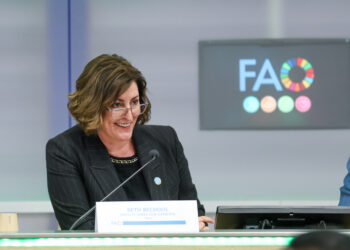
Joy Ngozi Ezeilo
The UN report also documents a systematic pattern of mass and arbitrary detention carried out by both the SAF and RSF against individuals accused of supporting the opposing side.
People attempting to move between areas controlled by rival forces are especially vulnerable. Many are detained at checkpoints, accused of collaboration, or subjected to ill-treatment. The detainees include journalists, humanitarian workers, lawyers, political activists, traders, religious leaders and ordinary civilians.
In some cases, detention is reportedly followed by extortion. The RSF is accused of demanding large ransom payments for release, in some instances reaching the equivalent of tens of thousands of US dollars.
The Mission warns that these practices are feeding an illicit war economy while imposing devastating financial and psychological burdens on already impoverished families.
The consequences for local economies are severe. Traders and civilians moving goods across frontlines face heightened risks of abduction or detention, contributing to rising food insecurity in multiple regions, including El Fasher, El Obeid, Dilling and Kadugli.
Humanitarian Workers Disappearing Amid Targeted Arrest Campaigns
One of the Mission’s most alarming findings concerns the disappearance of humanitarian workers. It reports that at least 70 individuals were arrested in El Geneina in May 2026 by RSF military intelligence, including aid workers, with no subsequent information provided on their whereabouts.
The Mission added that similar patterns have been documented in other RSF-controlled areas, where detainees are often transferred to facilities in Nyala and held in harsh conditions, including allegations of torture.
Humanitarian organisations have also faced restrictions on access to detention sites, limiting independent verification and raising concerns that abuses are being concealed from external scrutiny.
The report also details continued arrests by the SAF targeting political opponents, journalists, civil society actors and individuals suspected of links to the RSF. Many detainees are reportedly held based on tribal affiliation, prior activism, or family ties.
Journalists and media workers face harassment, detention and restrictions on internet access, further limiting the flow of independent information during the conflict.
The Mission highlights widespread due process violations, including prolonged detention without trial, limited access to legal representation, and cases of individuals being prosecuted again after acquittal.
Torture, Inhumane Conditions and Rising Death Risks in Detention
The UN Mission warns that detention conditions under both the SAF and RSF are “harsh, inhumane and pose a serious and immediate threat to life.”
Detainees are often held in overcrowded facilities without adequate food, water, medical care or sanitation, with outbreaks of disease reported in some locations. Many are held incommunicado, increasing the risk of enforced disappearance.
The report details allegations of severe abuse, including beatings, electrocution, sexual violence and psychological torture. In some cases, such treatment is said to have resulted in death.
Particularly grave concerns are raised over widespread sexual violence attributed to the RSF, including against women and girls, as well as reports of sexualised torture of male detainees in SAF-controlled facilities.
Facilities such as Nyala Prison in South Darfur and Soba Prison in Khartoum are singled out for especially severe overcrowding and abuse allegations.
The Fact-Finding Mission has called for the immediate release of all individuals detained without legal basis, an end to arbitrary arrests, and full disclosure of the fate and whereabouts of detainees.
It also urges unrestricted access to detention facilities for independent monitors, improved conditions for detainees, and guarantees of due process and family contact.
Beyond immediate measures, the Mission is calling for broader international action, including expanded cooperation with the International Criminal Court, targeted sanctions, and the establishment of an independent judicial mechanism to support accountability efforts.
READ ALSO: ”Family” Spirit Driving Spain’s World Cup Dream, Says De la Fuente