
Calls to mobilise Ghanaian capital to finance exploration in the Voltaian Basin have reignited debate over the country’s upstream petroleum strategy, with energy policy experts arguing that governance and project sequencing should take precedence over domestic fundraising.
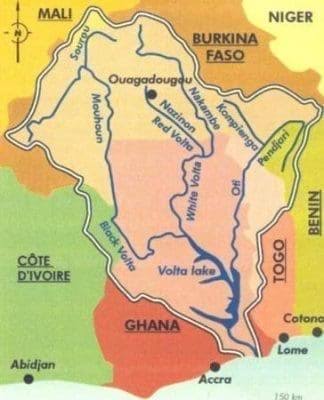
The discussion comes just days after the Ghana National Petroleum Corporation (GNPC) renewed its appeal for strategic partners to help unlock the Voltaian Basin, which is estimated to hold more than 11 billion barrels of oil equivalent resources.
During the West Africa Gas Summit in Accra, GNPC Deputy Chief Executive Officer Hamis Ussif described the basin as one of Ghana’s most promising untapped petroleum frontiers and said the corporation was positioning itself to attract investment into the vast onshore resource.
While few dispute the basin’s long-term potential, analysts argue that expectations surrounding its contribution to Ghana’s immediate energy future need to be tempered by technical realities.
Ghana’s crude oil production has declined steadily over the past five years, falling from a peak of about 71.4 million barrels in 2019 to a projected 36 million barrels in 2026, according to figures cited by the Public Interest and Accountability Committee (PIAC) and industry reports.
Against that backdrop, some observers have suggested that greater Ghanaian ownership of future petroleum projects could help reverse the country’s production decline. However, experts say linking domestic capital mobilisation directly to the Voltaian Basin overlooks the lengthy timelines associated with frontier exploration.
We have the assets. What we lack is accountability and sequencing.
Justice Ohene-Akoto, Executive Director, Africa Sustainable Energy Centre (ASEC).
Frontier Basin Still Years From Production
Unlike Ghana’s producing offshore fields, the Voltaian Basin remains at an early stage of exploration.
GNPC Explorco has indicated that the basin’s first stratigraphic well since 1974 is expected to be drilled later this year. The well is intended primarily to gather geological data and assess the basin’s subsurface characteristics rather than produce commercial quantities of oil.
That distinction is important because successful exploration would still need to be followed by appraisal drilling, reserve certification, field development planning, regulatory approvals and major infrastructure investment before commercial production could begin.

The Africa Sustainable Energy Centre (ASEC) estimates that, even under favourable conditions, commercial production from the basin is unlikely before 2033 to 2036.
That means the Voltaian Basin is unlikely to provide a near-term solution to Ghana’s declining crude output.
Governance Questions Remain
Beyond questions about timing, analysts have also pointed to governance concerns surrounding upstream petroleum financing.
The Africa Centre for Energy Policy (ACEP) has previously noted that GNPC spent more than US$120 million on seismic data acquisition in the Voltaian Basin without drilling a well, despite an earlier budget that had envisaged both seismic work and drilling.
Separately, ASEC has raised concerns over GNPC Explorco’s financial management, including allegations relating to lifting proceeds and expenditure approvals. Those issues have featured in broader discussions about governance within Ghana’s petroleum sector.
For analysts, the debate is not about whether Ghanaians should own a larger share of their natural resources, but whether stronger governance structures should precede efforts to mobilise domestic savings for high-risk exploration projects.
Any initiative seeking to attract local institutional or retail investors, they argue, would likely require greater transparency, stronger accountability mechanisms and clearly defined investment frameworks to build confidence.
Existing Assets May Offer Quicker Returns
Some experts believe Ghana’s immediate priority should instead focus on assets that are closer to commercial development.
ASEC has argued that the West Cape Three Points Block 2, estimated to contain around 1.5 billion barrels of resources, together with ongoing investments in the Jubilee and TEN fields, offers a more realistic pathway for stabilising production over the medium term.
The organisation has also pointed to the approximately US$3.5 billion in planned investment already committed to Ghana’s existing offshore fields as projects that could deliver measurable production gains much sooner than frontier exploration.
That perspective suggests Ghana’s upstream strategy should balance long-term exploration with maximising value from producing and near-producing assets.
Balancing Ambition With Reality

There is broad agreement across the industry that the Voltaian Basin represents an important long-term opportunity for Ghana.
Developing a new petroleum basin could diversify the country’s hydrocarbon portfolio, expand economic activity into inland regions and create new opportunities for local businesses, engineers and service providers.
However, experts caution that expectations should remain grounded in the realities of petroleum exploration, where discoveries are uncertain and commercial development often takes more than a decade.
The broader debate therefore extends beyond financing.
It raises questions about governance, institutional capacity, project sequencing and how Ghana balances investment between frontier exploration and assets capable of delivering nearer-term production.
As policymakers continue pursuing greater local participation in the petroleum sector, analysts say success will depend not only on who provides the capital, but also on how effectively projects are managed and how transparently public resources are governed.
For Ghana’s energy sector, the challenge is to ensure that long-term ambition is matched by strong institutions, sound financial management and realistic expectations about when new petroleum resources can begin contributing to national development.
READ ALSO: Ghana Primed to Shatter $15 Billion NTEs Barrier By 2030