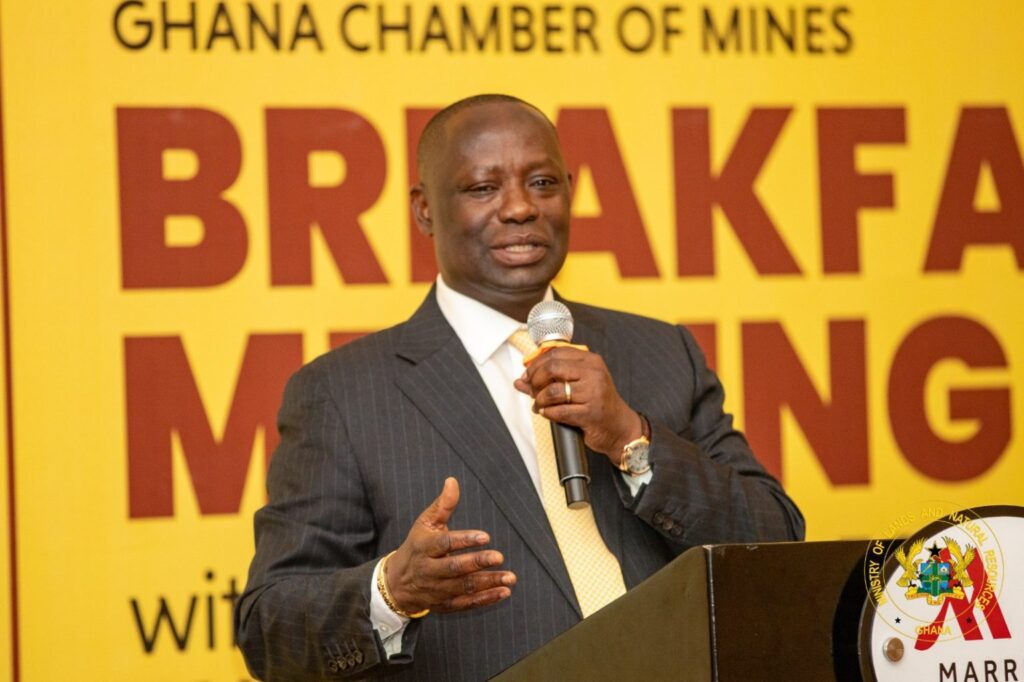
Kenneth Bansah, PhD, PE, a prominent mining and energy expert, has clarified the legal and structural boundaries defining the ongoing national conversation around the localization of mines in Ghana, aiming to dispel persistent misconceptions clouding the public discourse.
He emphasized that the current debates do not center on the expropriation of active mineral concessions or the premature termination of existing agreements, but rather on the strategic choices available to the state when a mining lease naturally reaches its full lifecycle expiration.
By distinguishing between active operations and post-expiration regulatory interventions, the analysis establishes a grounded framework that shields the localization policy from mischaracterizations while highlighting the state’s sovereign right to manage its mineral wealth.
“I have said time without number that a mining lease is similar to a tenancy agreement between a landlord and a tenant. Every lease has an expiration date. The main point is that consideration for renewal and automatic renewal are not the same thing.”
Kenneth Bansah, PhD, PE,
Expanding on this structural distinction, Dr. Bansah noted that the state and its regulatory bodies have never advocated for the unlawful seizure of assets while valid leases remain operational.
Instead, the crux of the policy debate rests entirely on whether expired leases should be seamlessly granted back to incumbent foreign operators or strategically transferred to capable domestic firms.
This distinction is vital because minerals in the ground constitute a sovereign resource held in trust by the sovereign state on behalf of the people of Ghana, thereby embedding a permanent public interest requirement into every lease renewal evaluation.
The Fallacy of Automatic Renewal and the Tenancy Analogy
Ghana’s mining legal framework explicitly rejects the notion of automatic lease extensions, a statutory reality well understood by large-scale multinational operators.
Under the Minerals and Mining Act, satisfying the baseline regulatory requirements merely qualifies an incumbent operator for renewal consideration rather than guaranteeing a mandatory approval.
This distinction ensures that the government maintains absolute regulatory oversight, preventing the permanent locking up of national wealth without periodic reassessments of broader socio-economic value.
The analogy to standard commercial tenancies clarifies how mineral rights function over time. When a specialized lease concludes, the state assumes its role as the ultimate custodian of the resource, evaluating whether a renewal or a strategic transition serves the national development agenda.
Historically, acquiring existing operations with established, functional infrastructure is a standard industrial practice, meaning local firms taking over post-expiration sites would not face unprecedented operational barriers.
Institutional Friction and Stakeholder Realities
The push toward local ownership has triggered significant friction between influential industry stakeholders, revealing deep divisions over the immediate execution of local content targets.
The Institute of Economic Affairs (IEA) has aggressively championed the non-renewal of specific foreign-held leases, arguing that local ownership models are essential to retaining wealth within the domestic economy.
Conversely, the Ghana Chamber of Mines has mounted a firm and structured opposition to these proposals, warning against potential disruptions to capital flight, investment security, and operational continuity.
According to Dr. Bansah, neither institutional faction has presented entirely compelling data or sufficiently rigorous analysis to definitively settle the dispute.
Compounding this institutional divide are the pragmatic anxieties expressed by the Ghana Mineworkers’ Union regarding employee welfare under domestic management.
The union’s concerns focus tightly on the protection of competitive salaries, robust benefit packages, and standard conditions of service, which must be systematically addressed and guaranteed if the state pursues domestic ownership pathways.
Local Content Regulations Shaping Ghana’s Mining Industry
The entire localization debate is structurally anchored to the Minerals and Mining (Local Content and Local Participation) Regulations introduced in 2020.
These legislative instruments were explicitly designed to maximize the retention of mining expenditures inside the Ghanaian economy, shifting the industry away from a purely extractive model toward an integrated economic catalyst.
By strengthening the enforcement of these laws, the state seeks to elevate local equity, expand domestic supply chains, and ensure that a larger share of mineral revenues directly finances national infrastructure projects.
Ultimately, how Ghana navigates this critical post-expiration legal framework will dictate the long-term global competitiveness of its extraction sector.
The legal structures shielding the debate demonstrate that localization is not an arbitrary political asset grab, but a rule-based legislative option designed to balance investor security with sovereign economic survival.
READ ALSO: Police Arrest Six Over Kwabenya-Kristo Asafo Shooting Incident