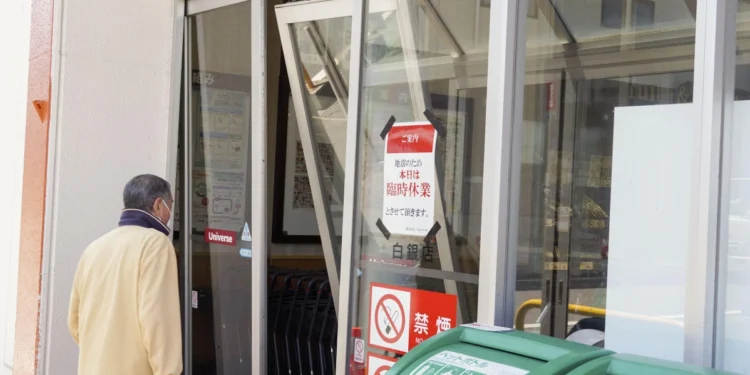
A powerful earthquake struck off the northern coast of Japan during rush hour this morning.
The earthquake occurred off the eastern coast of Iwate Prefecture and was initially measured at a magnitude of 6.9 before being upgraded to 7.2 by the Japan Meteorological Agency (JMA). The agency said that the quake originated at a depth of approximately 50 kilometers (30 miles) beneath the seabed.
The U.S. Geological Survey (USGS), which also monitors seismic activity worldwide, reported the earthquake with a magnitude of 6.9. Differences in magnitude readings between monitoring agencies are not uncommon and can result from varying methods of measurement and analysis.

The temblor occurred in an area where strong earthquakes have repeatedly been reported in recent months, including one that triggered a weeklong mega-quake caution advisory in December.
Eight people were injured in northern prefectures of Aomori and Iwate, mainly from falling or being hit by falling objects, the Fire and Disaster Management Agency said. Japanese media had no report of life-threatening injuries
The quake also mildly shook Tokyo, where Japanese Prime Minister Sanae Takaichi told reporters that her government’s emergency team is “putting people’s lives first,” while assessing information and preparing for relief operations, if needed. She urged residents in the affected regions to use caution against possible aftershocks.

Transportation operators and local authorities conducted inspections following the quake to ensure the safety of infrastructure and public services. Rail networks, roads and other critical facilities are routinely examined after significant seismic events to identify any damage that could pose risks to public safety. The East Japan Railway Co., which operates trains in northeastern regions, said that some bullet trains and local lines were temporarily suspended for safety checks.

Japan, which sits on what is known as the Pacific Ring of Fire, is one of the world’s most earthquake-prone areas. The earthquake is likely to renew discussions about earthquake preparedness and disaster readiness in Japan.
The country has invested heavily in seismic monitoring systems, strict building regulations and public awareness programs designed to reduce the impact of major earthquakes.
Japan’s extensive earthquake preparedness measures have been developed over decades in response to numerous devastating seismic events. Buildings are constructed to meet stringent earthquake-resistance standards, and emergency warning systems are designed to provide residents with valuable seconds of notice before strong shaking begins.
The country’s meteorological agency continuously monitors seismic activity and provides real-time information to the public, helping authorities respond quickly when earthquakes occur. Such systems have become an important component of Japan’s disaster risk reduction strategy.
No Danger Of A Tsunami
Despite the strength of the quake, the country’s meteorological agency said there was no danger of a tsunami. The JMA quickly assessed the event and confirmed that the earthquake was not expected to generate large sea waves capable of causing significant coastal flooding.
Residents in affected areas reported feeling strong shaking, though many were able to continue their daily activities after authorities confirmed there was no tsunami danger. Emergency services remained on standby as precautionary assessments continued throughout the day.
The earthquake serves as another reminder of Japan’s exposure to natural hazards and the importance of maintaining robust disaster preparedness measures. While the absence of a tsunami threat reduced the immediate risk to coastal communities, authorities stressed the need for continued vigilance in the hours and days following the quake.
Officials urged residents to remain alert for possible aftershocks. Secondary tremors frequently follow major earthquakes and can occur minutes, days or even weeks after the initial event. In some cases, aftershocks can cause additional damage to weakened structures.
Meanwhile, Government Spokesperson Minoru Kihara said that nuclear power plants and facilities, including the Fukushima Daiichi plant which was damaged by the 2011 massive quake and tsunami, and a spent fuel reprocessing plant in Aomori, have not reported any abnormalities from today’s earthquake.
READ ALSO: Maintain Transparent Public Updates on Gold Purchases and Foreign Exchange – Data Analyst to GoldBod