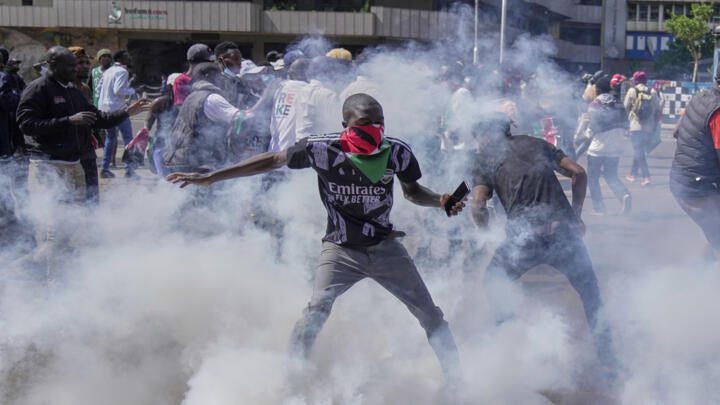
Thousands of memories, unanswered questions and lingering demands for justice has resurfaced across Kenya as citizens gathered to commemorate the second anniversary of the anti-government protests that shook the nation in June 2024 and left dozens of people dead.
Under a heavy security presence, mourners, activists, opposition leaders and ordinary citizens took part in remembrance activities in Nairobi and Mombasa to honour those who lost their lives during demonstrations that erupted over proposed tax increases and the rising cost of living.
The demonstrations being commemorated marked a turning point in Kenya’s political landscape. What began as protests against a controversial finance bill evolved into a broader expression of public frustration over economic pressures, youth unemployment, taxation and governance.
The unrest reached a dramatic climax on June 25, 2024, when protesters breached parliament grounds in Nairobi, triggering a security response that resulted in dozens of fatalities and drew international attention.
Two years later, the emotional and political impact of those events remains visible.
The Kenyan government deployed significant security measures ahead of the anniversary marches amid concerns that commemorations could spark fresh unrest.
In Nairobi, roads leading to key government installations were heavily guarded, water cannons were positioned at strategic locations and razor-wire barricades were erected around parliament buildings.
The capital’s usually bustling streets appeared unusually quiet as police established checkpoints and restricted movement in sensitive areas. Similar security arrangements were observed in other parts of the country, including the coastal city of Mombasa, where demonstrators marched under the watch of security personnel.
The government had made clear before the anniversary that it would not tolerate violence or criminal activity. On the eve of the commemorations, Interior Minister Kipchumba Murkomen warned that anyone attempting to exploit the occasion to engage in disorder would face firm action.
He indicated that individuals seeking to create “chaos, looting, destroy property, disrupt businesses, or commit any other criminal acts” would face “the full force of the law.”
Despite the heightened security environment, many of those who participated insisted that the gatherings were intended as peaceful acts of remembrance rather than political protests.
Deputy Inspector General of Police Gilbert Masengeli defended the measures, insisting that security operations were intended to protect citizens rather than suppress lawful demonstrations.
“There are no blocked roads. We are just ensuring the safety of Kenyans. We are just checking if they are carrying weapons. I am grateful because there are no vehicles being burnt and people are going about their work.”
Gilbert Masengeli
Compensation Efforts Fail to Silence Demands for Accountability
While the government has taken steps to address some of the grievances linked to the 2024 protests, rights organisations and civil society groups argue that significant questions remain unanswered.
Last week, President William Ruto announced that 2 billion Kenyan shillings, equivalent to approximately $15.5 million, had been allocated under a national reparations framework for victims of protest-related human rights abuses.
The move was presented as part of broader efforts to support those affected by the violence and provide assistance to families who lost loved ones during the demonstrations.
However, many advocacy groups contend that financial compensation alone cannot substitute for accountability.
Human rights organisations continue to demand comprehensive investigations into allegations of excessive force by security personnel during the protests. They argue that families deserve not only compensation but also a full account of what happened and who bears responsibility for the deaths and injuries recorded during the unrest.
As a result, the anniversary has taken center stage in continuing discussions over public trust, governance, and the interaction between citizens and state institutions.
Meanwhile, civil society organisations and rights groups continue to defend the demonstrations as a legitimate exercise of democratic freedoms guaranteed under the constitution. They argue that peaceful protest remains an essential mechanism through which citizens can demand accountability from public institutions.
For many young Kenyans, the anniversary serves as a reminder of a movement that challenged political authority and demonstrated the growing influence of digitally connected youth in shaping national conversations. The Gen-Z-led protests not only forced a policy reversal but also elevated broader concerns about unemployment, rising living costs, public debt and governance.
As Kenya moves closer to the 2027 general election, analysts believe the issues raised during the 2024 protests are likely to remain central to political debate. Public frustration over economic conditions and demands for greater accountability continue to resonate among many citizens, particularly younger voters.
READ ALSO: French Football Mourns Young Guingamp Player Kenzo Kies After River Tragedy