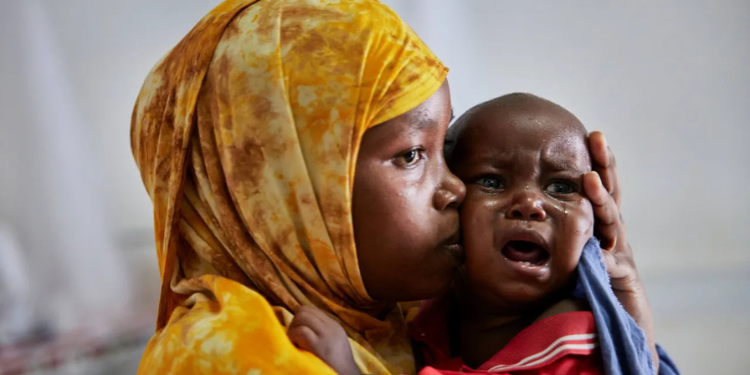
Somalia’s worsening hunger crisis is deepening as funding for efforts to tackle acute malnutrition has fallen by more than 80% this year, even as humanitarian organisations report a sharp rise in the number of children requiring urgent nutritional care.
According to Médecins Sans Frontières (MSF), the funding collapse is coming at a critical moment, with one in every four children screened in displacement camps in Baidoa, southwest Somalia, found to be severely malnourished.
This highlights a growing gap between the scale of Somalia’s humanitarian needs and the resources available to respond, with repeated failed rainy seasons, drought, conflict and displacement combining to place millions of people at risk of hunger.
MSF Health Adviser Mitchell Sangma revealed that, United States, previously a major source of humanitarian financing for Somalia, had reduced its support to aid agencies from $70 million last year to no funding this year.
Other Western donors have also reduced their contributions, further constraining the ability of humanitarian organisations to expand their operations.
The funding reductions have occurred at the same time as demand for nutritional assistance has increased substantially.
“This year we have admitted 22,000 nutrition cases, more than 80% higher than last year. When we need this massive scale-up in intervention measures, we are seeing less interest from donor support.”
Mitchell Sangma
Moreover, an MSF survey conducted in July among 888 households across 14 displacement sites in Baidoa found that one in four children was severely malnourished. The survey also found that about one-third of families were surviving on just one meal a day, while only 2% stated they could afford three meals each day.
For families already living with limited access to food, water and healthcare, the decline in humanitarian assistance risks turning food insecurity into a broader public health emergency.
MSF reported that it had evaluated more than 21,000 children under the age of five in Baidoa since the beginning of the year, with acute malnutrition rates approaching 50%.
Although acute malnutrition is less severe than severe acute malnutrition, it is nevertheless a potentially fatal condition, especially in young children whose health can worsen fast without prompt care.
The situation indicates an overall decline in Somalia’s food security.Repeated failed rainy seasons have damaged crops, killed livestock and depleted already limited water resources, undermining the livelihoods of communities that depend heavily on agriculture and livestock.
Drought has also driven large-scale displacement, pushing vulnerable families toward urban centres and displacement settlements in search of food, water and humanitarian assistance.
According to the United Nations, more than half a million people were displaced in Somalia during the first three months of 2026, with drought responsible for most of the movement. Women and children accounted for approximately 85% of those displaced.
At the same time, insecurity and conflict have complicated access to food and essential services in several parts of the country, making it more difficult for aid organisations to reach vulnerable communities.
The Somali government and the United Nations warned in February that approximately 6.5 million people were facing acute hunger as a result of the drought.
The latest malnutrition figures suggest that the consequences are already being felt most severely among children.
Funding Shortfall Revives Fears of Somalia’s 2022 Crisis
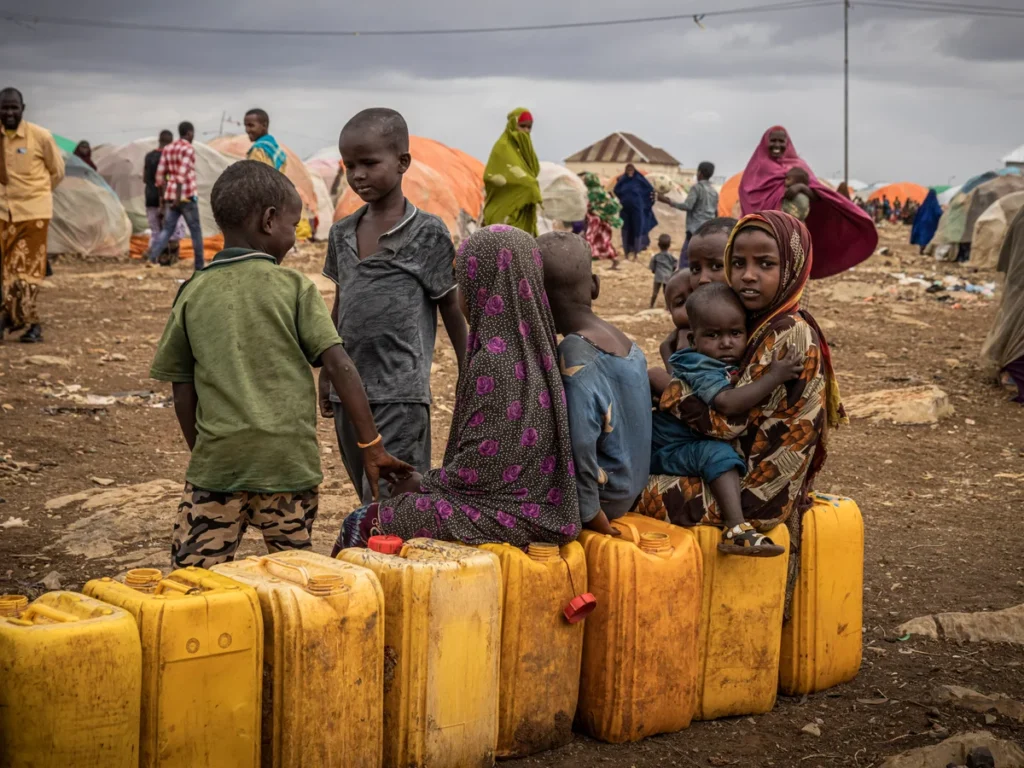
The worsening conditions are reviving memories of Somalia’s near-famine in 2022, when a prolonged drought pushed millions of people towards extreme hunger and created a major humanitarian emergency.
Aid organisations are now warning that the international response is significantly weaker than it was during that crisis.
MSF estimates that only about $300 million is currently available for Somalia from donors, compared with approximately $2.2 billion provided in 2022 when the country faced a similarly severe drought situation.
The difference represents a dramatic reduction in resources at a time when humanitarian needs remain extensive and are continuing to rise.
For organisations working directly with vulnerable communities, the concern is not simply about maintaining existing programmes but about whether they can expand rapidly enough to prevent malnutrition from becoming fatal.
The number of children being admitted for nutritional treatment by MSF has already risen sharply, while screening data indicate that the scale of acute malnutrition among children under five is far greater than the available response capacity.
Allara Ali, MSF’s Project Coordinator in Somalia, warned that the international community could not afford to wait for conditions to deteriorate further.
“The world cannot wait for a famine declaration before acting. Action is needed now to prevent loss of lives.”
Allara Ali
For Médecins Sans Frontières (MSF), the signs of a worsening humanitarian emergency in Somalia are becoming increasingly difficult to ignore.
Millions of people are suffering from severe hunger, hundreds of thousands have been displaced, families are reducing meals, and thousands of youngsters are already receiving treatment thru nutrition programs.
Aid organisations are cautioning that Somalia has limited space for more delays as humanitarian funding keeps dropping. They believe that before hunger and malnutrition worsen into yet another serious crisis, the first objective is to transform the mounting evidence of food insecurity into a coordinated international response that can reach vulnerable people.
READ ALSO: Jury Selection Begins in Landmark Tupac Murder Trial After Three Decades