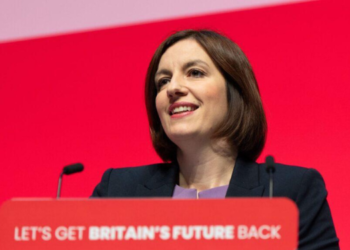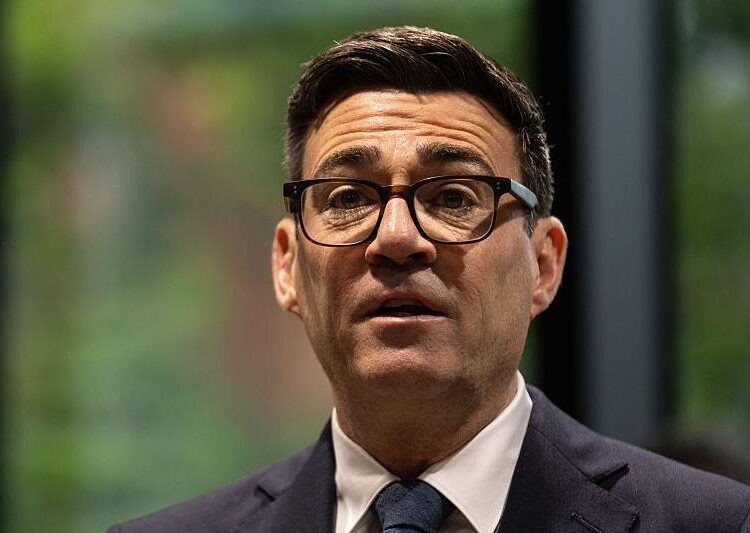
UK Prime Minister Andy Burnham is preparing for his first face-to-face meeting with US President Donald Trump in New York, expressing confidence that the two leaders can find “common ground” despite a series of sensitive issues confronting the transatlantic relationship.
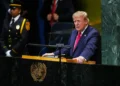
The meeting, scheduled during the United Nations General Assembly, will give Burnham his first opportunity to engage directly with Trump since becoming Prime Minister in July.
Burnham has already spoken with Trump twice by telephone since taking office. Downing Street has described those conversations as establishing a “productive relationship,” while the British leader has characterised the wider UK-US relationship as being “as strong as it’s ever been.”
The Prime Minister noted, “We’ve found a connection. So, I will go with where I feel it’s right, to meet him where he is at, and search for that common ground, which I’m sure we’ll find.”
Moreover, Burnham is expected to use his appearance at the UN General Assembly to argue for closer international cooperation on Artificial Intelligence(AI) while highlighting the opportunities and risks associated with the technology.
“I will be making the case for closer international co-operation on AI, a just and lasting peace in Ukraine, and renewed efforts to bring an end to the conflict in the Middle East because what happens abroad impacts each one of us at home.”
Andy Burnham
The visit has therefore been framed around both immediate diplomatic priorities and longer-term questions about how governments manage emerging technologies.
A new UK-US partnership on AI and autonomy is expected to form part of that agenda, with the two countries planning to work together on the use of artificial intelligence to protect critical national infrastructure. The proposed cooperation reflects an expanding role for AI in national security, where governments are increasingly examining applications ranging from infrastructure protection to autonomous military systems.
The British government has already pursued similar cooperation with Ukraine, signing an AI partnership in August focused on next-generation military capabilities, autonomous systems, cyber security and AI assurance.
That technology agenda is accompanied by a major defence development announced ahead of Burnham’s meeting with Trump. Britain and the United States have, for the first time, test-fired a US-developed heavyweight torpedo from an uncrewed underwater vessel rather than a crewed submarine.
The test took place in UK waters from the 12-metre-long XV Excalibur, a British-built undersea drone manufactured in Plymouth, as part of cooperation involving the AUKUS partnership.
On the contrary, Liberal Democrat leader Sir Ed Davey is expected to challenge the government’s proposed AI and autonomy partnership, arguing that it does not adequately address the risks posed by increasingly powerful artificial intelligence.
He is also expected to call for a global pause on superintelligent AI and advocate the creation of an International AI Safety Agency.
This issue has gained further urgency following a series of warnings from researchers and technology figures about the potential dangers of advanced AI.
Burnham has more than just technology on his diplomatic agenda. His mission at the UN is also anticipated to be heavily influenced by the Middle East conflict and Ukraine, which reflects Britain’s ongoing efforts to influence global reactions to significant conflicts.
UK government has continued to work closely with Ukraine on defence and artificial intelligence, including a collaboration aimed at fusing Ukrainian war experience with British technological know-how.
Diego Garcia Deal Adds Another Test to UK-US Relations
Burnham’s discussions with Trump take place while the future of the Diego Garcia military base remains unresolved.
UK government has been pursuing an arrangement involving the transfer of sovereignty over the Chagos Islands to Mauritius while securing a long-term lease arrangement for the joint UK-US military facility on Diego Garcia.
The future of the base carries major strategic significance because of its role in British and American military operations and its location in the Indian Ocean.
The proposed arrangement was paused after Trump withdrew his support, leaving the British government facing the task of finding a resolution acceptable to Mauritius while maintaining the military facility’s long-term operation.
Burnham spoke with Mauritian Prime Minister Navin Ramgoolam ahead of his meeting with Trump.
The British Prime Minister disclosed what transpired during his meeting with the Mauritian Prime Minister, where he indicated, “I said that we remain determined to secure the long-term operation of the base, which is crucial to our security and that of our allies.”
“The assurance I gave was I will work towards a resolution; at the moment we don’t have that, but I gave an assurance that I would commit to working towards one.”
Andy Burnham
The British government has separately confirmed Burnham’s commitment to working with Mauritius and the United States on a way forward that secures the continued operation of Diego Garcia and protects UK national security.
READ ALSO: Mahama Launches Accra Reset Health Report, Declares No Ownership Without Control