National Council of Parent-Teacher Associations (NCPTA) has issued a strong appeal to government to treat teacher welfare as a matter of national urgency, warning that the declining living and working conditions of Ghanaian teachers are directly undermining the quality of education in the country’s basic and senior high schools.
Presenting a submission on teacher welfare and quality education, Gapson Kofi Raphael, General Secretary of the NCPTA, argued that teacher welfare and teacher quality are inseparable, insisting that a teacher struggling to survive cannot be expected to deliver effective instruction in the classroom.
“We hold a simple truth. Teacher welfare is teacher quality. You cannot separate the two.”
Gapson
According to the submission, parents across the country are witnessing firsthand the economic hardships many teachers endure.
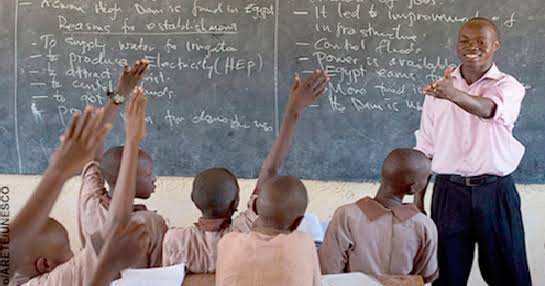
Raphael noted that a significant number of teachers, particularly those posted to basic and senior high schools, live in poor rented accommodation, face daily transportation difficulties, and are often forced to take up additional jobs after school hours simply to make ends meet.
He said current salary levels are inadequate to support family responsibilities, a situation that inevitably affects concentration and performance in the classroom.
Infrastructure Gaps and Labour Tensions
The submission also highlighted what it described as a “respect deficit” facing the profession. Raphael explained that teachers, once regarded in many Ghanaian communities as custodians of wisdom and key figures in resolving local disputes, have seen their social standing decline sharply.
He cited postings to rural areas as a particular source of frustration, noting that such assignments are often viewed as punishment because they come with little or no additional support.
In some cases, he said, teachers who turn to farming to supplement their income in these community’s face resentment from residents who accuse them of competing for local livelihoods.
Beyond welfare concerns, the NCPTA pointed to poor working conditions as a major obstacle to quality education. Raphael listed overcrowded classrooms, shortages of textbooks, the absence of science laboratories, and inadequate staff accommodation, common rooms, and washroom facilities as recurring challenges in many schools.
While Parent-Teacher Associations have stepped in to assist where possible, he stressed that government must take the lead in addressing these structural gaps.
The submission further referenced recent tensions in the education sector over delayed implementation of teacher promotions and unpaid salaries for newly recruited teachers, developments that had raised the possibility of industrial action.
Raphael said the council stands firmly behind teachers on these issues, describing parents and teachers as natural allies bound together by their shared responsibility for the child’s education.
A Teacher is Not A Cost, But A National Asset
“We wish to state unequivocally that the Ghanaian teacher is a national asset that we need to protect, not a cost.”
Gapson
He was careful to distinguish the role of parents from that of government, explaining that while school fees remain a government responsibility, dues and levies collected through parent associations are meant to support welfare initiatives that benefit both teachers and pupils.
The NCPTA outlined a set of proposals it believes could reverse the trend. On accommodation, the council called for the revival of a national teacher housing policy, including bungalows attached to new school blocks and a rural incentive allowance of between 20 and 30 percent for postings to deprived areas
On pay, it recommended an urgent review of the Single Spine Salary Structure as it applies to teachers, timely payment of responsibility allowances, and a dedicated salary framework reflecting the profession’s importance.
Call for Shared Responsibility
The council also called for a health insurance scheme tailored to teachers, particularly those in high-risk postings, alongside free access to Continuous Professional Development, the restoration of paid study leaves, and a transparent, time-bound promotion system.
On the role of parents, Raphael proposed a National PTA Teacher Welfare Compact, under which every parent association nationwide would set aside a portion of its dues and levies specifically to support teacher welfare not as salary, but through initiatives such as accommodation assistance, welfare events, and end-of-year recognition.
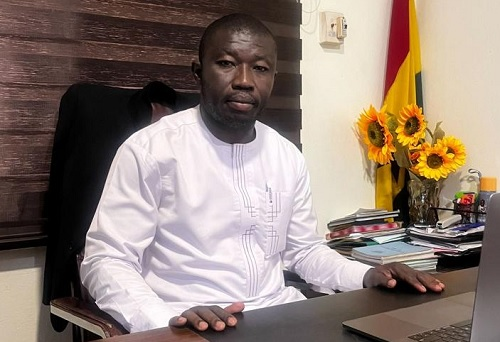
Closing the submission, Raphael maintained that quality education for every Ghanaian child, regardless of location, remains non-negotiable, and can only be guaranteed by a workforce that is properly motivated and supported.
He urged parents nationwide to view support for teachers not as an obligation but as a direct investment in their children’s future, framing the effort as a shared national responsibility between government, parents, and educators alike.
Read More: Mahama Calls for Action to Secure Africa’s Health Sovereignty Now