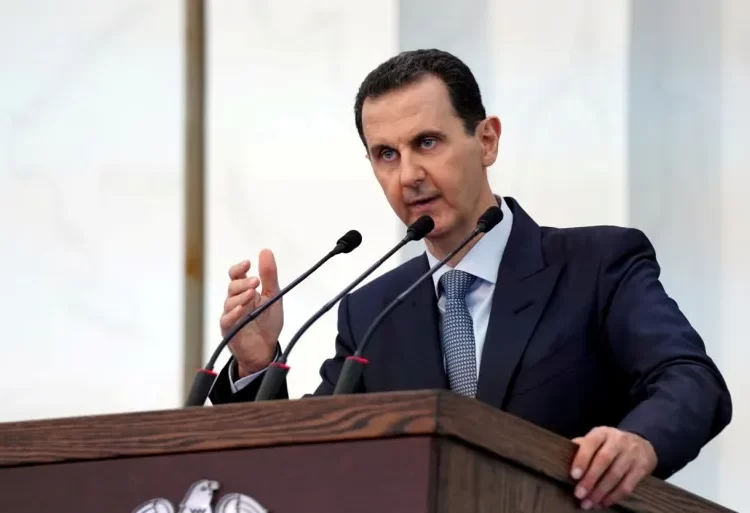
A Syrian court has sentenced ousted President Bashar al-Assad and his younger brother, Maher al-Assad, to death in absentia for crimes against humanity and war crimes committed during Syria’s 14-year conflict.
The ruling, issued by the Fourth Criminal Court in Damascus, marks the first death sentences against Bashar al-Assad or members of his inner circle since the Assad family’s five-decade rule over Syria ended in December 2024.
The conflict, which began with an uprising against Bashar al-Assad’s government in 2011, resulted in the deaths of about half a million people and displaced millions more. The uprising began after security forces detained and tortured teenagers in the southern city of Daraa for writing anti-government graffiti on a school wall.
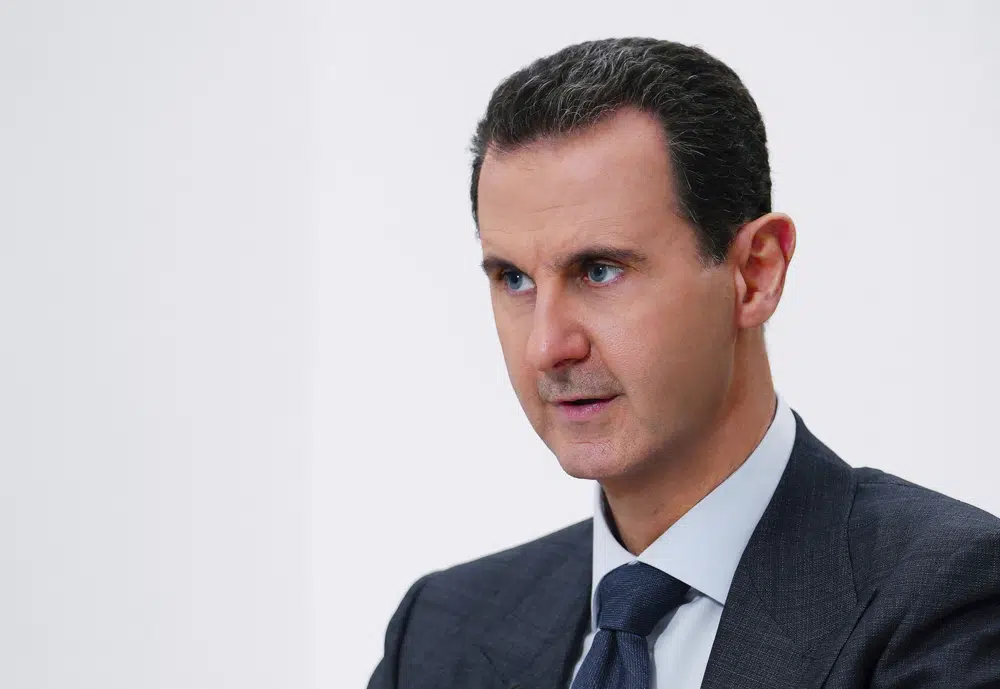
During the court session, which was broadcast live on state television, Judge Fakhareddine al-Aryan said Assad had used government institutions to carry out serious violations during the conflict. “Bashar Assad used state agencies to commit war crimes and crimes against humanity,” the judge said as he read the verdict.
The court’s decision against the Assad brothers was issued in their absence because both men left Syria following the collapse of their government. Bashar and Maher al-Assad fled to Russia after rebel forces took control of Damascus and were granted political asylum. Syria’s new authorities have since called on Moscow to hand the two brothers over so that they can face legal proceedings in Syria.
Maher al-Assad previously commanded the Syrian military’s 4th Armored Division, an elite unit that played a prominent role during the conflict. Syrian opposition activists have accused the division of involvement in killings, torture, extortion and drug trafficking, as well as operating detention facilities.
The sentencing represents a significant legal development for Syria, where the Assad family maintained control of the country for roughly five decades. Bashar al-Assad succeeded his father, Hafez al-Assad, as President in 2000 and remained in power until his government collapsed in late 2024.
The court proceedings form part of efforts by Syria’s new authorities to pursue senior figures associated with the former government over alleged abuses committed during the conflict. The death sentences, however, are unlikely to be carried out unless the Assad brothers are returned to Syria.
The ruling also places pressure on Russia over the future of the former Syrian leadership. Moscow has provided political protection to the Assad family since their departure from Syria, while Damascus has continued to seek their return.
Assad’s Maternal Cousin Also Sentenced To Death
Also sentenced to death was Assad’s maternal cousin, Atef Najib, who was convicted of overseeing the security crackdown in Daraa that helped trigger the uprising against Assad’s government.
Najib was present in court and stood inside a cage wearing a prisoner’s uniform as the judge announced the sentence.
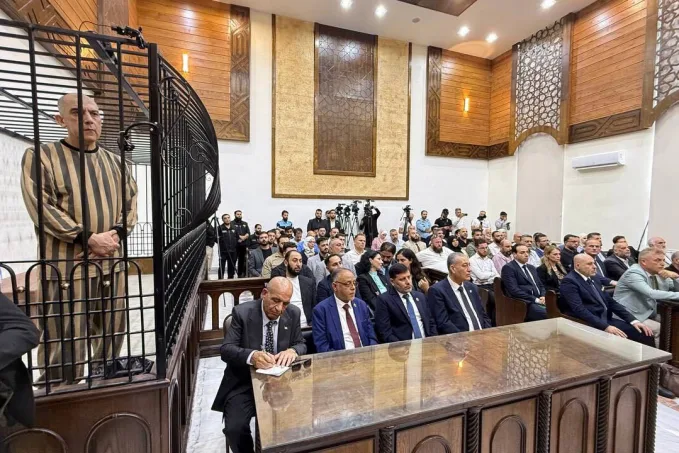
The proceedings took place under tight security, while a crowd gathered outside the courthouse in central Damascus to listen to the verdict.
Najib, a former Syrian Army Brigadier General, served as Head of the Political Security Branch in Daraa province in 2011. He was responsible for a security apparatus in the region at the time the anti-government protests began.
More than a dozen teenagers were arrested and tortured after writing anti-government messages on a school wall in Daraa. Their detention and treatment became a catalyst for wider protests against the Assad government and its security forces.
The government responded with a forceful crackdown, and the demonstrations gradually developed into a nationwide armed conflict. The war continued for more than a decade before Assad was removed from power following a rapid rebel offensive in December 2024.
Najib was sanctioned by the US Department of the Treasury in April 2011 over his role in the repression. His detention and subsequent prosecution have made him one of the highest-ranking former Syrian officials to face trial since the fall of the Assad government.
For Syrians who suffered during the conflict, the verdict is a major development in attempts to establish accountability for abuses committed during the Assad era. The case against Najib, in particular, links the court proceedings to the early events in Daraa that sparked the uprising in 2011 and ultimately led to a conflict that reshaped Syria and the wider Middle East.
The sentences against Bashar and Maher al-Assad and Atef Najib now mark the strongest judicial action yet against senior figures of the former Syrian government since the end of the Assad family’s rule.
READ ALSO: Japan Urges Safe Passage Through Hormuz