Ghana’s push to expand domestic refining is gathering momentum, but energy analysts say the country should avoid presenting refinery growth as a guarantee of cheaper or more stable fuel prices.
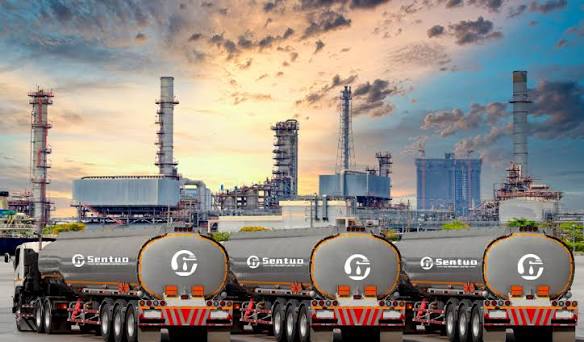
The warning comes as government advances two major projects simultaneously: the operational revival of the Tema Oil Refinery (TOR) and the planned expansion of the privately owned Sentuo Oil Refinery.
Together, the facilities are being positioned as a cornerstone of Ghana’s energy-security and industrialisation agenda.
The Centre for Environmental Management and Sustainable Energy (CEMSE), however, argues that the real test is not how many barrels Ghana can theoretically refine, but whether the country can build a financially and operationally integrated petroleum system around those refineries.
Refining capacity is important, but capacity on paper does not automatically translate into protection from international oil-price movements.
Benjamin Nsiah, Executive Director of CEMSE.
A different conversation from the public debate
Much of the public discussion has focused on refinery expansion as a way to reduce dependence on imported petrol and diesel.
CEMSE says that objective is valid, but it is only part of the story.
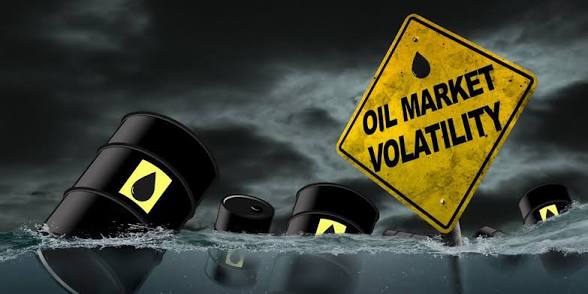
Even when fuel is refined in Ghana, the crude oil feeding those refineries is still largely valued against international market benchmarks.
As a result, sharp increases in global crude prices can continue to influence the cost of locally produced petroleum products.
The organisation’s position is that Ghana is dealing with two different vulnerabilities: dependence on imported refined products and exposure to global crude-price volatility.
Expanding local refining helps address the first more directly than the second.
Why the refinery story is still economically significant
CEMSE is not dismissing the value of domestic refining. On the contrary, the think tank argues that the economic case remains substantial.
Local processing can keep more value within the economy through employment, taxes, logistics activity and associated industrial services.

It can also shorten supply chains and reduce reliance on foreign refineries during periods of external disruption.
Domestic refining can strengthen supply resilience and create broader economic benefits, but it should be viewed as an industrial and strategic investment rather than a promise of permanently low pump prices.
Benjamin Nsiah, Executive Director of CEMSE.
This framing is important because it shifts the discussion away from short-term fuel relief and toward long-term economic resilience.
Feedstock is becoming the decisive issue
The debate is increasingly moving from refining capacity to crude availability.
TOR recently received a cargo of Jubilee crude as part of efforts to restore more consistent operations.
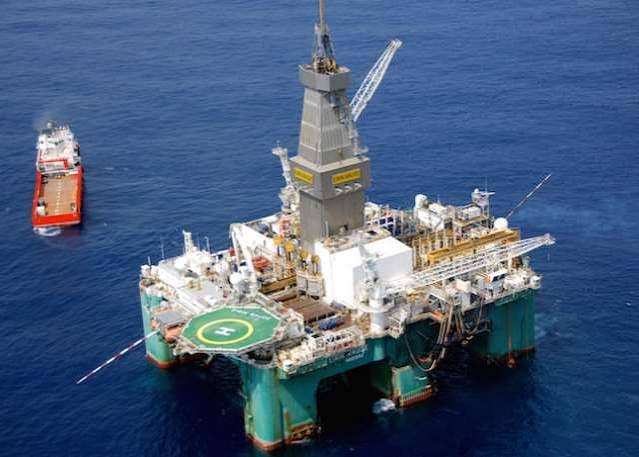
CEMSE says such allocations are critical because a refinery without reliable feedstock cannot operate efficiently, regardless of its installed capacity.
The think tank has previously argued for a more predictable framework for supplying domestically produced crude to local refineries, warning that irregular feedstock could leave expensive infrastructure underutilised.
In practical terms, a refinery designed for high throughput but operating intermittently may struggle to spread its fixed costs and remain commercially competitive.
Sentuo and TOR face different tests
Although both facilities are part of Ghana’s refining strategy, they operate under very different conditions.
TOR’s challenge is closely tied to working capital, operational reliability and long-term financial sustainability.
Sentuo, as a private refinery, faces a stronger commercial discipline: access to crude, financing costs, operational efficiency and the ability to compete in a deregulated market.
That means government’s aspiration for the two refineries to meet a large share of domestic demand should be understood as a potential outcome, not a guaranteed supply level.
The hidden role of the exchange rate
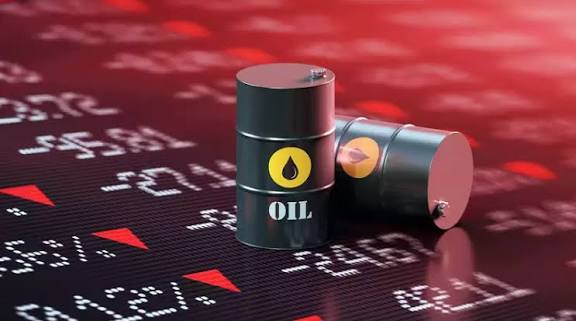
Another reason local refining cannot fully insulate Ghana is the exchange rate.
Crude oil is purchased in dollars, and many elements of the petroleum value chain remain linked to foreign currency.
A weaker cedi can therefore raise the cost of both imported products and domestically refined products.
This explains why Ghana can expand refining while still experiencing upward pressure on fuel prices during periods of currency depreciation.
The country’s fuel market remains connected to global crude prices, international product markets and domestic exchange-rate conditions simultaneously.
What could make a bigger difference?
CEMSE suggests that strategic storage may offer a more direct buffer against short-term price shocks.
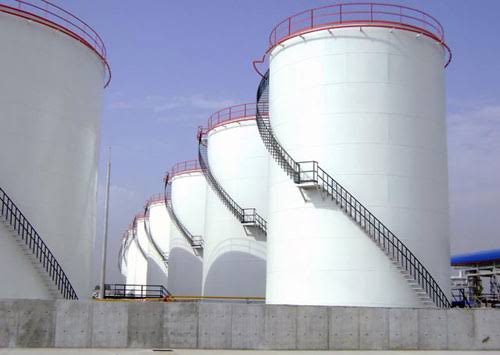
A refinery determines how much fuel can be produced; a strategic reserve influences how quickly international price movements are transmitted to the domestic market.
If stocks are built during periods of lower prices, authorities may gain greater flexibility in managing temporary supply disruptions or sudden market spikes.
The think tank therefore sees refining and storage as complementary rather than competing policies.
The broader lesson for energy policy
The deeper message from CEMSE is that Ghana’s downstream sector should be treated as a connected economic system, not as a collection of separate projects.
Crude production, refinery operations, storage, transportation, foreign-exchange management and retail pricing all interact with one another.
Strengthening one link while leaving others weak may produce less benefit than expected.
This is a familiar challenge in energy policy: infrastructure expansion is often easier to announce than the financial, logistical and institutional reforms required to make that infrastructure perform consistently.
A more useful measure of success
The current refining push represents a significant strategic shift for Ghana.
If TOR and Sentuo operate reliably and at meaningful utilisation levels, the country could reduce its dependence on imported finished fuels and improve supply resilience.
CEMSE’s warning is not that the strategy is wrong. It is that the success of the strategy should be measured differently.

The important question is not whether Ghana can build larger refineries.
The important question is whether those refineries can secure crude consistently, operate competitively, maintain strong finances and work alongside storage and market systems that reduce the economic damage of external oil shocks.
In that sense, Ghana’s refining programme may be moving the country closer to greater energy resilience, but resilience is not the same thing as immunity.
READ ALSO: Ghana’s Private Sector Credit Explodes 41.2% in June