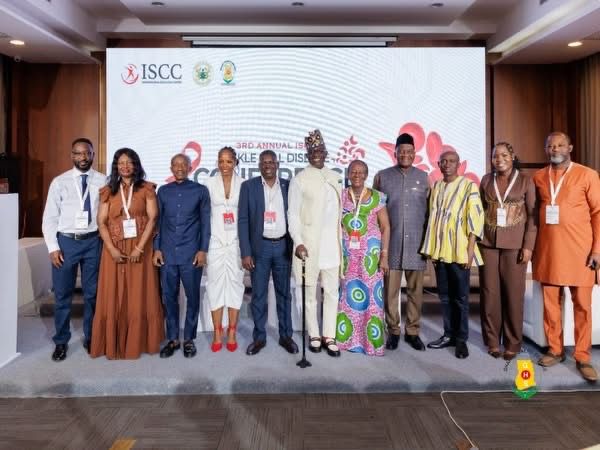
Government, health experts and partners are calling for increased investment, expanded newborn screening and stronger national action to improve sickle cell care in Ghana.
The renewed commitment was made at the 3rd Annual Sickle Cell Disease Conference, where participants acknowledged the progress Ghana has made in developing policies and treatment guidelines but warned that significant disparities in access to quality care continue to undermine efforts to reduce the burden of the disease.
Organised by the International Sickle Cell Centre (ISCC)
“Government, health experts and development partners are renewing efforts to strengthen sickle cell prevention, diagnosis and treatment in Ghana as the country works to address persistent gaps in care.”
Organised by the International Sickle Cell Centre (ISCC) in collaboration with the Ministry of Health (MoH) and the Ghana Health Service (GHS) to commemorate World Sickle Cell Day.

the conference brought together policymakers, clinicians, researchers, development partners, caregivers, faith-based organisations and persons living with sickle cell disease to assess the country’s response to the condition and identify practical strategies for improving patient outcomes.
Held under the theme, “Current State of Sickle Cell Disease in Ghana; Progress Made, Challenges Faced and the Way Forward”.
The conference also attracted representatives from the Office of the National Chief Imam, the Christian Council of Ghana, the National Health Insurance Authority (NHIA), the National Ambulance Service, philanthropists, medical equipment suppliers and other key stakeholders committed to strengthening healthcare delivery.
A major outcome of the conference was the unanimous call for a coordinated national approach that prioritises early diagnosis, equitable access to treatment and sustained public education to reduce the impact of sickle cell disease on individuals, families and the national health system.
Progress Made, But Significant Challenges Remain
Speaking on behalf of the Director-General of the Ghana Health Service, the Director of Public Health at GHS, Dr. Franklin Asiedu-Bekoe, described the conference as an important opportunity to evaluate Ghana’s progress while acknowledging the challenges that continue to affect people living with sickle cell disease.
He mentioned that although public awareness has improved over the years and several policy interventions have been introduced, many patients still face barriers in accessing specialised healthcare services, particularly in underserved parts of the country.
According to him, the burden of sickle cell disease extends beyond affected individuals and their families, placing considerable pressure on Ghana’s healthcare system and the national economy.
“Behind every statistic are real people whose lives are affected by this condition. The burden goes beyond patients and families to impact communities, the health sector and national development,”
Director of Public Health at GHS, Dr. Franklin Asiedu-Bekoe
He highlighted the development of national policies and clinical treatment guidelines as important milestones in improving care,
He added that the Ghana Health Service is gradually integrating sickle cell disease management into primary healthcare through routine monitoring, early diagnosis and strengthened reporting systems, including services delivered through the Community-based Health Planning and Services (CHPS) programme.

However, he admitted that unequal access to specialised healthcare and limited availability of genetic counselling services remain major obstacles that require urgent attention.
Dr. Asiedu-Bekoe further noted that government’s Free Primary Healthcare Policy and the Ghana Medical Trust Fund (Mahama Cares) provide an opportunity to improve access to treatment and reduce the long-term burden of the disease.
“We have the tools, we have the resources and we have each other. Every person living with sickle cell disease deserves hope, quality healthcare and the assurance that they will never be overlooked,”
Director of Public Health at GHS, Dr. Franklin Asiedu-Bekoe
Ministry Calls for Sustained National Action
Chairing the conference, the Director of Technical Coordination at the Ministry of Health, Dr. Hafiz Adam Tahir, commended the International Sickle Cell Centre for sustaining national advocacy and promoting evidence-based interventions to improve patient care.
He explained that the conference theme created an opportunity for stakeholders to review the country’s achievements, identify existing gaps and develop practical recommendations capable of strengthening Ghana’s response to sickle cell disease.
Dr. Tahir recalled that the Ministry introduced the National Strategic Plan for Sickle Cell Disease in 2014, followed by national treatment guidelines to standardise clinical management across health facilities.
He maintained that future progress would depend on expanding newborn screening programmes, strengthening genetic counselling services, intensifying public health education, developing national standards of care and ensuring financial protection for patients and their families.
According to him, sustained collaboration among government agencies, healthcare providers, researchers and development partners remains essential to achieving those objectives.
KKD Calls for Greater Investment
Delivering the keynote address as Special Guest of Honour, H.E. Kwasi Kyei Darkwah (KKD), Presidential Special Envoy to the Caribbean, challenged governments and development partners to increase investment in sickle cell research, treatment and advocacy.
He described sickle cell disease as a global public health challenge that disproportionately affects Africa, noting that the continent accounts for an estimated 66 percent of reported cases worldwide despite receiving relatively limited international attention.
Mr. Darkwah argued that addressing the disease requires stronger political commitment supported by reliable national data to guide policy decisions and resource allocation.
“Sickle cell disease is not only a medical condition but also a development challenge. Those most affected by it must be empowered to lead the conversation and shape lasting solutions,”.
H.E. Kwasi Kyei Darkwah (KKD),
He further explain that the disease continues to impose significant economic costs on families and national healthcare systems, making increased investment both a public health and economic necessity.
Collaboration Identified as Key to Better Outcomes
Representing former President John Agyekum Kufuor, Dr. Winfred Hammond, praised the Ministry of Health, Ghana Health Service and the International Sickle Cell Centre for their continued efforts to improve the welfare of persons living with the condition.
He stressed that sustained collaboration among government institutions, healthcare professionals, civil society organisations, researchers and development partners remains critical to achieving meaningful improvements in patient care.

According to him, stronger partnerships will help expand access to quality healthcare services while improving support systems for affected individuals and their families.
Documentary Highlights Real-Life Experiences
The conference also featured the premiere of Beyond Love, an animated short documentary produced by the institute of Sickle Cell Care and Research under the leadership of its Co-founder, Dr. Mary Ansong.
The documentary explores public awareness, informed reproductive choices and the lived experiences of people affected by sickle cell disease.
they described the production as an innovative educational tool capable of increasing public understanding of the disease while helping to reduce stigma within communities.
Stakeholders Recommend Dedicated National Programme
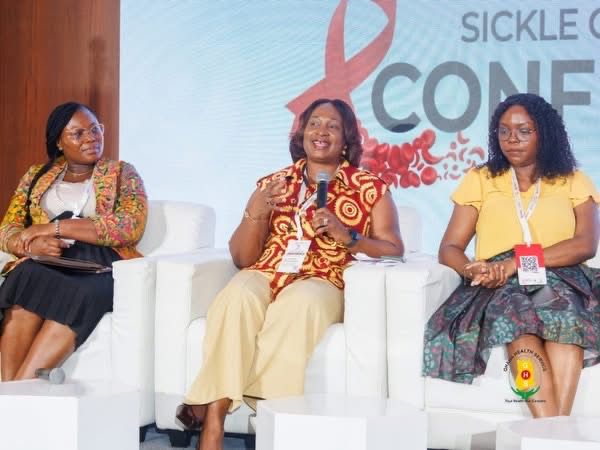
During panel discussions, Stakeholders proposed several measures aimed at strengthening Ghana’s sickle cell response.
Among the key recommendations were the nationwide implementation of routine newborn screening, increased investment in diagnostic equipment and treatment infrastructure, expansion of genetic counselling services and guaranteed access to essential medicines.
Stakeholders also called for the establishment of a dedicated national programme for sickle cell disease similar to existing national programmes for HIV and tuberculosis.
According to them, such a programme would improve coordination, strengthen resource mobilisation and ensure consistent delivery of specialised services across the country.
The conference concluded with a renewed pledge by government institutions, healthcare professionals, researchers and development partners to deepen collaboration and sustain investments that will improve prevention, diagnosis and treatment.
expressed optimism that with stronger partnerships, expanded healthcare services and sustained political commitment, Ghana can significantly improve the quality of life of persons living with sickle cell disease while ensuring that no patient is left behind.
READ ALSO: Education Reform Agenda Gains Momentum, As Parliament Reviews Sector Performance