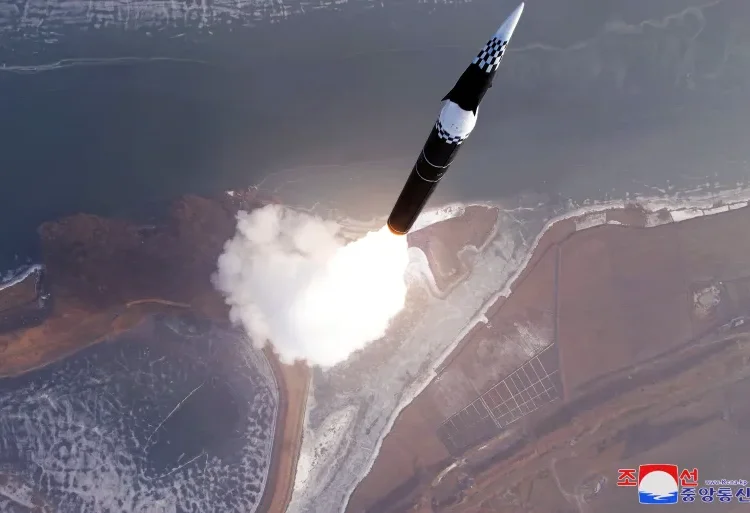
North Korea has launched a ballistic missile towards the Sea of Japan, according to South Korea and Japan, marking Pyongyang’s second reported missile test in less than a week and adding to tensions ahead of planned US-South Korea military exercises.
South Korea’s Joint Chiefs of Staff said its military detected the launch at about 6:00am local time from the Wonsan area on North Korea’s eastern coast. The missile was fired towards the East Sea, which South Korea calls the body of water also known as the Sea of Japan.
South Korea’s military said that the missile travelled more than 700 kilometres (435 miles) before falling. It did not immediately provide further details about the missile’s type or trajectory. The military added that it had strengthened its surveillance posture and was closely coordinating with the United States and Japan to assess the launch.
Japan’s Defence Ministry also confirmed the suspected missile launch, saying on social media that the projectile had “already fallen,” although it did not provide additional information about where it landed or its precise flight characteristics.
According to assessments by South Korea, the launch is the 11th suspected ballistic missile test conducted by North Korea this year. It follows another short-range ballistic missile launch on August 6, when North Korea fired a projectile from the same Wonsan area, according to South Korean, Japanese and US officials. That launch was the country’s first reported ballistic weapons test since late June.
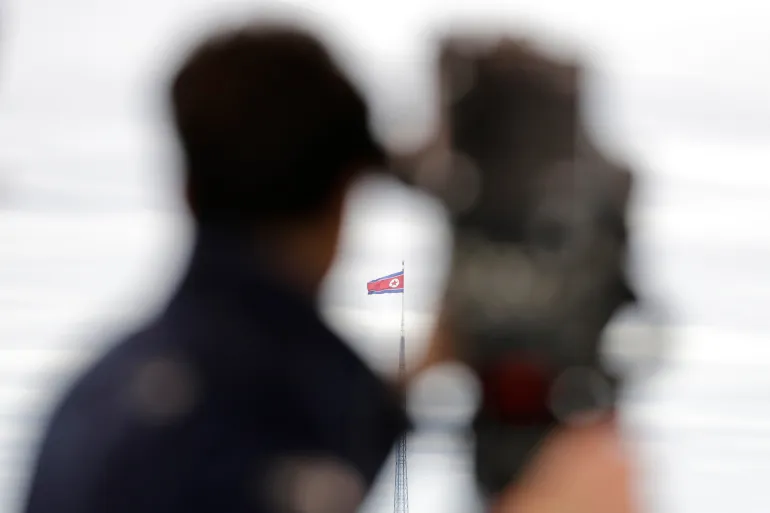
North Korea has not publicly confirmed the latest launch. The missile test comes amid increasingly sharp rhetoric from Pyongyang towards Japan, particularly over Tokyo’s defence policies. North Korea has issued critical statements about Japan at least seven times since July.
On Tuesday, North Korean state media condemned Japan’s latest defence white paper, describing it as a “re-invasion-minded” document. Pyongyang accused Tokyo of “groundlessly” identifying North Korea as its greatest strategic challenge in order to justify what it called a reckless expansion of Japan’s military capabilities.
The latest tensions also come as North Korea faces growing international scrutiny over its alleged military support for Russia’s war in Ukraine. Ukrainian President Volodymyr Zelenskyy said on Tuesday that Russia had used a North Korean ballistic missile in an attack on the southeastern Ukrainian city of Zaporizhzhia.
According to Zelenskyy, the attack killed seven workers at a steel plant. The reported use of North Korean weapons by Russia has added another dimension to concerns over Pyongyang’s military cooperation with Moscow, as North Korea continues to develop its missile capabilities.
South Korea, U.S Due To Begin Joint Military Drills
The latest launch also comes days before South Korea and the United States are due to begin their annual Ulchi Freedom Shield military exercises. The joint drills are scheduled to start on August 17 and run for 11 days.
South Korea’s military disclosed that the scale of this year’s exercises would be similar to previous years, with about 18,000 South Korean troops expected to participate. The exercises are designed to strengthen the two allies’ readiness and coordination. Seoul and Washington have repeatedly described the training as defensive in nature.
Pyongyang, however, has historically condemned the annual exercises, arguing that they amount to preparations for an invasion of North Korea. In previous years, North Korea has responded to US-South Korea drills with weapons tests and strong warnings against the allies.
The timing of the latest missile launch is therefore likely to heighten attention surrounding this year’s exercises, although there has been no immediate indication from Pyongyang that the launch was directly linked to the upcoming drills. For South Korea, Japan and the United States, the latest test adds to a continuing pattern of North Korean weapons activity and regional tensions. Pyongyang has continued to advance its missile programme despite international pressure, while its increasingly close military relationship with Russia has created additional concerns for Washington and its allies.
The latest launch also sheds light on the broader security tensions in Northeast Asia, where North Korea’s weapons development, Japan’s expanding defence capabilities and the US military presence in the region remain closely linked.
With Ulchi Freedom Shield set to begin next week, South Korea and the United States are expected to maintain close monitoring of North Korean military activity as they assess the latest missile launch and any further developments.
READ ALSO: Cristiano Ronaldo Marries Long-Time Partner Georgina Rodriguez in Intimate Ceremony