
An international coalition of human rights advocates has filed a lawsuit against the government of Ghana at the ECOWAS Court of Justice, accusing Accra of facilitating a covert United States policy that transferred migrants with legal protections through Ghanaian territory before sending them to countries where they face torture or persecution.
The case, filed on behalf of 27 of at least 60 individuals transferred to Ghana under the arrangement, alleges that the Ghanaian government violated regional and international human rights laws by participating in what critics describe as a legal loophole engineered to sidestep American court protections.
The individuals at the center of the case had each previously obtained asylum or withholding of removal orders from United States immigration judges. Those rulings specifically barred their direct return to their home countries on the grounds that they faced documented risks of torture or persecution if sent back.
Despite those protections, the lawsuit alleges that Ghana did not provide refuge. Instead, it acted as a transit hub, forwarding deportees onward to their dangerous home countries or leaving them stranded in neighboring countries such as Togo within hours or days of their arrival in Ghana.
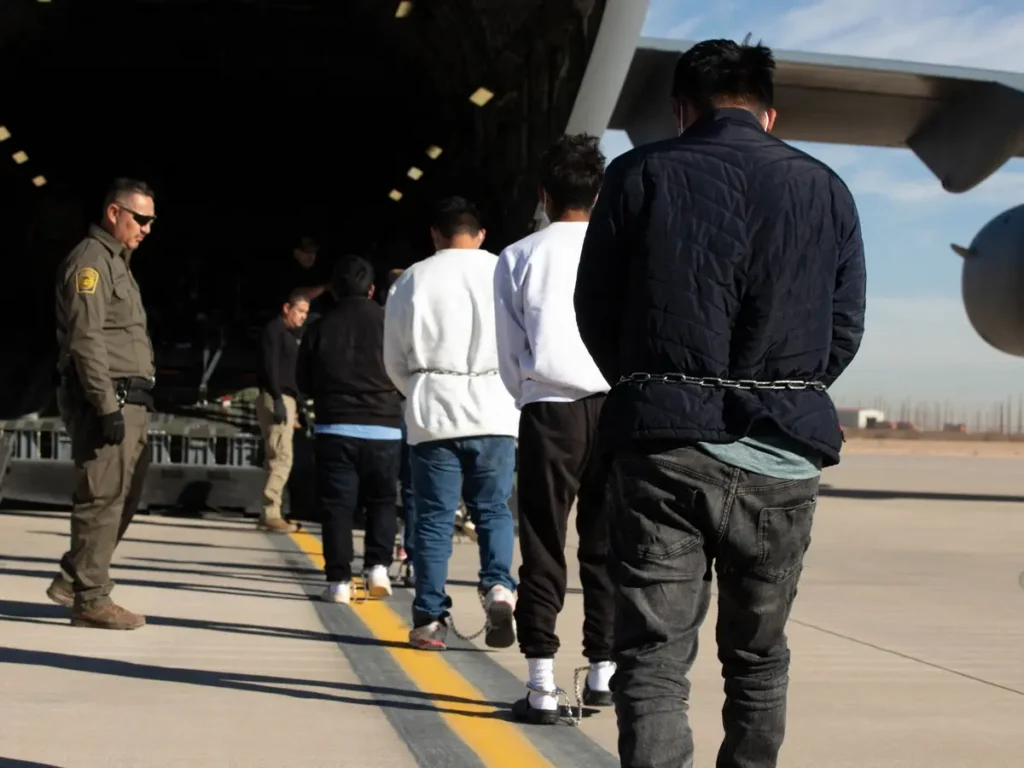
The transfers, according to the legal filing, were conducted under a covert bilateral agreement reached between Accra and Washington. Lawyers argue that the United States administration used this arrangement to circumvent domestic court orders that would otherwise have prevented the deportations from proceeding.
Who Filed the Case and What They Are Demanding
The ECOWAS lawsuit was brought by Cornell Law School’s Transnational Disputes Clinic, the Global Strategic Litigation Council and the Ghanaian law firm Merton and Everett LLP.
The legal team is demanding that Ghana terminate its agreement with the United States, publicly disclose the full terms of the deal, and pay compensation of 100,000 dollars to each affected deportee.
The filing before the ECOWAS Court is not the only legal front on which the Ghana government now faces scrutiny. Domestically, the civil society organization Democracy Hub has filed a separate suit at the Supreme Court of Ghana,

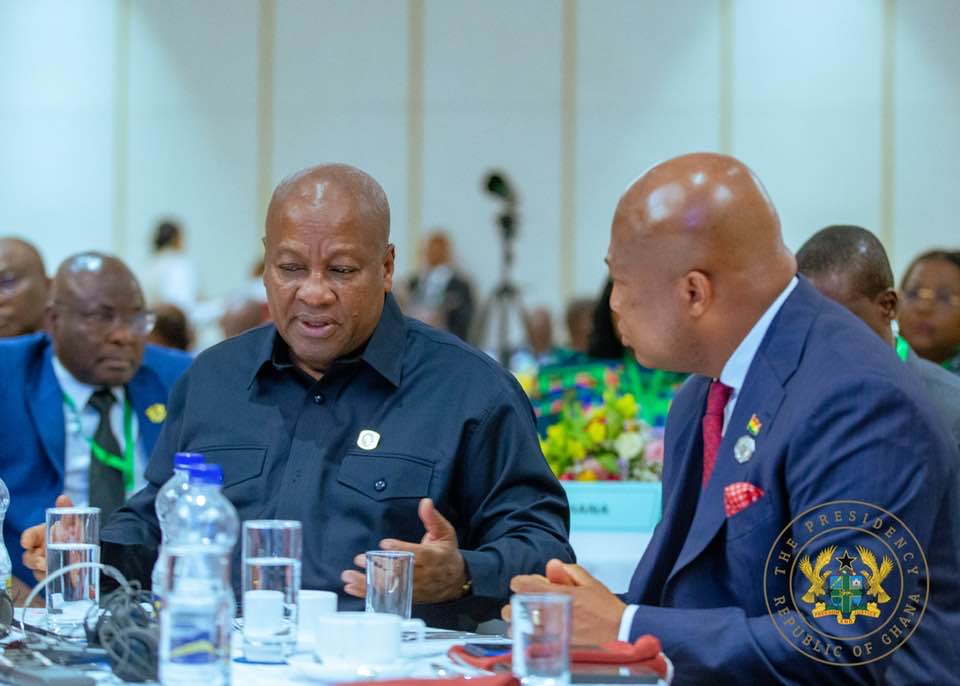
The argues that the bilateral agreement is unconstitutional because President John Mahama’s administration entered into it without subjecting it to the mandatory parliamentary ratification process required under Ghanaian law.
Earlier domestic legal actions were also initiated after the first group of West African deportees arrived in Ghana, challenging the immediate placement of those individuals into military detention facilities upon landing, a practice lawyers described as unlawful.
The Legal Frameworks Invoked
The ECOWAS lawsuit rests on multiple regional and international legal instruments, each addressing a distinct dimension of Ghana’s alleged conduct. The African Charter on Human and Peoples’ Rights sits at the foundation of the regional argument.
The lawsuit points to three specific provisions: the prohibition of torture under Article 5, which the filing argues Ghana breached by expelling individuals to countries where torture or execution is a documented risk; Article 12(3), which protects the right to asylum for those fleeing persecution; and Article 12(5), which prohibits the mass expulsion of non-nationals without individualized legal processes.
On the international level, the principle of non-refoulement anchors the case. Article 3 of the UN Convention Against Torture strictly prohibits any state from expelling, returning, or extraditing a person to another country where there are substantial grounds to believe they would face torture.
The legal team argues that Ghana’s conduct directly violated this obligation by routing deportees through its territory toward exactly those outcomes.
Within the ECOWAS framework itself, Article 4(g) of the ECOWAS Treaty commits member states to recognizing and protecting human and peoples’ rights in line with the African Charter, while the regional Protocol on Free Movement guarantees specific legal protections and due process for citizens of member states facing expulsion or deportation. Both provisions, the lawyers argue, were disregarded under the terms of the secret deal.
The lawsuit also invokes the International Covenant on Civil and Political Rights, arguing Ghana failed to uphold two core provisions: Article 7, covering cruel, inhuman or degrading treatment, which the filing links to the psychological and physical trauma caused by deceptive transit deportations, and Article 13, which requires that any alien facing expulsion be given a formal opportunity to submit reasons against removal and have their case reviewed by a competent authority.
A Warning to the Rest of the Continent
The legal action carries implications that extend well beyond Ghana. The filing is explicitly intended to serve as a warning to other African nations, at least nine of which have reportedly explored or signed similar third country removal agreements with Washington as the United States intensifies its immigration enforcement operations.

A parallel legal challenge has also been filed before the African Commission on Human and Peoples’ Rights, aimed at halting US deportations being routed through Equatorial Guinea, suggesting that advocates are pursuing a coordinated regional legal strategy to close what they characterize as a systematic attempt to use African states to circumvent American judicial protections.
For Ghana, the twin pressures of the ECOWAS suit and the domestic Supreme Court challenge place the Mahama administration in an increasingly difficult position. The government has not publicly disclosed the terms of its agreement with Washington, and the demand for full transparency forms one of the central remedies the legal coalition is now seeking through the regional court.
How the ECOWAS Court of Justice responds to the case could set a precedent that shapes how African governments engage with similar requests from major powers in the future.
READ ALSO: Government Backs TOR Modernisation as Refinery Targets Long-Term Energy Security