UK has unveiled new rules governing political donations, tightening restrictions on overseas funding and imposing tougher transparency requirements on candidates in an effort to protect the country’s democratic process from foreign influence.
The measures follow a government investigation that found hostile foreign nations continue to pose persistent danger to Britain’s democratic system through financial meddling and covert political manipulation.
The announcement also coincides with mounting scrutiny of political funding arrangements involving Reform UK leader Nigel Farage, whose financial disclosures are currently under investigation by Parliament’s standards watchdog.
Although the government has not linked the new regulations directly to Farage’s case, the timing has intensified public attention on political financing and the transparency of donations received by senior politicians.
Housing Minister Steve Reed indicated that the reforms reflect growing concerns about “dodgy funding” entering British politics and demonstrate the government’s determination to prevent foreign interests from undermining democratic institutions.
“By holding overseas donors to tougher standards and requiring candidates to prove where their funding comes from, we are taking world-leading action to protect the integrity of our elections and tackle the threats we face from abroad.”
Steve Reed
The new framework introduces several significant changes to Britain’s political finance regime. For the first time, individuals seeking elected office will be required to declare donations exceeding £2,230 that they receive before officially becoming parliamentary candidates. They must also demonstrate that any funding secured before their formal candidacy originated from legitimate and lawful sources.
The reforms also impose stricter eligibility rules on wealthy individuals relocating to Britain. Anyone arriving from overseas must now live permanently in the United Kingdom for at least one year before becoming eligible to make political donations of £100,000 or more.
In addition, businesses wishing to contribute to political parties will face tighter financial scrutiny. Rather than assessing donation eligibility based on company revenue, authorities will now examine post-tax profits to ensure that only businesses with genuine economic activity and meaningful links to the United Kingdom can make substantial political contributions.
The latest package builds on earlier reforms introduced in March, when the government capped annual political donations by British citizens living abroad at £100,000 and imposed a temporary ban on cryptocurrency donations until an appropriate regulatory framework can be established.
The government’s review into election security was commissioned last year after the conviction of a former Reform UK politician who was imprisoned for accepting bribes in exchange for delivering speeches and public statements that promoted Russian interests.
According to Ministers, the investigation concluded that countries including Russia, China and Iran continue attempting to influence British political debate and weaken democratic institutions through a range of covert methods, including financial support, disinformation campaigns and other forms of political interference.
The findings prompted renewed calls for stronger safeguards to ensure that political donations remain transparent and originate from legitimate domestic sources.
Funding Transparency Concerns Grow Around Reform UK
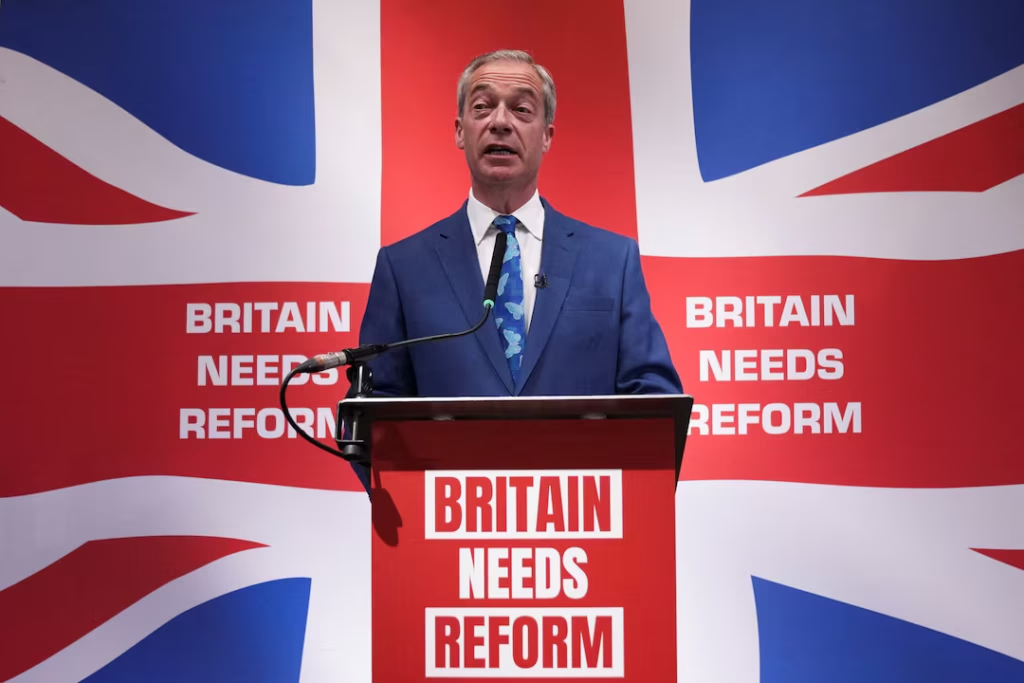
The introduction of the new rules comes as Reform UK continues to dominate opinion polls while facing renewed scrutiny over its fundraising practices.
Nigel Farage, whose anti-immigration party has led several national polls for more than a year, is currently under investigation by Parliament’s standards watchdog over whether he should have declared a £5 million donation received before he entered Parliament.
The contribution came from Thailand-based cryptocurrency billionaire Christopher Harborne and was reportedly made before Farage announced his intention to stand as a parliamentary candidate.
Reform UK has strongly rejected suggestions that any rules were broken, maintaining that the donation complied fully with existing electoral regulations.
Electoral Commission figures indicate that Harborne accounted for approximately two-thirds of Reform UK’s total funding during the previous year, making him the party’s largest financial supporter.
The scrutiny intensified further after reports emerged that Farage had been referred to Parliament’s standards watchdog over allegations that he failed to declare additional benefits unrelated to the donation. The parliamentary investigation remains ongoing.
The overlap between the regulatory changes and ongoing investigations has given broader discussions about transparency, accountability, and public trust in political institutions new impetus, despite ministers’ insistence that the latest reforms are intended to strengthen Britain’s political finance framework rather than target any specific party or politician.
The government contends that as global political and economic networks grow more intertwined, foreign financial influence has become one of the biggest challenges to democratic societies, necessitating stricter regulation.
By extending disclosure requirements to the pre-candidacy period, tightening residency rules for overseas donors and strengthening checks on corporate donations, ministers believe the reforms will make it substantially more difficult for foreign interests to channel money into British politics through indirect or poorly regulated routes.
Supporters of the proposals argue that the revisions modernise election safeguards to match current financial realities, particularly the growing significance of international wealth, digital assets, and cross-border financial transactions in political financing.
READ ALSO: Haaland’s Double Sinks Brazil, Norwagien Catches Mbappé and Messi in Golden Boot Race