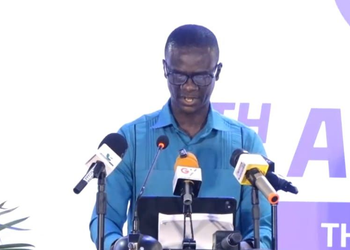
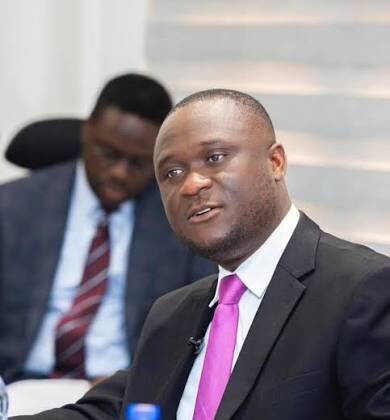
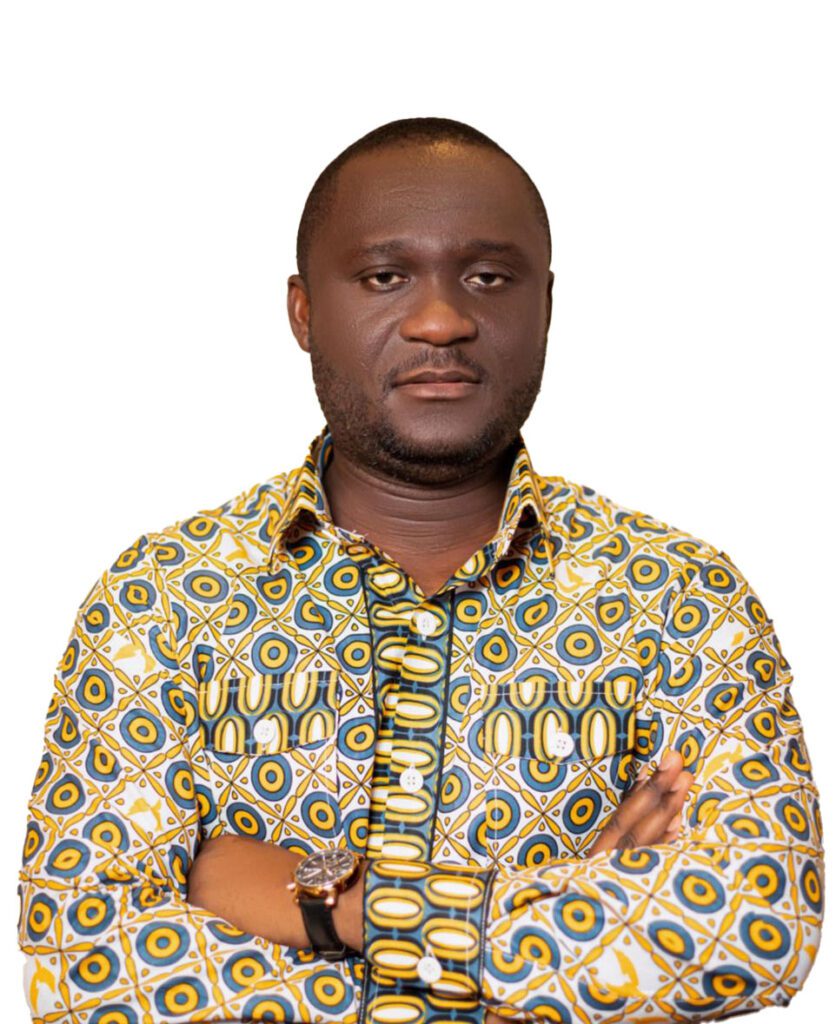
Frederick Amissah, Technical Advisor at the Ministry of Finance, has defended the Mahama administration’s handling of the Greater Accra Resilient and Integrated Development Project, insisting that claims of delay under the current government distort what actually happened to the loan facility over the past several years.
Speaking in a media interview, Mr Amissah walked through how the $350 million World Bank-funded project was used before and after the change in government. Amissah opened by reminding listeners that GARID sits within a broader portfolio of World Bank loan projects that Ghana carries as a state.
“These are loans we have contracted as a state,” he said, stressing that the country remains obligated to repay every dollar drawn from the facility, which makes scrutiny of how the funds were spent a matter of basic fiscal responsibility rather than political point scoring.
A Pattern of Questionable Spending
To illustrate what he described as a troubling trend inherited from the previous administration, Mr Amissah cited a separate World Bank project, the Ghana Economic Transformation Project, under which he said almost one billion Ghana cedis was spent on travel in 2024 alone.
He contrasted this figure with the cost of building a district hospital, noting that a government that could not complete a single district hospital in eight years, at a cost of roughly $30 million to $40 million, had spent a similar scale of money on travel within a single year.
That broader pattern, he said, informed how the current government approached GARID once President Mahama established a flood committee in March 2025 and directed the Finance Minister to back it with resources from the facility.
COVID Diversions Take Center Stage
According to Mr Amissah, of the $137 million drawn from the $350 million GARID facility, nearly half, some $65 million, was redirected toward COVID-19 related expenditure. He said only $60.8 million of that redirected amount had been properly retired, leaving about $4.2 million unaccounted for.
Pressed on what specific activities absorbed the $65 million, Amissah said the details would trouble most Ghanaians. He pointed to fumigation exercises that cost about $2.8 million, later found to be largely ineffective, along with $60.8 million shared directly to Metropolitan, Municipal, and District Assemblies.
He added that over $1 million went toward quarantine feeding, while nearly $3 million was recorded simply as “support for COVID-19 activities,” a category he said remains unclear even now. “We don’t know what that is,” he said of the vague classification.
Amissah argued that COVID could not justify this scale of diversion, recalling that the Mahama administration’s first term had built a $300 million stabilisation fund that was later drawn down, alongside a rapid support facility from the IMF and financing from the African Development Bank.
In his view, the pandemic became, in his words, “almost a ruse to claim more resources” that were never intended as grants but as loans the country must still repay.
Just $11.4 Million Reached Actual Flood Work
The core of Mr Amissah’s argument rests on a single set of figures. Between 2019 and 2024, he said, approximately $103.8 million had been drawn down and expended from the GARID facility. Of that amount, only $11.4 million actually went toward flood mitigation activities, the core purpose for which the loan was secured.

The remaining funds, he explained, went largely toward the COVID diversion already described, along with $22.1 million spent on training, including sessions held at Aqua Safari that he questioned as only loosely connected to flood prevention, and a further $7.9 million spent on consultancies.
Amissah did not dispute that consultants deserve payment for legitimate work, but questioned the scale of spending on training and consultancy when the borrowed funds were meant to protect communities from flooding.
Two Years, Thirteen Million Dollars
By contrast, Mr Amissah said that in the two years since the current administration took over, $13.52 million has gone directly into flood mitigation work, already surpassing the entire $11.4 million spent over the previous five to six years combined.
He noted that the GARID Project itself had requested commitment authorisation to spend funds across three years, from 2026 through 2028, but the Finance Ministry compressed that timeline, approving $76 million to be spent within two years instead, given the urgency of the work ahead of the rainy season.
Responding to the World Bank’s Language
Asked directly about a World Bank report stating that GARID’s implementation had been significantly constrained by fiscal measures introduced by the Ministry of Finance during 2025, Amissah drew a careful distinction.
He noted that the World Bank used the word “constrained,” not “delayed,” and said those fiscal measures reflected ongoing discussions to ensure funds were redirected toward their intended purpose rather than continuing a pattern of misallocation.
He rejected the idea that his ministry disagreed with the World Bank, insisting instead that the institution had never actually used the word delay, and that any suggestion otherwise amounted to a misinterpretation circulating separately from the Bank’s own position.
Implementation Problems Predate the Handover
Mr Amissah also pointed to disbursement records from before the change in government to argue that GARID faced execution problems well before the current administration took charge.
He said a $30 million disbursement in 2023 went largely unused that year and remained unused through 2024, with the project only requesting fresh disbursement around October or November of 2025.
“The project itself was facing implementation challenges,” he said, arguing that the current government has since accelerated the pace of execution rather than slowed it.
A Dispute Over Numbers and Narrative
Taken together, Mr Amissah’s account frames the GARID story as one of correction rather than delay, a redirection of funds toward flood mitigation after years in which the bulk of the facility went toward COVID spending, training, and consultancy fees.
Whether that framing settles the broader public debate over the project’s pace may depend on how future disbursements translate into visible flood prevention infrastructure across Accra in the months ahead.
READ ALSO: Gov’t to Expand Freight Operations to Mining Areas to Unlock Revenue Potentials