In a move to reintroduce the regional and district tribunals into Ghana’s judicial system, the proposed Tribunals Bill 2026 has renewed national discussions on the country’s judicial structure and constitutional obligations. The bill, currently before Parliament, seeks to establish regional and district tribunals as provided for under the 1992 Constitution.
The Member of Parliament for Odotori and Member of the Constitutional and Legal Affairs Committee, Honourable Anthony Mmieh, explained that the legislation seeks to address a constitutional gap that has existed for more than three decades. Honourable Mmieh stated that the Attorney General’s proposal aligns with constitutional provisions and aims to operationalise institutions already recognised by law.

Discussing the purpose of the bill, the Odotori MP noted that it would establish regional tribunals with jurisdiction comparable to the High Court and district tribunals with powers similar to those of the Circuit Court. He indicated that although tribunals previously operated within Ghana’s judicial framework, they gradually disappeared following the implementation of the 1992 Constitution.
According to Honourable Mmieh, the disappearance of the tribunals stemmed largely from the public perception attached to those institutions after the country’s constitutional transition. Consequently, physical tribunal structures, chairpersons and tribunal panels ceased to exist even though the Constitution continues to provide for them.
“The Constitution already provides for these tribunals. They have remained absent for years. This bill simply fills that constitutional void. Legally, nothing is wrong with its introduction. The time has come to operationalise those provisions.”
Honourable Anthony Mmieh
Additionally, the Odotori MP explained that Articles 126, 142 and 143 of the 1992 Constitution expressly recognised both regional and district tribunals. He added that Ghana’s Courts Act contains provisions acknowledging those judicial bodies despite their long absence from practical operation.
Provisions Within The Constitution Backing The Tribunal
Against this backdrop, Honourable Mmieh argued that the proposed legislation could not be described as unconstitutional because it draws its authority directly from the country’s supreme law. The emphasis, he said, rests on implementing constitutional provisions that successive governments have chosen not to activate.
Responding to questions on whether the country still has the option of leaving the tribunals dormant, Honourable Mmieh acknowledged that previous administrations exercised that discretion for many years. Nevertheless, he pointed out that the current Attorney General has decided to introduce legislation to activate these constitutional provisions.
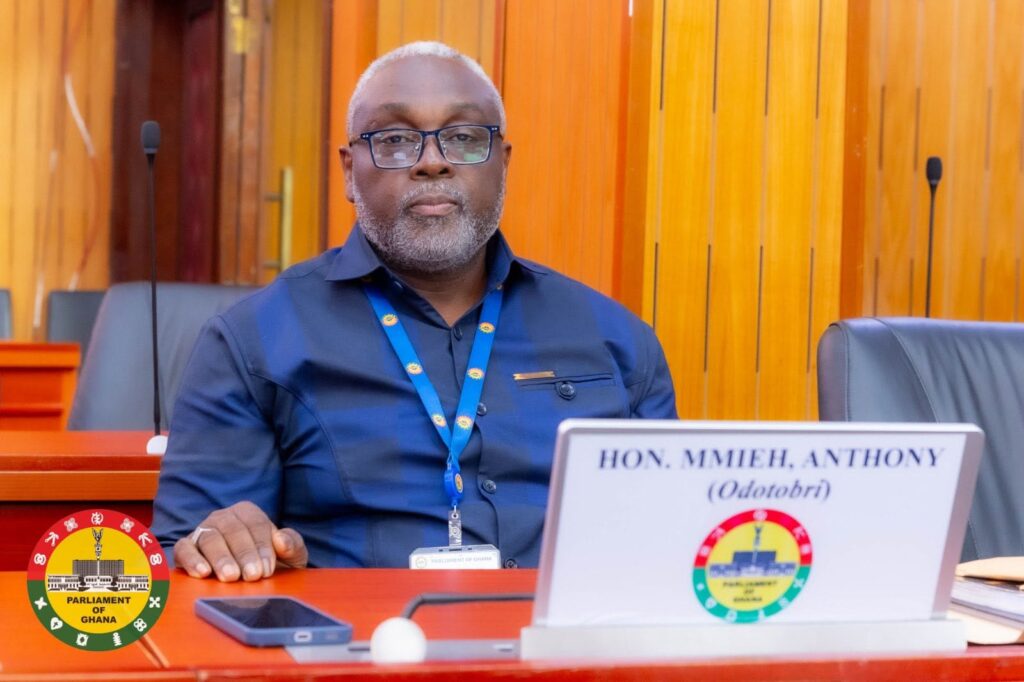
Furthermore, the Odotori MP emphasised that Parliament’s responsibility centres on examining the contents of the bill instead of debating the legality of establishing the tribunals. He observed that constitutional backing gives the proposal a firm legal foundation for parliamentary consideration.
In light of the ongoing debate, Honourable Mmieh remarked that the proposal represents a significant development within Ghana’s judicial framework because it seeks to revive institutions recognised by the Constitution since 1992. He added that discussions should therefore focus on how the legislation could effectively strengthen the administration of justice while remaining faithful to constitutional requirements.
Addressing public interest in the bill, Honourable Mmieh reiterated that the Attorney General’s initiative seeks to fill a longstanding gap within the judicial system instead of introducing an entirely new concept. He added that Parliament would continue scrutinising every provision before determining the next stage of the legislative process.
Committee Proposes Changes To Strengthen Tribunal Bill Before Approval
Honourable Anthony Mmieh disclosed that Parliament has already begun detailed scrutiny of the proposed Tribunals Bill 2026 as part of the legislative process. Honourable Mmieh indicated that the committee has recommended several amendments before the bill returns to the House for its second reading.
Discussing the progress of the legislation, the Odotori MP explained that the bill has successfully passed its first reading before being referred to the Constitutional and Legal Affairs Committee. He revealed that members have completed an initial review of the document and submitted their recommendations to the Attorney General’s Department for consideration.
According to Honourable Mmieh, the committee carefully examined every provision of the draft legislation before proposing changes intended to improve its implementation. He added that the revised document would return to Parliament after the suggested amendments have been incorporated.
“We examined every clause carefully and our recommendations seek to strengthen the bill. It will return to Parliament after the amendments.”
Honourable Anthony Mmieh

Additionally, Honourable Mmieh disclosed that one recommendation corrected a typographical error relating to the description of the tribunal chairman. He explained that although the amendment appears minor, accuracy is essential in every piece of legislation considered by Parliament.
Another important recommendation is on the timetable for tribunal proceedings contained in the schedule of the bill. The Odotori MP stated that the committee considered the proposed 42 day period for handling cases insufficient and therefore proposed extending it to 60 days.
In further deliberations, Honourable Mmieh explained that the committee also reviewed provisions governing the making of regulations under the proposed law. Consideration, he said, focuses on assigning that responsibility to the Ministry of Justice instead of the Chief Justice.
“The oversight structure is important. Checks and balances strengthen public confidence. Every institution benefits from accountability.”
Honourable Anthony Mmieh
Responding to questions about that recommendation, Honourable Mmieh argued that regulations required to operationalise the law should come from the ministry responsible for justice administration. He added that placing the responsibility within the ministry would provide a clearer administrative framework for implementation.
Addressing issues within the judiciary, the Odotori MP acknowledged that existing courts continue to face significant logistical challenges. He pointed to inadequate court infrastructure, limited office space for judges and delayed completion of judicial facilities in parts of the country, including Wa. He also recognised arguments that resources could also be directed towards strengthening the existing court system.
Bringing his remarks to a close, Honourable Mmieh indicated that Parliament’s recommendations seek to improve the quality of the proposed legislation instead of altering its constitutional purpose. He added that continuous engagement between the Attorney General’s Department and Parliament would help shape the final version of the bill before its eventual consideration by the House.