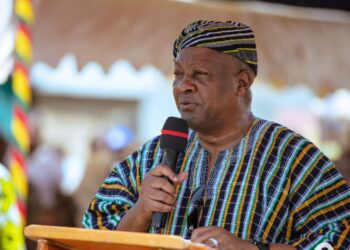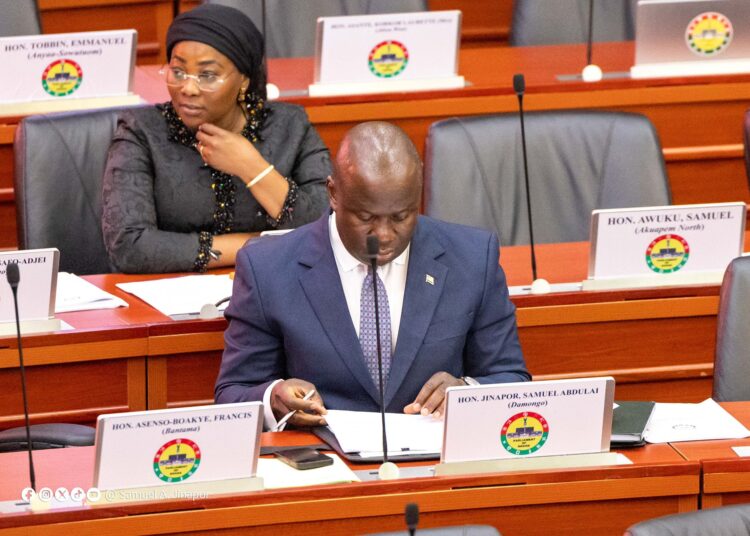
The Member of Parliament for Damongo and Ranking Member of the Foreign Affairs Committee, Honourable Samuel Abu Jinapor has criticised xenophobic attacks against African nationals in South Africa, describing the situation as a setback to the ideals of continental unity. He stated that the treatment of migrants from other African countries undermines the principles of solidarity that guided the continent’s liberation struggles.
In highlighting the history of South Africa, he said Ghana and other African nations played significant roles in South Africa’s fight against apartheid and the eventual emergence of a democratic state. He argued that the historical relationship between both countries makes the current tensions deeply unfortunate.
Furthermore, Honourable Jinapor recalled the support African countries provided during the struggle against apartheid. He noted that Ghana was recognised among nations that contributed to South Africa’s liberation despite not sharing a geographical border with the country.

The Ranking Member referenced the role of former President Jerry Rawlings in supporting liberation efforts and cited suggestions that he provided assistance that helped Nelson Mandela during his years as a freedom fighter. He also mentioned frontline states including Mozambique and Zimbabwe, which offered support during the anti apartheid struggle.
“The way Africans are treating each other is unfortunate and a major setback to Pan Africanism. Ghana played a role in South Africa’s liberation struggle, and it is painful to see these developments today.”
Honourable Samuel Abu Jinapor
Honourable Jinapor stated that the emergence of anti migrant sentiments in South Africa requires serious reflection by leaders across the continent. He said such developments weaken the vision of African unity and create difficulties for efforts aimed at strengthening cooperation among nations.
The Current Xenophobic Actions Attributed To Political Tensions
Describing the rising tensions to political discussions ahead of elections in South Africa, he indicated that the anti migrant rhetoric during political seasons can deepen divisions and create challenges for governments attempting to address xenophobic incidents.
From his perspective, the situation requires diplomatic engagement at the highest level to rebuild confidence between Ghana and South Africa. He explained that the relationship between both countries has suffered from weakened communication channels, especially between their foreign affairs authorities.
Additionally, Honourable Jinapor said the matter should move beyond routine diplomatic exchanges and receive attention from the presidencies of both nations. He suggested that direct engagement between Ghana’s President and South Africa’s President could help restore stability in bilateral relations.
The Ranking Member also supported Ghana’s decision to adopt a stronger approach through diplomatic and multilateral platforms. He said the country’s position of seeking justice for affected citizens aligns with efforts to protect the rights of Ghanaians abroad.

However, he stressed that diplomatic firmness must be balanced with strategic engagement. He explained that international relations often require a combination of strong positions and constructive dialogue to achieve lasting outcomes.
He referred to the principle of using both pressure and negotiation in diplomacy, noting that countries must create room for discussions while pursuing national interests. He added that Ghana’s response should remain focused on securing justice and protecting citizens.
Honourable Jinapor also backed possible compensation for Ghanaians who suffered losses through xenophobic attacks if such claims are supported by international law. He compared the pursuit of compensation for affected citizens to wider reparatory justice efforts supported by Ghana over historical injustices.
The Damongo MP stated that Ghana’s advocacy for reparations linked to the transatlantic slave trade demonstrates the country’s commitment to justice for victims of historical and contemporary wrongs. He added that similar principles could guide efforts to seek remedies for citizens affected by attacks abroad.
He further urged stakeholders to approach the Ghana South Africa relationship with a long term perspective. He noted that restoring trust would require commitment from both governments and stronger diplomatic cooperation.
Mining Reforms Essential Empower Local Participation
Speaking on the country’s mining issues, Honourable Samuel Abu Jinapor stated that Ghana’s mining sector must focus on increasing local participation without confusing the concept with state control of private investments. He explained that resource nationalism and indigenisation represent different approaches to managing natural resources.
The Damongo MP, who previously served as Minister for Lands and Natural Resources, said the discussion around Ghana’s extractive sector requires careful understanding. He noted that policies aimed at strengthening local involvement should be separated from measures that involve government takeover of privately owned mining operations.
Addressing the debate on the future of the mining industry, Honourable Jinapor explained that resource nationalism generally involves stronger state intervention in the ownership and control of natural resources. He contrasted this with indigenisation, which focuses on increasing the participation of citizens and local businesses within the sector.

From his view, the two concepts carry different meanings and should not be treated as the same policy direction. He indicated that Ghana’s objective should be to create opportunities for local actors while maintaining a stable environment for investment.
“Indigenisation of the mining sector is something I fully support. There is a clear difference between empowering local participation and taking over privately owned mining interests.”
Honourable Samuel Abu Jinapor
The Ranking Member stated that efforts to increase Ghanaian involvement in mining did not begin under the current administration. He explained that previous governments contributed to the gradual development of policies designed to ensure greater local ownership and participation.
Referencing the role of former President Nana Akufo-Addo in advancing measures aimed at strengthening local involvement in the mining industry, he added that discussions around indigenisation have evolved over several administrations.
Additionally, Honourable Jinapor argued that Ghana must continue developing policies that allow citizens to benefit more directly from the country’s natural resources. He stated that mineral wealth should contribute significantly to economic opportunities for Ghanaians.
In light of this, he emphasised that the conversation around mining reforms requires a balanced approach. He explained that policies must encourage local participation while protecting investor confidence and maintaining the country’s attractiveness as a mining destination.
Measures To Boost The Countries’ Extractive Sector
The Ranking Member noted that Ghana’s extractive sector remains an important contributor to national development. He suggested that stronger local capacity within the industry would improve economic benefits and create more opportunities for businesses and professionals.
Moreover, he stated that empowering local participation should involve deliberate measures to build expertise among Ghanaian companies and workers. He explained that such steps would help citizens play greater roles across different levels of the mining value chain.
Changing his focus to policy direction, Honourable Jinapor stressed the need for a national conversation on the future of mining governance. He argued that the subject goes beyond political discussions and requires contributions from industry experts, policymakers and citizens.
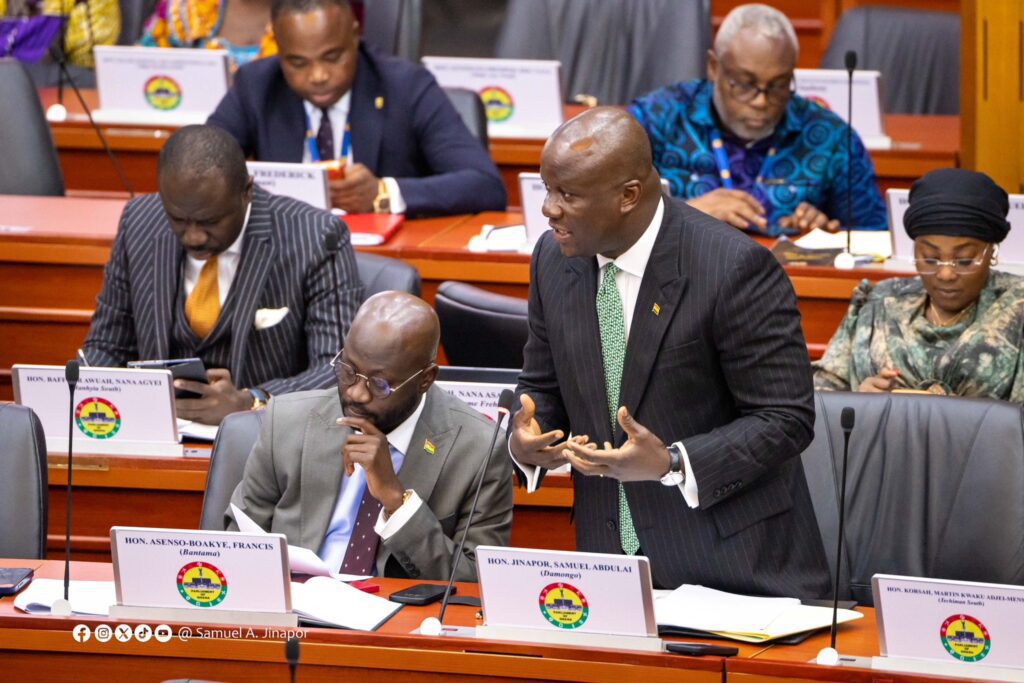
He further urged stakeholders to examine how Ghana’s mineral resources can support sustainable development. He said effective reforms should prioritise national benefits while ensuring responsible management of natural resources.
Additionally, the former Lands and Natural Resources Minister stated that mining policies must be guided by clear principles and long term planning. He noted that successful resource management depends on balancing economic growth, local empowerment and responsible investment.
The Damongo MP also indicated that Ghana’s mining sector has the potential to generate greater value when citizens are actively involved. He encouraged continuous efforts to strengthen indigenous businesses and improve technical capacity within the industry.
Nevertheless, Honourable Jinapor cautioned against approaches that could create uncertainty within the sector. He stressed that reforms should promote participation and growth while preserving confidence among legitimate investors.
READ ALSO: Tribunals To Fill Constitutional Void, Strengthen Justice Delivery — Mmieh