The Minister of Mines and Mineral Resources of Sierra Leone has officially launched the nation’s milestone National Strategy for Critical Minerals (2026–2031), signaling an assertive step forward in realizing the broader “Africa Local Content Dream” through the responsible development of its natural resource endowment.
This comprehensive five-year framework establishes an explicit structural pathway to identify, prioritize, and manage the country’s critical mineral reserves to capture maximum domestic economic value.
Designed as a proactive policy response to the accelerating global demand for inputs essential to clean energy technologies, the initiative seeks to systematically attract credible foreign direct investment, advance indigenous green industrialisation, and build bulletproof governance structures across the domestic extraction sector.
“This Strategy gives Sierra Leone a clear pathway to convert its critical mineral endowment into responsible investment, value addition, jobs, transparency and long-term national development.”
Minister of Mines and Mineral Resources.
The Ministry of Mines and Mineral Resources noted that the strategic framework is firmly anchored in the legal and policy architecture of the state, drawing its operational legitimacy from the Constitution of Sierra Leone, the modern provisions of the Mines and Minerals Development Act, 2023 (Act No. 16 of 2023), and the foundational Sierra Leone Minerals Policy (2018).
These legislative instruments provide an integrated regulatory bedrock that guarantees absolute transparency, strict corporate accountability, and long-term environmental sustainability.
By establishing clear legal operational boundaries, the government aims to mitigate historical extractive vulnerabilities, ensuring that future exploration licenses are granted through competitive, open processes that protect the rights of host communities while offering commercial predictability to international mining conglomerates.
Redefining National Wealth through Green Industrialisation
The government of Sierra Leone describes these specialized critical minerals as a highly strategic component of the nation’s overarching wealth, carrying vital implications for economic diversification, national security, and the global energy transition.
To move away from the traditional, low-value export models that have historically characterized sub-Saharan extraction, the newly enacted strategy outlines an array of priority actions, targeted programs, and clear institutional responsibilities.
Key operational pillars within the five-year plan include the rapid modernization of national geological data systems, the enforcement of rigorous environmental stewardship protocols, and the deployment of transparent, digitalized licensing mechanisms.

Importantly, this domestic roadmap does not operate in isolation; it is designed to align seamlessly with collaborative continental initiatives, explicitly reinforcing the core tenets of the Africa Mining Vision and the African Green Minerals Strategy.
By embedding these regional architectures into its national laws, the country is positioning itself to champion localized value-addition, ensuring that raw materials undergo primary and secondary processing within domestic borders before export.
This deliberate alignment with pan-African mineral goals transforms the local mining sector from a simple provider of raw materials into a dynamic hub for industrial processing and technological collaboration.
The Imperative for Sovereign Local Management of African Minerals
The rollout of Sierra Leone’s targeted strategy underscores an urgent, continent-wide economic necessity for the sovereign, localized management of Africa’s vast mineral resources.
For generations, African economies have been vulnerable to international price volatility and asymmetric trade relationships because they exported unprocessed ores while importing high-value finished technology goods.
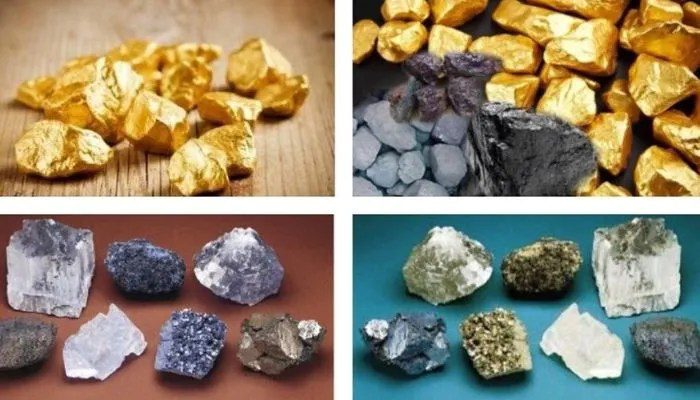
In the current global race for decarbonization, Africa holds a significant portion of the world’s graphite, lithium, cobalt, manganese, and rare earth elements, which are indispensable for manufacturing electric vehicles, wind turbines, and utility-scale battery storage units.
Fulfilling the “Africa Local Content Dream” requires African states to shift from passive resource suppliers to active market gatekeepers through robust local management frameworks.
True economic sovereignty means that domestic authorities must oversee resource mapping, dictate sustainable extraction paces, and enforce strict domestic integration policies.
This structural pivot ensures that African nations retain a fair share of the financial value generated along global clean energy supply chains.
Local management keeps high-skilled engineering and refining jobs within domestic borders, broadens the sovereign tax base, and ensures that mining revenues directly fund critical public infrastructure, domestic education systems, and rural development projects.
Boosting Investor Confidence and Structural Sector Governance
Ultimately, the successful deployment of this critical minerals framework is expected to boost international investor confidence by offering a stable, transparent, and highly predictable regulatory environment.
By formalizing clear institutional mandates and eliminating bureaucratic redundancies, Sierra Leone is presenting a sophisticated model where rigorous resource governance and attractive commercial returns can coexist harmoniously.

The strategy actively addresses the modern ESG (Environmental, Social, and Governance) criteria that reputable international financiers demand, thereby filtering out predatory, speculative actors in favor of long-term development partners.
Over the next five years, the strategic actions contained within this document are anticipated to catalyze inclusive economic growth and spark an enduring industrial transformation across the country.
By establishing a robust system where mineral extraction directly feeds local supply chains and creates sustainable employment, the state is building a resilient post-mining economic legacy.
This pioneering strategy offers a practical blueprint for other resource-rich African nations, demonstrating that with political will and structured planning, the global energy transition can be leveraged to fuel domestic prosperity and secure true economic independence.
READ ALSO: Iran’s Late Supreme Leader Laid To Rest