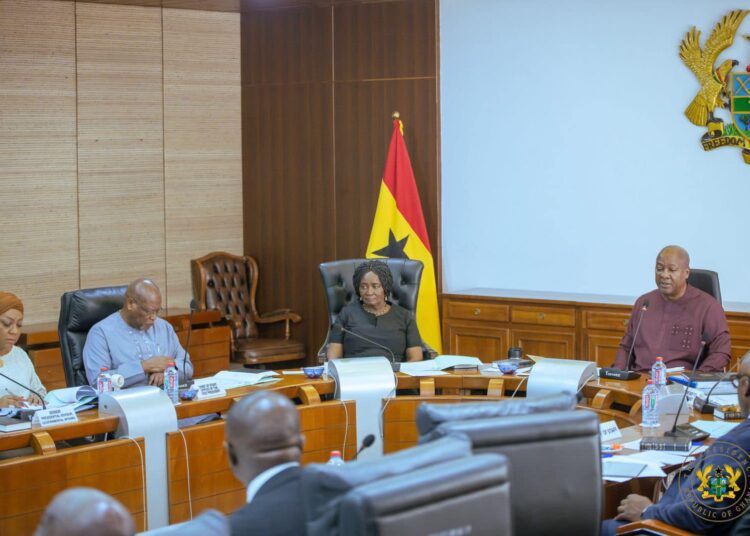
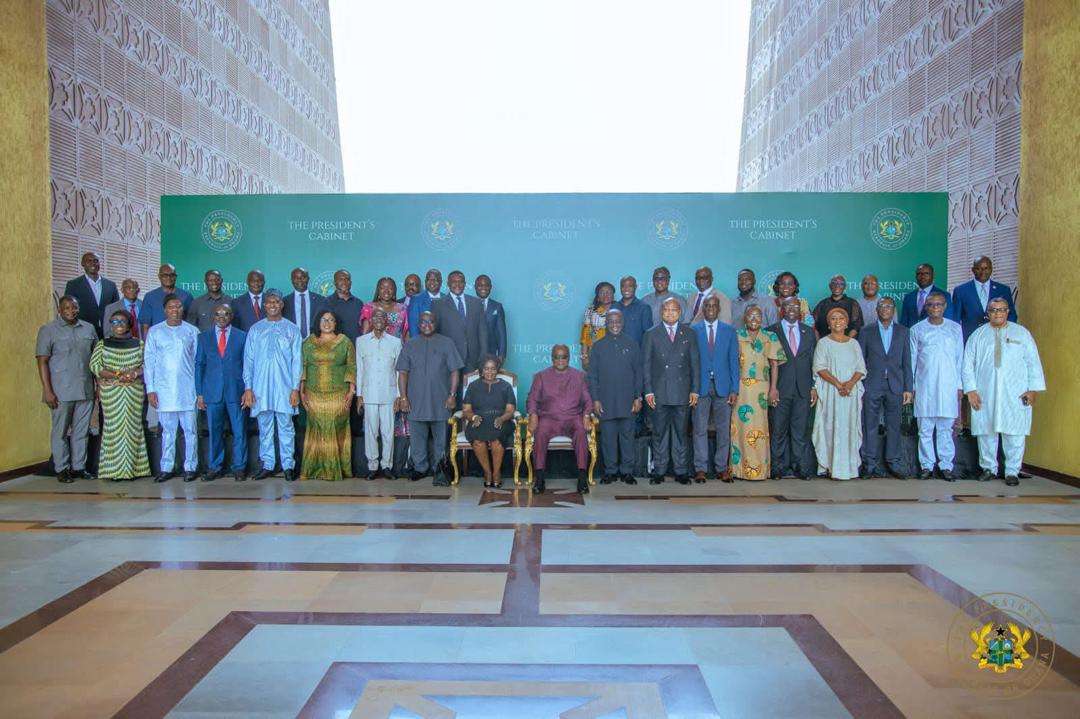
Ghana’s Cabinet has entered its third and final session to conclude the government’s position on sweeping constitutional review proposals, moving the country a step closer to what could become the most significant reform of its governance structures in decades.
Presidential Spokesperson and Minister of State in charge of Government Communications, Felix Kwakye Ofosu, confirmed that the session was underway as government works to finalise its stance ahead of formal implementation.
The Cabinet’s deliberations follow the submission of a comprehensive report in December 2025 by the Constitutional Review Committee, led by Professor H. Kwasi Prempeh.
That report has since undergone multiple rounds of scrutiny, with Cabinet holding several sessions throughout the first-half of 2026 to settle government’s position before handing the document to the newly established Constitutional Review Implementation Committee, which will guide the reforms through the legislative process.
A Process Rooted in Cross-Country Engagement
The push for constitutional review began in January 2025, when President John Dramani Mahama inaugurated an eight-member committee tasked with identifying and addressing structural gaps in the country’s governance framework.
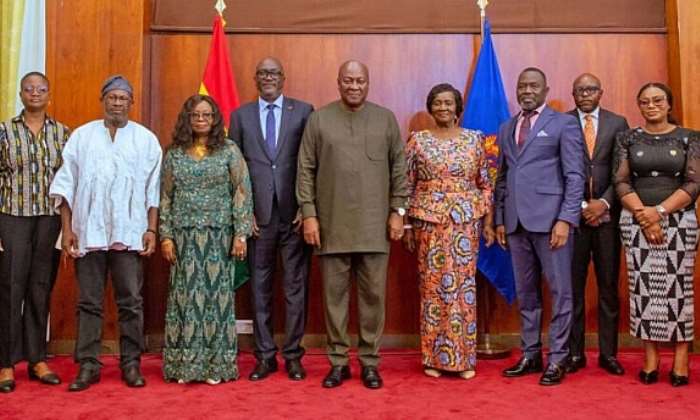
Between February and November 2025, the committee conducted zonal and institutional engagements across the country, gathering input from citizens and stakeholders on how Ghana’s constitution should evolve.
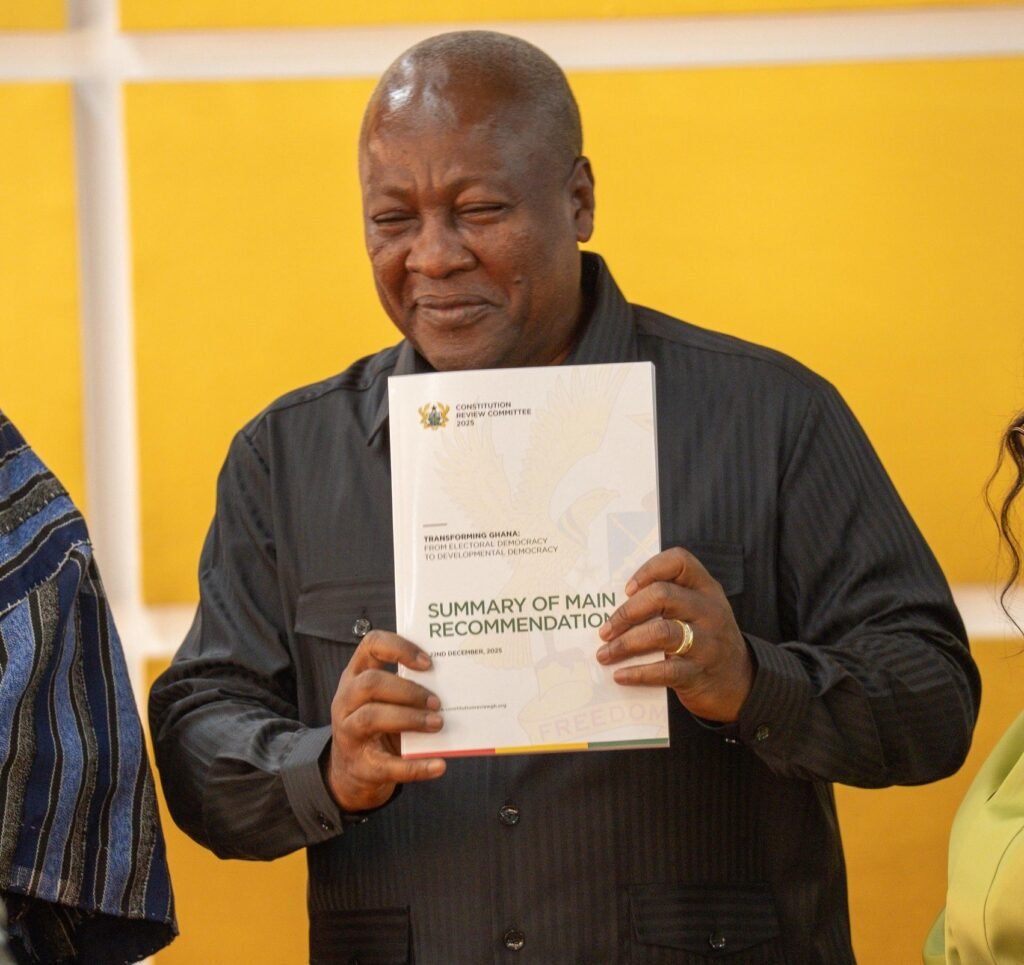
The committee’s work culminated on December 22, 2025, when Professor Prempeh formally presented the final recommendations to President Mahama. By March 2026, the President had announced plans to roll out the Constitutional Review Implementation Committee, setting the stage for the current phase of Cabinet deliberations that are now nearing completion.
Proposed Changes to the Presidency and Parliament
Among the most consequential recommendations contained in the committee’s final report is a proposal to restructure the presidential term. The committee has suggested shifting from the current four-year tenure to a five-year tenure, a change intended to give elected leaders greater continuity to pursue long-term policy without the disruption of frequent electoral cycles.
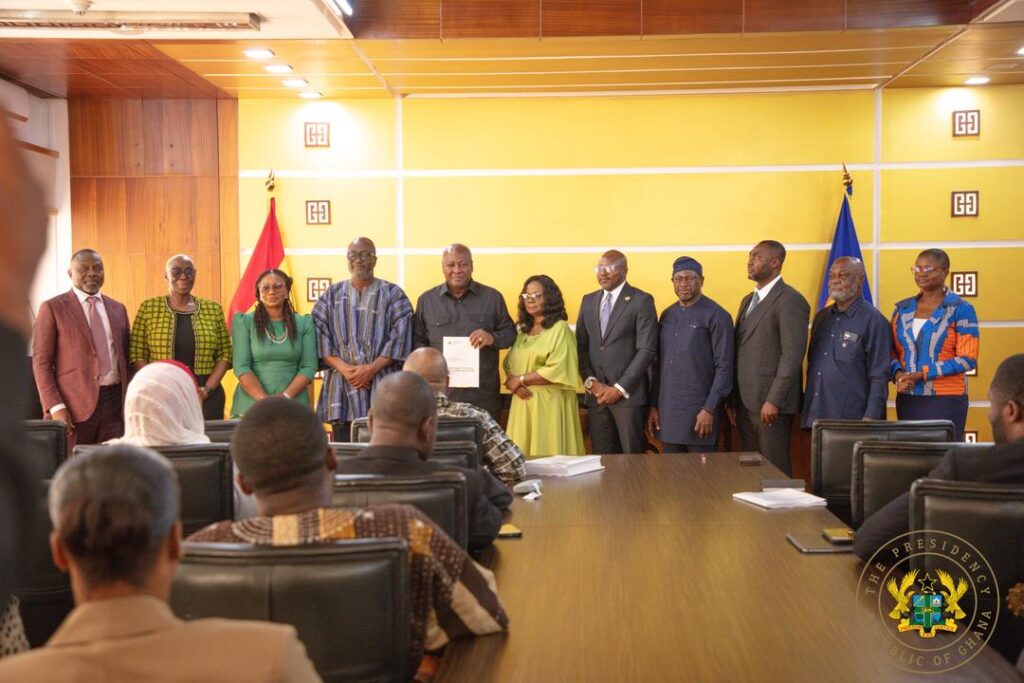
Despite this proposed extension, the committee firmly upheld the existing two-term limit for the presidency, explicitly ruling out any possibility of a third term. This provision signals an intent to preserve one of the more widely supported safeguards in Ghana’s current constitutional order, even as other structural elements face significant revision.
The report also recommends severing the constitutional requirement that compels the President to appoint the majority of government ministers from sitting Members of Parliament.
If adopted, this change would represent a fundamental shift in the relationship between the executive and legislative arms of government, potentially reducing the concentration of power currently vested in the presidency through parliamentary appointments.
Decentralisation and the Push for Elected Local Leaders
The committee’s recommendations extend deeply into local governance, proposing that Ghanaians directly elect their Metropolitan, Municipal and District Chief Executives, commonly known as MMDCEs.
Currently, these positions are filled through presidential appointment, a system that has long drawn criticism for limiting local accountability and citizen participation in district-level governance. Alongside this proposal, the committee has recommended integrating traditional chiefs more directly into the legislative and governing frameworks of district assemblies.
This recommendation reflects an attempt to formally recognise the role traditional authorities already play in many communities, while embedding that influence within the structures of local government rather than leaving it informal.
Strengthening Accountability and Expanding Political Rights
On accountability, the committee has proposed the formation of an independent Ethics and Anti-Corruption Commission with exclusive prosecutorial powers.
Such a body, if established, would mark a significant departure from the current arrangement, where anti-corruption enforcement is distributed across multiple agencies with varying degrees of independence and prosecutorial authority.
The report also recommends lifting the existing ban that prevents dual-citizenship Ghanaians from contesting parliamentary seats. This proposal, if adopted, would open political participation to a broader segment of the Ghanaian diaspora, many of whom have previously been excluded from seeking legislative office due to their dual nationality status.
The Road Ahead for Implementation
With Cabinet’s position paper nearing finalisation, the next phase of the process will involve the Attorney General and legal counsel consolidating the combined recommendations into a coherent legal document.
This legal consolidation is expected to take between one and two weeks, after which the Constitutional Review Implementation Committee will take over to drive bi-partisan legislative coordination.
From there, the reform proposals will follow two distinct paths depending on their constitutional classification. Non-entrenched provisions will proceed through ordinary parliamentary votes, while entrenched provisions, which touch on more fundamental aspects of the constitution, will require approval through a national referendum.
Hurdles That Could Slow the Reform Agenda
Despite the progress made so far, several risks could complicate the path toward full implementation. Entrenched provisions face a particularly high legal bar, requiring a minimum 40 percent national voter turnout alongside a 75 percent approval threshold before they can pass into law.
Meeting both conditions simultaneously has historically proven difficult in Ghana’s electoral context, raising questions about whether some of the more ambitious proposals will ultimately survive the referendum process.
Political consensus presents another significant challenge. The successful transition of these structural reforms depends heavily on bi-partisan cooperation within a Parliament that remains divided along political lines.
Without sustained cross-party support, key elements of the reform agenda could stall during the legislative phase, regardless of how thoroughly Cabinet has finalised its position.
Financial considerations also loom over the process. Implementing large-scale structural changes, combined with the logistical and administrative costs of conducting a national referendum, will require substantial state resources that have not yet been factored into existing budgets. How government intends to fund this next phase remains an open question as the process moves forward.
As Cabinet completes its final adjustments to the position paper, attention will now shift to the Attorney General’s office and, subsequently, to the Constitutional Review Implementation Committee, whose work will determine how many of these ambitious proposals ultimately translate into lasting constitutional change.
READ ALSO: FAO Warns of Rising Volatility in Global Coffee, Cocoa and Tea Prices