
Government’s decision on the ownership structure of Ghana’s proposed second Gas Processing Plant (GPP2) should be anchored on reliable gas supply, credible financing and technical capability rather than political considerations, the Africa Centre for Energy Policy (ACEP) has advised.
The caution comes as government weighs different financing and ownership models for the long-delayed gas processing facility, which is expected to complement the Atuabo Gas Processing Plant and strengthen gas supply for thermal power generation.
Although discussions on the project have resurfaced under the current administration, no final policy decision has been announced on how the plant will be financed, owned or operated.
Speaking in an interview with The Vaultz News, Head of Petroleum and Conventional Energy at ACEP, Mr Kodzo Yaotse, said government was still assessing several options before settling on a preferred model, stressing that the ultimate objective should be to guarantee sustainable gas supply to support the country’s energy security.
Government yet to settle on ownership model
According to Mr Yaotse, the idea of constructing a second gas processing plant has been under consideration for more than a decade, but successive attempts to advance the project have been constrained largely by financing challenges.
He explained that Ghana Gas had initially pursued the project but struggled to mobilise the capital required to move it beyond the planning stage.
The current administration, he said, has reopened discussions on the project and is evaluating multiple financing and ownership arrangements before taking a final decision.
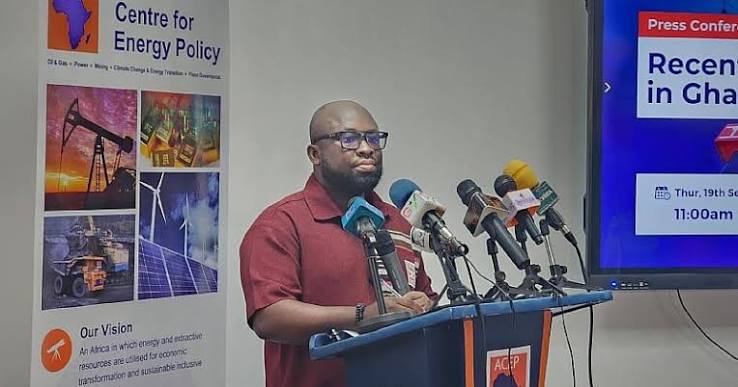
The government is yet to come up with the outcome of those conversations on what the policy direction is at this point. We have been assured that that decision is going to come very soon to give us some direction on where we are going in terms of who is going to own and run the plant.
Kodzo Yaotse, Head of Petroleum and Conventional Energy, Africa Centre for Energy Policy (ACEP)
Mr Yaotse disclosed that the discussions have gone beyond the question of ownership to include the commercial viability of the project, the availability of gas feedstock and the most suitable financing mechanism.
Among the options being explored, he said, are direct government financing, private sector investment, joint ventures involving upstream gas producers and public-private partnership arrangements that would allow private investors to build and operate the facility before eventually transferring ownership to the state.
Industry observers say the eventual structure adopted could influence not only the pace of implementation but also the long-term commercial sustainability of the project.
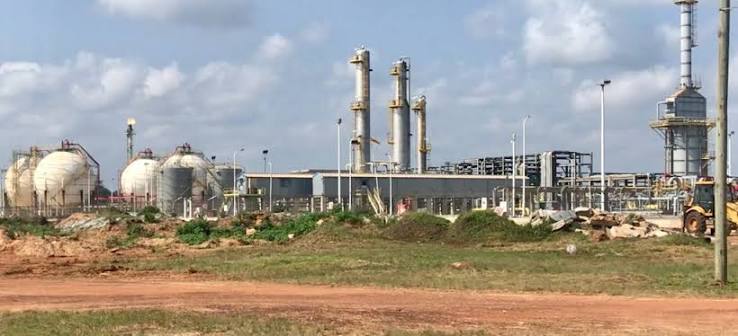
The proposed facility is expected to complement the Atuabo Gas Processing Plant by processing additional natural gas from offshore fields to meet rising domestic demand, particularly for electricity generation and industrial use.
Reliable gas supply more important than ownership
While debate has largely centred on whether the plant should remain under state control or involve private participation, Mr Yaotse argued that ownership should not overshadow the more fundamental issue of ensuring reliable gas supply.
He explained that constructing a processing facility without guaranteed feedstock would expose the country to significant financial and operational risks.
For most people, whatever the model is, the key concern on people’s mind is how do we secure supply, because then that would also feed into our power security.
Kodzo Yaotse
According to him, government must satisfy itself that sufficient volumes of natural gas will be available throughout the operational life of the plant before committing substantial investment.
Otherwise, he warned, Ghana could end up with an expensive processing facility operating below capacity or be compelled to import gas at significantly higher cost to keep the plant functional.
Such a scenario, he noted, would undermine the project’s economic rationale while weakening the country’s efforts to strengthen energy security.
Mr Yaotse further explained that discussions have also examined the possibility of involving upstream petroleum partners supplying gas from Jubilee or other producing fields, allowing them to participate in financing the project while guaranteeing long-term feedstock supply.
He said such arrangements could improve project bankability and reduce investment risks if carefully structured.
Credible investors and transparency critical
Beyond financing, Mr Yaotse stressed that any eventual private sector participation should be based on technical competence, financial strength and transparent procurement rather than political considerations.
He maintained that whichever model government finally adopts, the overriding consideration should be whether the selected investor possesses the financial capacity to complete the project and the technical expertise to operate it efficiently.
It should be a competitive process that allows the government the opportunity to select from among companies or entities that can offer the best deal for the country.
Kodzo Yaotse
He added that maintaining transparency throughout the selection process would be essential to safeguarding public confidence and ensuring value for money.

It should be a competitive process that is isolated from politics and politically exposed persons who may want to insert themselves into that process.
Kodzo Yaotse
Mr Yaotse noted that internationally recognised project delivery models, including build-operate-transfer arrangements, remain available to government and could be considered depending on the state’s appetite for investment risk and the level of operational control it intends to retain.
Under such arrangements, he explained, private developers could finance and operate the facility for an agreed period before transferring ownership to government after recovering their investment.
He stressed, however, that the chosen model should ultimately support the country’s long-term energy objectives rather than merely provide a short-term financing solution.
Growing attention on Ghana’s gas infrastructure
The discussion surrounding GPP2 comes at a time when Ghana is seeking to expand domestic gas processing capacity to support electricity generation, reduce dependence on imported fuels and maximise value from its offshore petroleum resources.
Recent months have also seen renewed debate over the ownership structure of the proposed facility following calls by some energy policy stakeholders for government to retain full ownership in the national interest.
However, Mr Yaotse believes the conversation should extend beyond ownership alone.
According to him, securing dependable gas supply, identifying technically competent partners and establishing transparent governance arrangements will be more decisive in determining whether the project succeeds.
With government expected to announce its preferred policy direction in the coming months, industry stakeholders say the decisions taken on GPP2 could shape Ghana’s gas infrastructure development and electricity security for years to come.
For ACEP, the central issue is not whether GPP2 is publicly or privately owned, but whether the project is supported by reliable gas supply, sound commercial fundamentals and transparent governance capable of sustaining Ghana’s long-term energy security.
READ ALSO: GSE Bulls Stay Firm as Market Adds GH¢200 Million