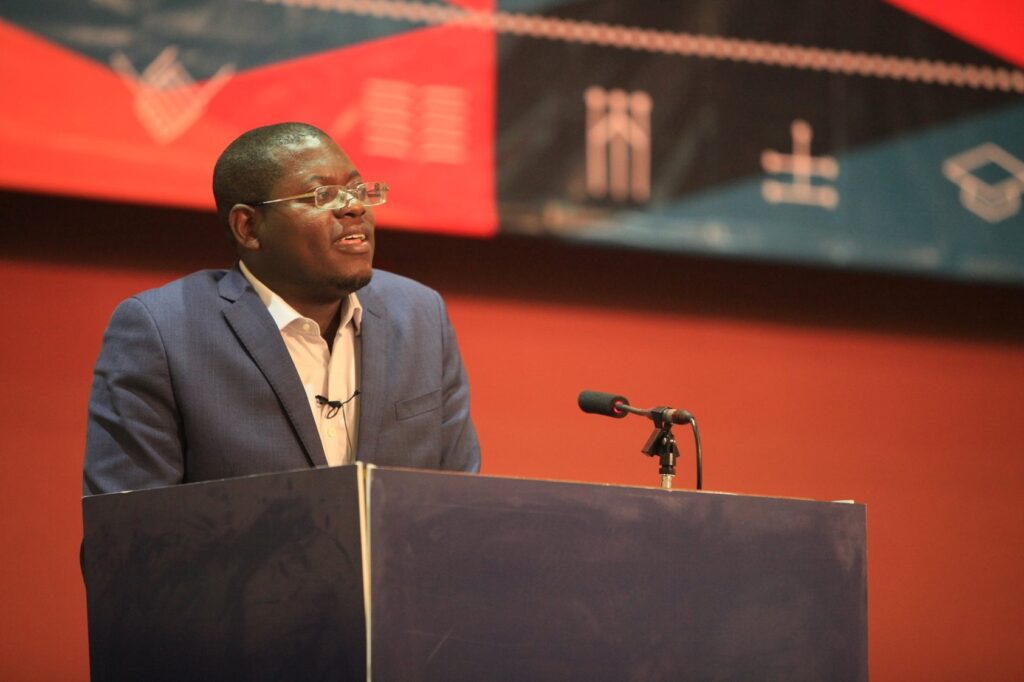
Bright Simons, Policy Analyst and Vice President of the IMANI Centre for Education, has alleged that corporate negligence and the habit of signing poorly understood contracts severely worsened the ongoing legal battle over the Black Volta goldmine.
This critique targets the ownership dispute between the indigenous Ghanaian firm Engineers & Planners (E&P) and international investors, highlighting how a failure to thoroughly digest legal agreements can turn highly publicized transactions into long, drawn-out international battles that undermine the credibility of local players in the mining industry.
“But, of course, the real issue is not that E&P was swindled out of $100 million by con investors but that it keeps signing agreements it doesn’t seem to properly read through. The original September 2023 agreement that brought E&P and the investors together in the first place was not a simple sales agreement. The idea that after spending roughly $120 million settling the debts of previous investors and investing in exploration to quadruple the gold reserves, the investors would just take $100 million and walk away is not only naive but also ludicrous.”
Bright Simons

To fully understand the breakdown, one must look at the timeline of the legal and financial maneuvers that have defined this case.
Although E&P’s advocates assert that the company successfully resolved the dispute by wiring roughly $100 million to investors in early October 2025 under a Confirmation Agreement, the judicial reality tells a very different story.
A London High Court eventually instructed E&P to comply with the international arbitration tribunal’s interim award which labeled the company as a trespasser on the concession—demonstrating that the substantial financial transfer did not legally secure the mine as claimed.
Chronology of the Legal and Financial Escalation
In explaining how the situation escalated, Bright Simons highlighted the glaring contradictions in the dates surrounding E&P’s financial transactions and subsequent judicial rulings. According to the analyst, E&P’s supporters claim the company wired roughly $100 million to investors on October 6 and 7, 2025, under a Confirmation Agreement dated September 23, 2025, to secure ownership.
However, Simons notes that if a final settlement had been reached, it is illogical that the international tribunal still ruled against E&P just weeks later, instructing them to vacate the concession on grounds of trespass.

“If all the issues had been settled and full payment indeed made,” Bright Simons observed, then the subsequent enforcement of the tribunal’s order by the London High Court in June 2026 suggests E&P is receiving “badly, really badly” corporate and legal counsel.
Framing the Conflict: Beyond Mere Corporate Greed
The framing of the dispute by E&P’s representatives as a simple case of investor “greed” has been described by the IMANI Vice President as a highly “unsophisticated” view of complex commercial contracts.
He cautioned that a transaction where $100 million in bank-borrowed capital from the ECOWAS Bank for Investment and Development (EBID) is disbursed without functional safety nets like escrow accounts or bulletproof guarantees raises serious red flags.
Bright Simons questioned whether Ghana can remain confident in its strategic extractive assets when major local players bypass basic risk-management practices.
He warned that paying out such vast sums only to end up with a worsening legal dispute is indicative of a systemic failure to grasp the legal realities of joint-venture and acquisition frameworks.
Macroeconomic Threats to Ghana’s Mining Sector
Beyond the immediate corporate fallout, this high-profile dispute carries severe systemic risks for Ghana’s broader mining sector, which remains a key pillar of the national economy.
A protracted legal battle between a prominent indigenous firm and international investors over a highly prized asset like the Black Volta goldmine threatens to dampen foreign direct investment (FDI) in the extractive industry.
When local champions are perceived as failing to respect international arbitration rulings or circumventing established legal procedures, it raises the risk premium for international financiers considering Ghanaian projects.
This skepticism is especially damaging at a time when Ghana seeks to balance domestic ownership with the massive capital requirements of modern deep-and-hard-rock mining.
Ultimately, if local players do not adhere strictly to global contract standards, the nation risks choking off the vital global investment necessary to convert exploration concessions into operational, revenue-generating mines.
READ ALSO: Spain Reach Second Ever World Cup Final After Beating France