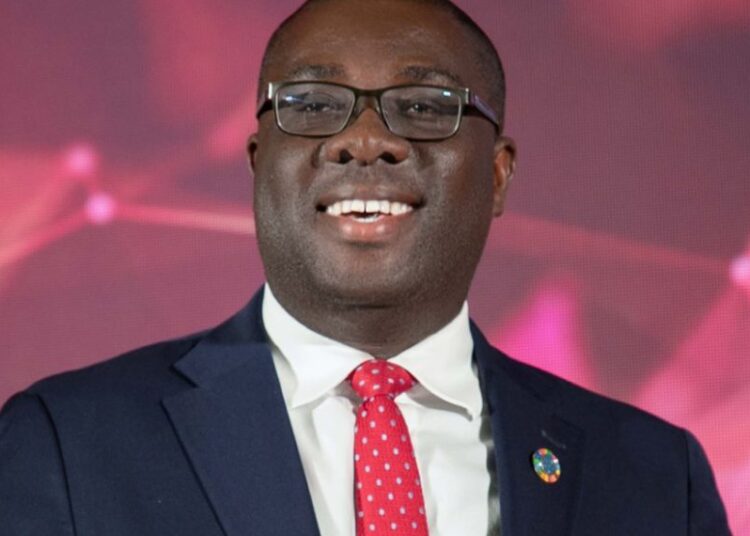
The Member of Parliament for Akuapim North, Honourable Samuel Awuku, has argued that the Economic and Organised Crime Office (EOCO) does not have the authority to act as a judicial body when determining bail conditions for suspects. He stated that investigative institutions must operate within constitutional limits and ensure that the rights of individuals are protected during criminal investigations.
Honourable Awuku explained that Article 14 of the 1992 Constitution provides clear guidelines on the treatment of persons who are arrested or detained by state authorities. The Akuapim North MP said individuals must be presented before a court within the required period when they remain in custody after an arrest.

According to him, constitutional provisions also require administrative bodies and officials to exercise their powers fairly and reasonably. He added that agencies responsible for investigations must ensure their decisions are guided by law and subject to proper accountability.
“EOCO is not a judge. EOCO is not a judicial officer. The exercise of discretionary power must be guided by the Constitution and the law.”
Honourable Samuel Awuku
The legislator further questioned the basis for imposing a GH₵50 million bail condition in relation to investigations involving an individual. He argued that authorities must clearly communicate the specific allegations being investigated before imposing restrictions on a person’s liberty.
Honourable Awuku noted that the Constitution requires fairness in the use of discretionary powers by state institutions. He explained that the standard for assessing such decisions should be based on what a reasonable person would consider appropriate under the circumstances.
Additionally, the Akuapim North MP warned against turning legal matters into political debates between the New Patriotic Party and the National Democratic Congress. He stated that constitutional protections apply to every citizen regardless of political affiliation.
The Member of Parliament said the principle of innocence until proven guilty remains central to Ghana’s justice system. He argued that public discussions should focus on legal procedures and institutional responsibilities instead of attaching guilt to individuals before court proceedings.

“Whether it happens to an NDC person or an NPP person, the Constitution is clear. You must presume the person innocent until a competent court determines otherwise.”
Honourable Samuel Awuku
He also raised questions about the extent of investigative powers exercised by institutions such as EOCO. Honourable Awuku reiterated that agencies must respect constitutional safeguards when conducting searches, making arrests and setting conditions that affect personal freedom.
Constitutional Rights Must Guide State Investigations
The Member of Parliament for Akuapim North also called for a wider discussion on how state institutions exercise discretionary powers during investigations and arrests. He said the issue extends beyond individual cases and requires attention to constitutional principles that govern Ghana’s democratic system.
Honourable Awuku explained that similar debates have emerged under different governments throughout the Fourth Republic. He argued that the continuation of such situations across political administrations does not justify actions that fail to comply with constitutional requirements.
The Akuapim North MP stated that the Constitution remains the foundation upon which all other laws and institutions operate. According to him, political history should not determine whether citizens receive the protections guaranteed under the law.
Furthermore, he urged political actors to avoid framing justice issues solely around party identity. He said focusing on whether an individual belongs to the NPP or NDC removes attention from the larger responsibility of ensuring lawful conduct by state institutions.
“The Constitution is the fundamental law that all other laws sanction from. Whatever EOCO is doing, whether lawful or unlawful, it is in the Constitution.”
Honourable Samuel Awuku
Honourable Awuku acknowledged that concerns about state authority and individual freedoms have appeared during different periods of Ghana’s democratic journey. He argued that every administration has a responsibility to ensure that officials acting on behalf of the state comply with legal standards.
The lawmaker also referred to bail conditions granted in recent cases and questioned whether such decisions align with constitutional protections. He said the use of excessive conditions could affect the rights of individuals who have not been convicted of any offence.
In addition, Honourable Awuku highlighted the importance of ensuring that suspects receive fair treatment throughout investigations. He explained that keeping individuals beyond legally permitted periods or restricting access to legal representation could undermine the principles of justice.
He further stated that political parties must examine the conduct of institutions through the lens of the Constitution. The Akuapim North MP said previous actions by different governments should not prevent current authorities from addressing practices that require correction.
“Keeping somebody beyond 48 hours and giving unreasonable bail conditions, regardless of the times that you are in, does not respect the spirit and letter of the law.”
Honourable Samuel Awuku
Honourable Awuku stressed that democratic institutions become stronger when constitutional rules are respected consistently. He called on all stakeholders to prioritise legal standards in discussions about arrests, investigations and the exercise of public authority.
READ ALSO: 26% of Ghanaian Youth Abuse Drugs Before 15