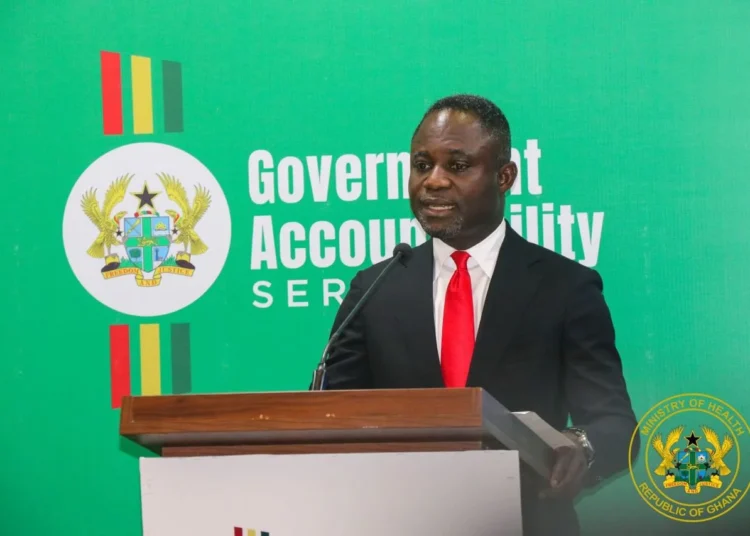
Ghana’s Health Minister has told African counterparts that the continent can no longer afford to depend on foreign nations for its medicines and vaccines, urging governments to back local manufacturing as a matter of health security rather than convenience.
Hon. Kwabena Mintah Akandoh made the appeal while addressing the African Union Extraordinary Health Summit, where he laid out a set of commitments he argued the continent could no longer postpone if it hopes to make good on its promise of universal health coverage.
Hon. Akandoh opened his remarks with a blunt assessment of Africa’s current health financing model, arguing that out-of-pocket healthcare costs have quietly pushed many families into debt even as governments claim progress toward universal coverage.
He said the African Union’s roadmap toward 2030 and beyond could not be allowed to end as another declaration without follow-through, insisting that citizens across the continent were owed concrete decisions rather than further discussion.
From there, the minister outlined three commitments he believes must anchor Africa’s health agenda going forward, beginning with a call for the continent to finance its own health systems using predictable, sustainable and domestically generated resources, an idea he tied back to the Abuja Declaration of 2001.
His second and most pointed commitment centred on what he described as Africa’s health sovereignty. He noted that the continent still consumes medicines, vaccines and health technologies that are overwhelmingly produced elsewhere, a dependency he said left African nations exposed during recent global health emergencies.
“The next emergency must never again find Africa waiting at the back of the queue.”
Hon. Kwabena Mintah Akandoh, Minister of Health
To close that gap, Hon. Akandoh called for investment in local manufacturing capacity, harmonised regulatory systems, stronger regional markets, pooled procurement mechanisms and more resilient supply chains, describing these as the building blocks needed to give the continent confidence to produce more of what its people need at home.
Primary Care as the Foundation, Not an Afterthought
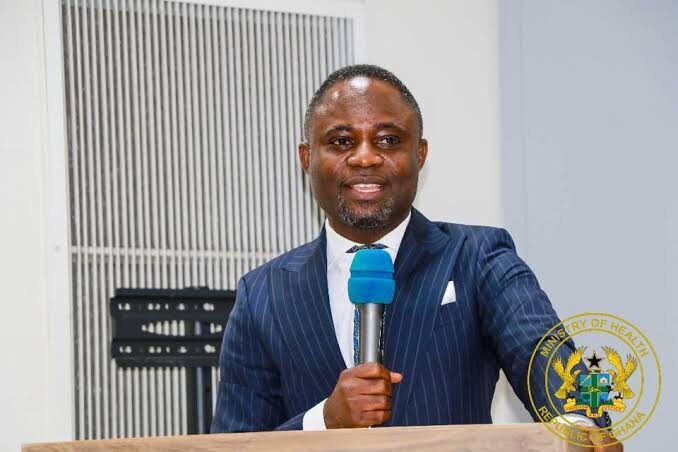
The minister’s third commitment turned attention away from large hospitals toward the community level, arguing that universal health coverage cannot be achieved through tertiary institutions alone. He said the goal begins much closer to where people actually live, pointing to community clinics, community health workers, nurses, midwives and physician assistants as the true backbone of any functioning health system.
He argued that if primary health care is genuinely regarded as the foundation of universal coverage, then governments must be willing to equip it, fund it and value the workers who sustain it daily, rather than treating it as a lesser priority behind specialist and hospital-based care.
Ghana’s Own Record Cited as Evidence
Turning to his own country’s experience, Akandoh acknowledged that Ghana does not present itself as a finished model, pointing to ongoing challenges such as maternal mortality as proof that significant work remains.
Even so, he cited a series of recent domestic reforms as evidence that deliberate action, rather than declarations, can shift outcomes.
Among these, he referenced the restoration of full funding to the National Health Insurance Scheme, the establishment of the Ghana Medical Trust Fund known as Mahama Cares, and the launch of a free primary health care initiative introduced only months earlier to strip away financial barriers to essential treatment.
“No Ghanaian should be denied basic health care simply because they cannot afford it.”
Kwabena Mintah Akandoh, Minister of Health
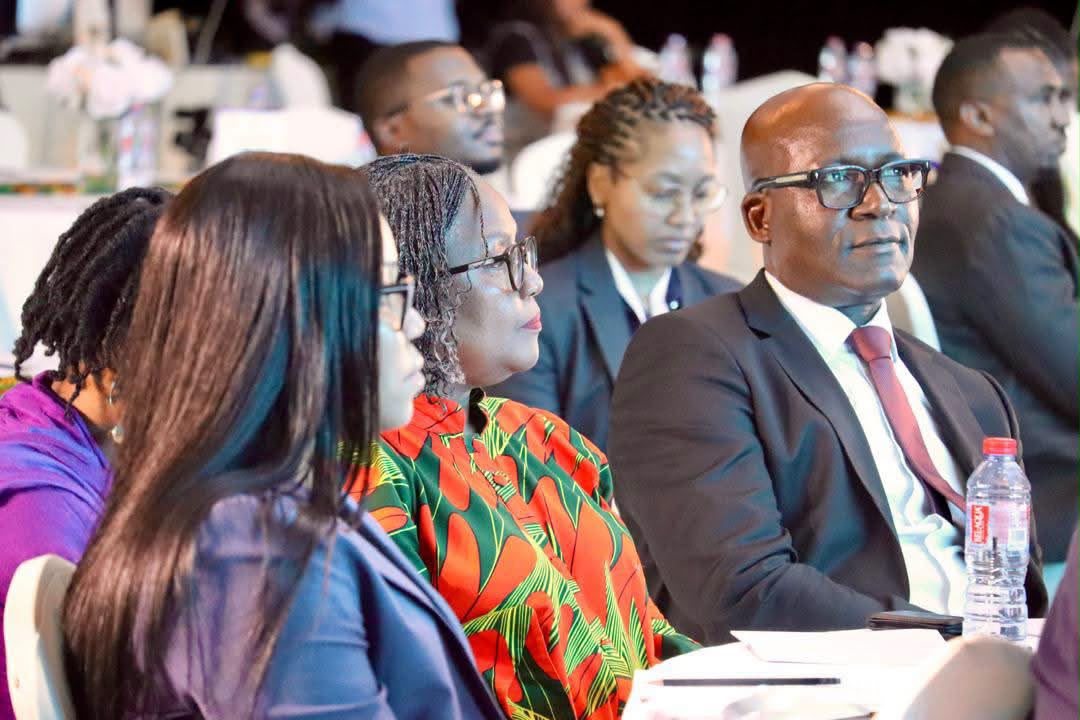
He framed these efforts as parts of a single guiding philosophy for health systems: that they should work to prevent illness before treating it, protect families before impoverishing them, and ensure no one is left behind in the process.
A Summit Judged by Outcomes, Not Speeches
Shifting from policy detail to a broader challenge for the room, Akandoh reminded fellow ministers that history tends to judge gatherings like the summit not by the polish of their declarations or the number of speeches delivered, but by whether the decisions reached translate into real change for ordinary citizens.
He suggested the true measure of the summit’s success would eventually rest on far more human indicators: whether a mother in a rural village survives childbirth, whether a young person is shielded from a preventable disease, and whether a family manages to keep both a loved one and its livelihood intact.
He called on delegates to deliberate honestly, decide with courage and hold one another accountable for whatever commitments emerge from the gathering, adding that the next generation of Africans would not ask whether the work before them had been difficult, only whether their leaders had risen to meet it.
The “Accra Reset”
Akandoh closed his address by describing Ghana’s hosting of the summit as part of what he termed the “Accra Reset,” a phrase he used to characterise a broader shift toward African-led health governance.
“It is Africa securing its own health by its own leadership, through its own institutions and for its own people.”
Kwabena Mintah Akandoh, Minister of Health
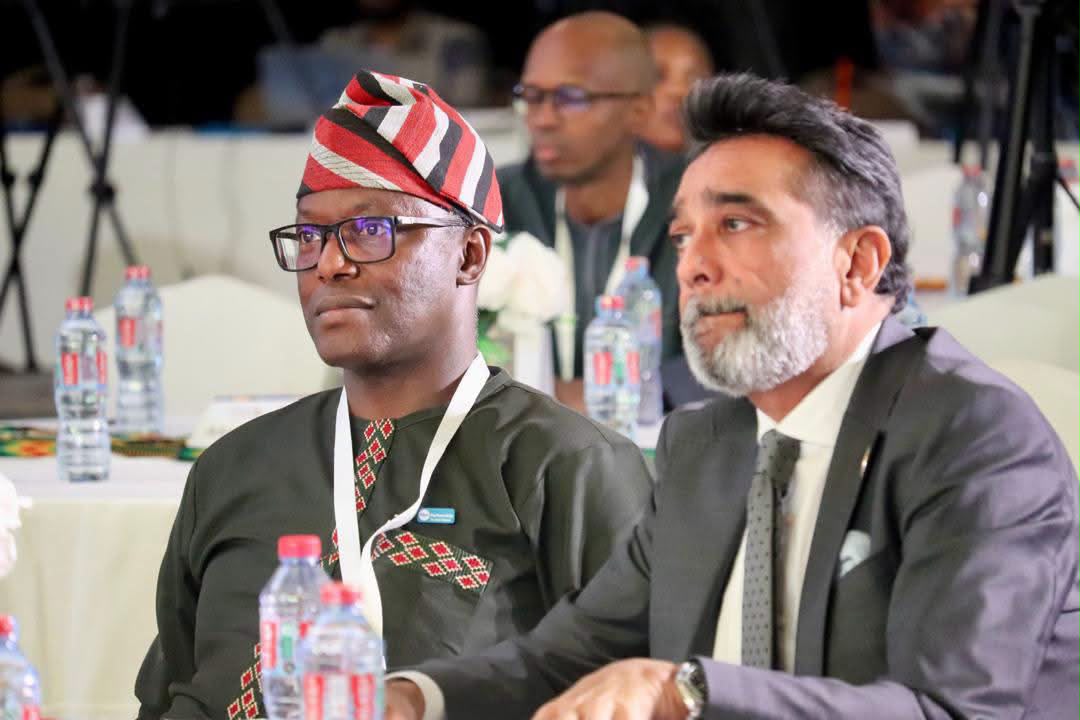
He said Ghana was ready to play its full part in that shift and expressed confidence that the continent, working together, could meet the moment the summit represented.
The summit’s outcomes are expected to be carried forward to African heads of state for further deliberation, with Akandoh’s proposed commitments likely to feature prominently in discussions on the continent’s long-term health financing and manufacturing strategy.
READ MORE: Mahama Hosts AU Extraordinary Summit to End AIDS, TB