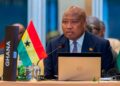
Ghana is gearing up for a key economic event as Finance Minister Dr. Cassiel Ato Forson prepares to deliver the 2026 Mid-Year Budget Review to Parliament on July 23.
This review arrives amid notable macroeconomic stabilization under the President John Mahama administration, following years of fiscal turbulence.
With inflation at historic lows, a strengthened cedi, and declining debt ratios, the document is expected to outline a transition from austerity toward growth-oriented policies, including the ambitious 24-Hour Economy initiative.
Macroeconomic Stabilization Gains
The Mahama government inherited an economy scarred by high debt and inflation. Painful fiscal reforms have yielded results. Public debt has decreased significantly, with the debt-to-GDP ratio falling from around 61.8 percent to approximately 45 percent through restructuring and currency appreciation. The government has met major obligations, including US$1.4 billion in Eurobonds and substantial domestic debt payments, while building buffers for future maturities.
Inflation has dropped sharply to single digits, around 3-4 percent in recent months, supported by tighter monetary policy, a stronger cedi (appreciating over 20-30 percent from lows), and improved food supplies. The Bank of Ghana’s Monetary Policy Committee is signaling the end of disinflation, with attention shifting to balancing risks from potential oil volatility and global factors.
Treasury bill auctions reflect restored investor confidence, with recent oversubscription by 73 percent and falling yields at the short end of the curve. These developments provide a solid foundation, but analysts caution that revenue mobilization remains a constraint, with revenue-to-GDP hovering near 16 percent.
Growth Outlook and Sectoral Drivers
The 2026 Budget projects overall GDP growth of 4.8 percent, with non-oil GDP around 4.9 percent. Projections from the IMF and World Bank align closely, forecasting a moderation from stronger 2025 performance as stability gains taper and certain extractive outputs soften.
Services continue to lead expansion, while agriculture benefits from initiatives like free fertilizer distribution. Industry shows modest recovery, aided by gold exports and efforts to boost local refining. Ghana aims to meet up to 70 percent of domestic fuel demand locally through expansions at Sentuo Oil Refinery (to 100,000 barrels per day) and Tema Oil Refinery, potentially cutting the import bill that reached billions in prior years.
The 24-Hour Economy and Accelerated Export Development initiative emerges as a flagship strategy. The government reports signing Joint Development Agreements worth US$5.5 billion from an $11.5 billion pipeline, targeting 1.7 million jobs by 2028. Projects include a $1.45 billion solar and battery facility at Buipe (1,500 MW, thousands of jobs) and oil palm complexes. Critics question implementation speed and direct government spending claims, but the model emphasizes private capital with public support for preparation and viability gaps.
Fiscal Strategy and Debt Sustainability
The mid-year review is unlikely to seek supplementary funding, consistent with prior restraint. The 2026 framework targets a 2.2 percent overall deficit (commitment basis) and a 1.5 percent primary surplus, underscoring fiscal discipline. Total expenditure is projected around GH¢302.5 billion (18.9 percent of GDP), with emphasis on capital spending under the Big Push infrastructure program.
Debt servicing will consume significant resources, with projections of GH¢54 billion next year. However, improved ratings outlook and market access provide breathing room. Structural reforms, such as tax administration enhancements and potential VAT adjustments, could boost revenues without new broad-based taxes.
Challenges persist: high interest payments crowd out capital expenditure, youth unemployment remains elevated, and external risks from global growth slowdowns (IMF projects 3 percent in 2026) or commodity price shifts could pressure the cedi and fiscal space.

Policy Shifts and Investment Climate
Expectations for July 23 center on concrete measures to translate stability into inclusive growth. These may include further incentives for private investment, skills development via the new TVET Fund (operational from 2027), and regional infrastructure. The review could detail progress on constitutional or governance reforms that enhance business predictability.
Analysts view this as a potential inflection point. Sustained primary surpluses, revenue growth above 16-17 percent of GDP, and successful execution of public-private projects could lower borrowing costs, attract FDI, and support medium-term growth averaging near 5 percent. Failure to address revenue weaknesses or contain spending risks reversal of gains.
Risks and Opportunities Ahead
Global headwinds, including Middle East tensions affecting energy prices and trade fragmentation, pose downside risks. Domestically, galamsey (illegal mining) threatens agriculture and environment, while climate impacts on cocoa and food production require attention.
Opportunities lie in value addition, digital economy expansion, and leveraging gold and oil revenues for diversification. Local refining and renewable energy projects could enhance energy security and export potential.
The July 23 review will test the government’s ability to balance consolidation with acceleration. Clear, measurable targets for job creation, infrastructure delivery, and revenue performance will be critical. Success could redefine Ghana as a resilient West African growth story, moving beyond crisis management toward sustainable prosperity. Failure to deliver specifics might erode confidence just as buffers rebuild.
All in all, this mid-year exercise offers more than routine reporting. It represents a strategic blueprint for resetting Ghana’s trajectory. Markets, investors, and citizens will scrutinize signals on fiscal path, growth drivers, and policy continuity. With disciplined execution, Ghana could unlock its demographic dividend and resource potential for a more prosperous future.
READ ALSO: GSE Opens Week with Sharp Trading Decline