

President John Dramani Mahama has officially signed into law the new Ghana Investment Promotion Authority Act, repealing the former Ghana Investment Promotion Centre Act, according to a statement issued by Presidency Communications.
The new legislation is designed to reposition Ghana as a top investment destination in Africa, introducing streamlined processes intended to cut bureaucratic barriers and make it easier for investors to establish and operate businesses in the country.
According to the statement, the new Act eliminates minimum capital requirements that previously restricted entry for wholly foreign-owned enterprises and joint ventures, allowing smaller-scale entities to invest in Ghana without facing the same financial thresholds imposed under the former legislation.
“This legislation is set to reposition Ghana as a top investment destination in Africa and beyond, with streamlined processes that cut red tape and make it easier for investors to establish and operate businesses in Ghana”.
Presidency of Ghana
Stronger Legal Protections for Investors
The Act also introduces enhanced investor protection by strengthening the legal framework governing business operations in Ghana, a move the statement says will give both local and foreign investors greater confidence and security when committing capital to Ghanaian ventures.
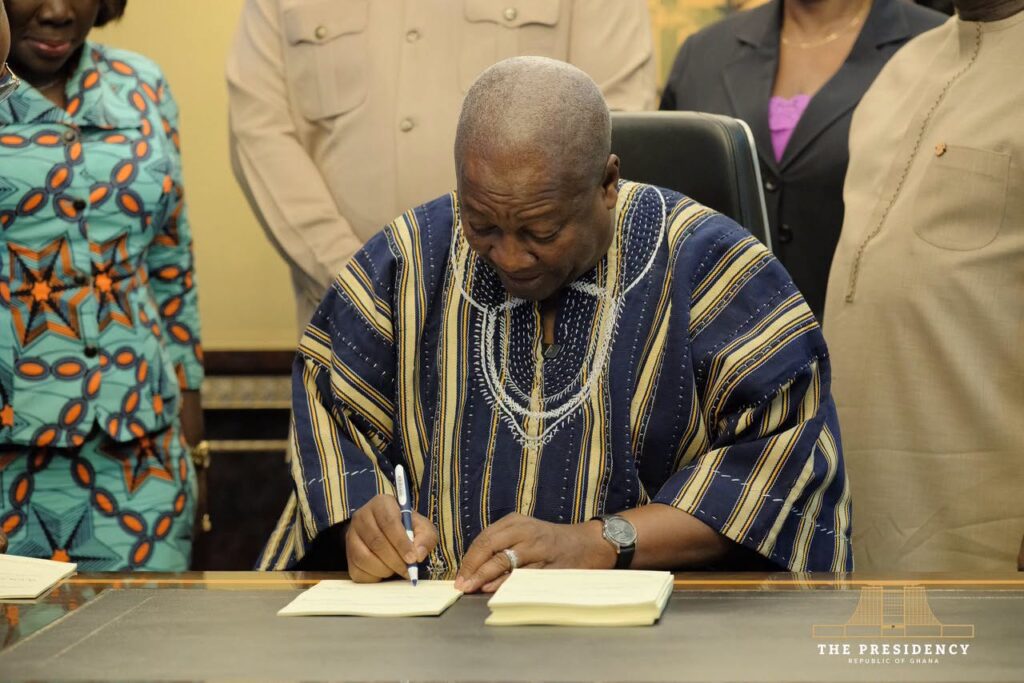
Beyond attracting external capital, the new Ghana Investment Promotion Authority carries an explicit mandate to support Ghanaian businesses in scaling up and participating meaningfully within the country’s investment ecosystem.
“The Ghana Investment Promotion Authority is also mandated to boost local enterprise by supporting Ghanaian businesses to scale up and participate meaningfully in the investment ecosystem”.
Presidency of Ghana
Government describes these combined reforms as bold steps intended to accelerate economic growth, create jobs and position Ghana as the leading investment hub in West Africa.
A Focal Point for AfCFTA Investment Protocol
Among its expanded responsibilities, GIPA has been designated as the strategic focal point for implementing the African Continental Free Trade Area Protocol on Investment, positioning the Authority at the center of Ghana’s engagement with continental trade and investment frameworks moving forward.
This designation reflects the government’s broader ambition to align domestic investment policy with regional economic integration efforts already underway across the continent.
The GIPA Act forms part of a broader economic agenda that includes the Big Push National Infrastructure Development Programme, which has allocated more than GH¢40 billion toward extensive road construction and network upgrades across the country.
This programme combines public and private resource partnerships to systematically close existing deficits in logistics, rail, clean energy and digital connectivity infrastructure across the country, reflecting a coordinated approach to development that extends well beyond investment policy alone.

24-Hour Economy Push Targets Industrial Output
A second flagship initiative, the 24-Hour Economy and Accelerated Export Development programme, introduces incentive frameworks designed to help manufacturing, agribusiness and critical mineral firms operate multiple shifts around the clock.
According to background details on the programme, this operational shift is intended to raise industrial productivity, improve export potential and expand sustainable employment across targeted sectors.
The GIPA Act’s introduction comes on the heels of a significant strategic win in Ghana’s energy sector, with government securing a $3.5 billion investment commitment from international upstream oil partners.
This includes $2 billion from Jubilee partners earmarked for drilling up to 20 new wells, alongside $1.5 billion from OCTP partners aimed at reversing historical production slumps within the sector.
This substantial capital commitment underscores the kind of large-scale investment government hopes the new GIPA framework will help attract across other priority sectors going forward.
Priority Sectors for Future Investment
According to the statement, government has identified several key sectors for continued investment promotion under the new Authority, including manufacturing and pharmaceuticals, renewable energy and green industries, critical mineral exploration, and agribusiness value-addition.
These sectors reflect government’s broader strategy of diversifying Ghana’s investment base beyond traditional extractive industries toward higher value, more sustainable economic activities.

Taken together, the passage of the GIPA Act represents a significant legislative overhaul of Ghana’s investment promotion architecture, combining eased entry requirements, stronger legal protections and an expanded institutional mandate within a single piece of legislation.
Alongside complementary programmes such as the Big Push infrastructure initiative and the 24-Hour Economy strategy, the new Act positions Ghana to compete more aggressively for global capital at a time when several African nations are simultaneously working to attract foreign direct investment into their economies.
Whether these legislative and institutional reforms translate into a measurable increase in investment inflows will likely become clearer in the coming months, as GIPA, led by its CEO Simon Madje, begins operating under its newly expanded mandate and the government continues pursuing the broader economic agenda these reforms were designed to support.
READ ALSO: Mahama Receives Procurement Report to Kickstart Green Digital City Project