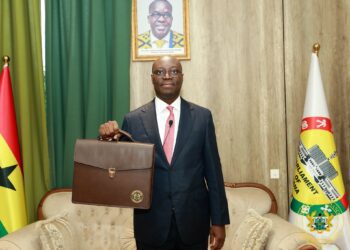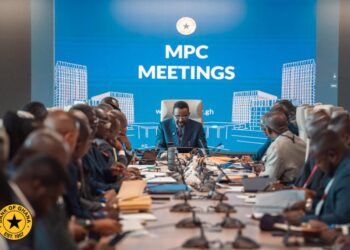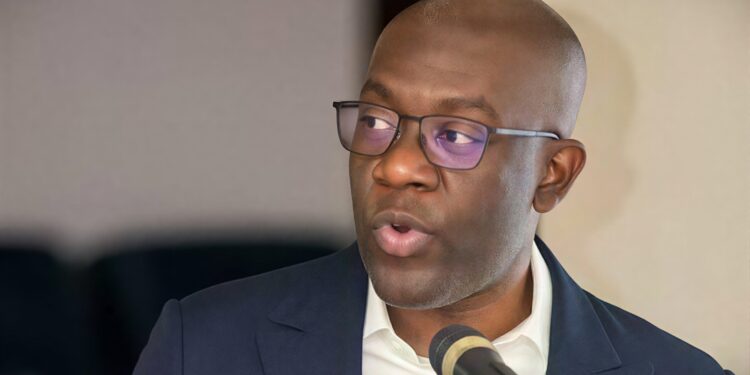
The Member of Parliament for Ofoase Ayirebi, Honourable Kojo Oppong Nkrumah, has cautioned the Finance Minister against using the Mid-Year Budget Review to introduce new spending commitments outside the economic programme already approved by Parliament. He argued that the review should focus on evaluating the government’s performance against existing plans and accounting for how approved public funds have been utilised.
Speaking ahead of the Finance Minister’s presentation of the Mid-Year Budget Review, Honourable Kojo Oppong Nkrumah emphasised that the country’s economic assessment should be based on verifiable data and measurable outcomes rather than political narratives advanced by either the governing National Democratic Congress (NDC) or the opposition New Patriotic Party (NPP).
The Ofoase Ayirebi MP noted that Parliament approved about GH¢650 billion to finance the government’s priorities during the first two years of its administration. He therefore maintained that any proposal involving additional expenditure should be accompanied by a clear explanation of how it would be financed.
“Mid-year is not the time to announce new policies and new projects. It is an opportunity to account for what has already been approved and implemented.”
Honourable Kojo Oppong Nkrumah
He stressed that any new initiative should be linked to an existing budgetary allocation. Where government intends to redirect spending, he said the Finance Minister should identify the expenditure that would be reduced or withdrawn to accommodate the new commitment.
Honourable Nkrumah also warned against announcing programmes without identified funding sources, arguing that such commitments would lack credibility. Instead, he urged greater attention to the financial data presented in the review.
He further stated that the Mid-Year Budget Review should primarily assess the government’s economic performance by showing what targets have been achieved, where implementation has fallen short and the measures being taken to address those shortcomings.
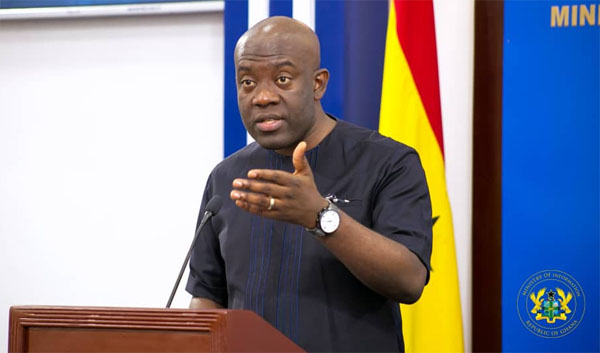
The former Information Minister also called for a distinction between political messaging and economic evidence. He argued that national discussions on the economy should be guided by objective indicators rather than competing political claims.
He added that where government departs from its original economic programme, the Finance Minister should provide a clear explanation for the change. According to him, the review should give Parliament and the public a comprehensive account of how approved resources have been managed.
Tax Bills Raise Fresh Questions Over Revenue Performance and Debt
The presentation of several tax bills is also expected to place revenue mobilisation at the centre of Parliament’s consideration of the Mid-Year Budget Review. The proposed Customs Bill, Income Tax Amendment Bill, Value Added Tax Amendment Bill and Excise Bill will form part of the legislative business accompanying the government’s economic update.
Honourable Kojo Oppong Nkrumah argued that the Finance Minister should clearly explain the rationale behind the proposed revenue measures. According to him, the bills raise important questions about revenue performance and the government’s return to the debt market.
He said Parliament and the public deserve to know whether the proposed tax amendments are intended to address shortfalls in revenue collection. He also called on the Finance Minister to present the supporting data and explain how the measures fit into the country’s broader fiscal position.

“Where he is having problems and thinks that he needs to change course, be honest to admit it. We expect the Minister to be truthful to the data.”
Honourable Kojo Oppong Nkrumah
Referring to the Minority’s position, Honourable Nkrumah said the Mid-Year Budget Review should present a transparent assessment of government revenue performance. Where actual collections differ significantly from earlier projections, he argued, the Finance Minister should provide a direct explanation to Parliament and the Ghanaian public.
He observed that the introduction of the four tax bills adds an important legislative dimension to the review, with Parliament expected to determine whether the proposed amendments are justified by current economic conditions.
Honourable Nkrumah also linked the discussion on revenue to debt sustainability. He argued that weaker-than-expected revenue performance could increase pressure on government borrowing, making it necessary for Parliament to closely examine the country’s fiscal outlook.
READ ALSO: Poverty Of Judiciary Must End For Justice — Speaker Of Parliament