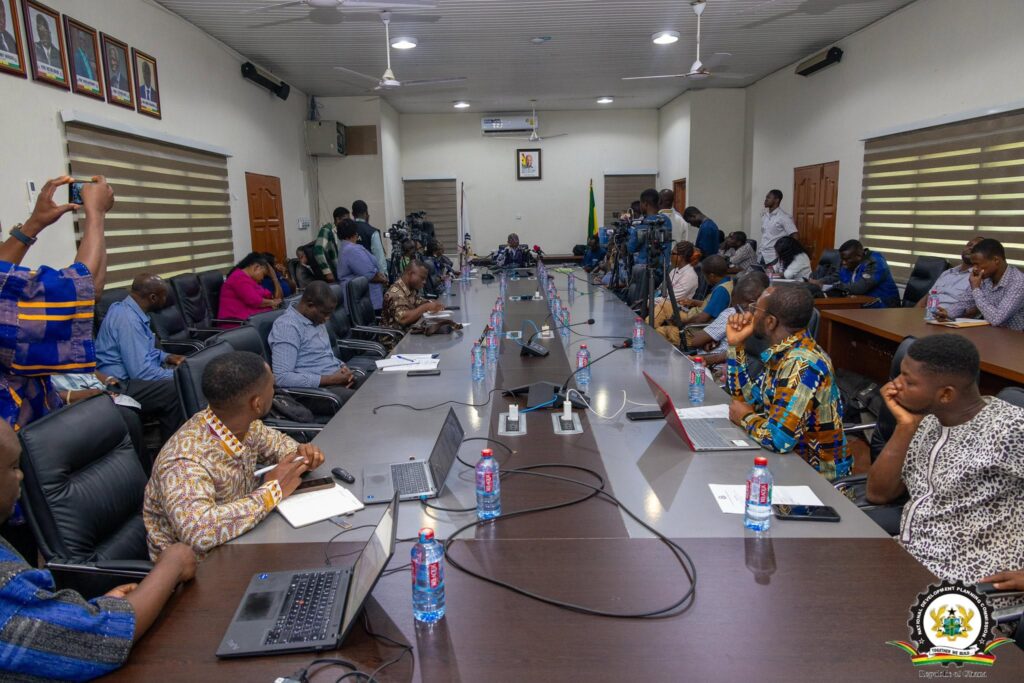
Chief Analyst at the National Development Planning Commission (NDPC), Isaac Kwesi Eweh, has warned that Ghana’s economy remains exposed to severe vulnerability due to its continuous over-reliance on gold and oil exports to drive nation-wide growth.
Presenting the 2025 Annual Progress Report in Accra, Eweh emphasized that while primary resource exports have fueled recent economic recoveries, this heavy concentration exposes the entire country to severe exogenous shocks.
He cautioned that without immediate structural diversification into value addition and manufacturing, any sudden global price collapse or domestic production failure within these three main pillars could trigger widespread macroeconomic instability.
“Gold, oil and cocoa continue to explain most of the improvement in the economic sector. The worry is that if there should be a problem with one of them, the whole economy could be in trouble, so there is a need to diversify this particular sector to ensure that we do not run into trouble in the future,” Chief Analyst at the NDPC, Isaac Kwesi Eweh, said during a presentation on the 2025 Annual Progress Report in Accra.
Chief Analyst at the National Development Planning Commission (NDPC), Isaac Kwesi Eweh
Macroeconomic Stabilization Gains vs. Industrial Stagnation
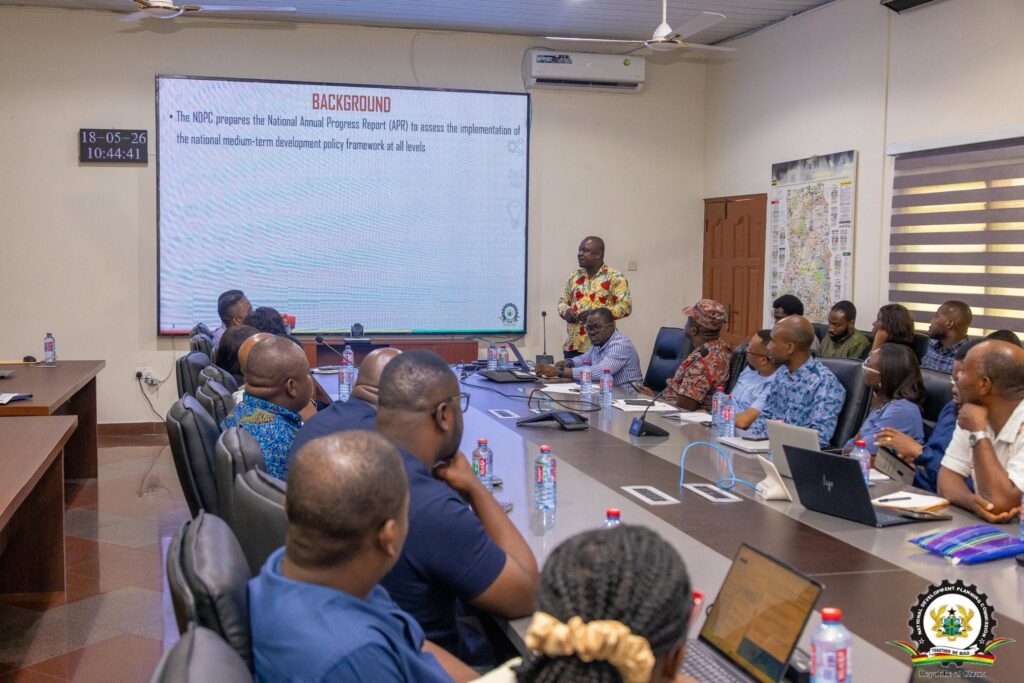
The NDPC report which marks the fourth and final assessment of the Agenda for Jobs II: Creating Prosperity and Equal Opportunity for All Policy Framework (2022–2025) presents a complex dichotomy in Ghana’s economic trajectory.
On one hand, headline macroeconomic indicators recorded notable turnarounds during the evaluation period. Ghana achieved its projected six percent GDP growth target under the policy framework, supported by a dramatic decline in inflation from a peak of 54.1 percent in 2022 down to 5.4 percent.
Furthermore, domestic revenue mobilization expanded consistently via income and property taxes, while borrowing costs, exchange rate volatility, public debt levels, and the overall debt-to-GDP ratio demonstrated clear improvements.
However, these monetary stabilization gains mask underlying structural weaknesses across real productive sectors.
The industrial sector, explicitly designated under the Agenda for Jobs framework to anchor long-term employment generation and value addition, failed to achieve its mandatory performance metrics.
Instead of attaining the targeted average growth rate of 7.1 percent over the four-year implementation cycle, the industrial sector recorded a sluggish average growth rate of roughly 2.5 percent. Consequently, overall national unemployment saw only a modest decline, dropping from 14.7 percent to 13 percent, confirming that top-line GDP growth driven by raw resource extraction has not generated sufficient jobs for the populace.
Extractive Vulnerabilities and Commodity Price Shock Risks
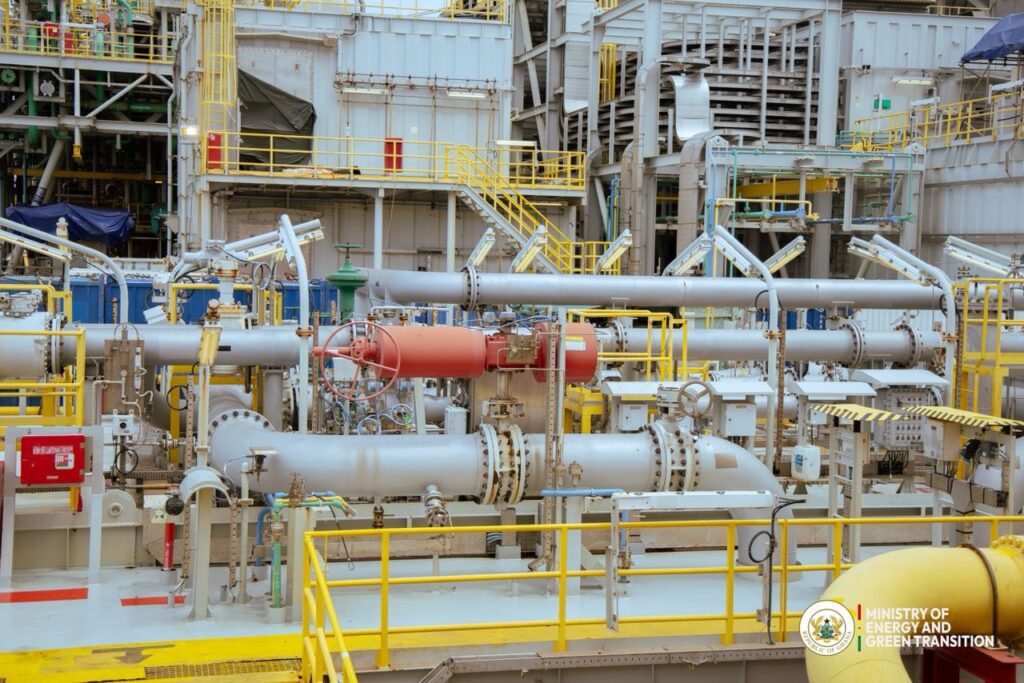
Relying on raw commodity shipments to sustain fiscal balances inherently undermines long-term economic resilience. Gold, crude oil, and unprocessed cocoa function as price-taker commodities on global exchanges, leaving domestic government revenues, foreign exchange reserves, and currency valuation at the mercy of global supply chains and international price fluctuations.
When export earnings are tightly tied to unrefined extractives, sudden global recessions, trade disruptions, or environmental yield drops immediately translate into severe fiscal deficits, reduced sovereign liquidity, and forced currency devaluations.
This structural concentration also fosters “Dutch Disease” dynamics within the national economy.
Massive capital inflows directed toward gold and oil extraction inflate the real exchange rate, rendering domestic non-resource sectors such as agro-processing, local manufacturing, and specialized technology far less competitive globally.
Furthermore, mineral extraction in its raw state creates an enclave economy: it generates substantial foreign revenue but offers limited domestic value chain linkage, weak local supply chain integration, and minimal direct job creation relative to capital invested.
Consequently, the non-mineral industrial base remains underdeveloped while resource wealth flows outward as raw material.
The Imperative for Export Diversification and Value Addition
To insulate the national economy against international market cyclicality, the NDPC report urges state agencies and private sector developers to shift aggressively toward value addition, resource processing, and agricultural diversification.
Eweh stressed that the findings underscoring the final Agenda for Jobs II evaluation make it imperative to expand the national export base through competitive manufacturing and productive, labor-intensive industries.
Similar structural vulnerabilities persist in the agricultural and food production sectors.
While Ghana achieved broader food self-sufficiency across primary staple crops, domestic rice production fell short of consumption demands, forcing the country to rely heavily on foreign imports. Similarly, the fisheries sector remains heavily dependent on traditional marine sources, leaving significant commercial capacity in inland aquaculture untapped.
Expanding domestic processing capacity across minerals, agricultural produce, and marine resources remains the central pathway toward establishing genuine macroeconomic resilience and sustainable job creation.
READ ALSO: GCC, Jordan Decry Iranian Attacks