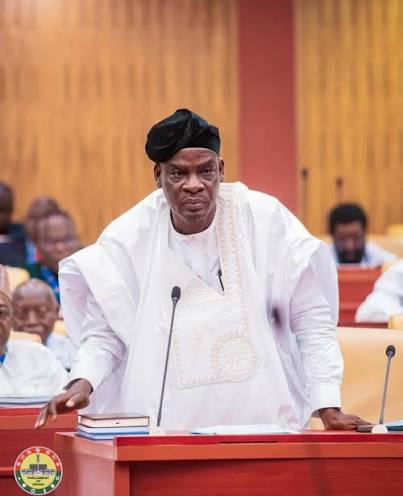
The Minister for Education, Hon. Haruna Iddrisu, has called for zero tolerance toward bullying, violence, substance abuse and other criminal conduct in schools, insisting that Ghana’s educational institutions must remain safe spaces dedicated to teaching and learning rather than environments marred by fear and disorder.
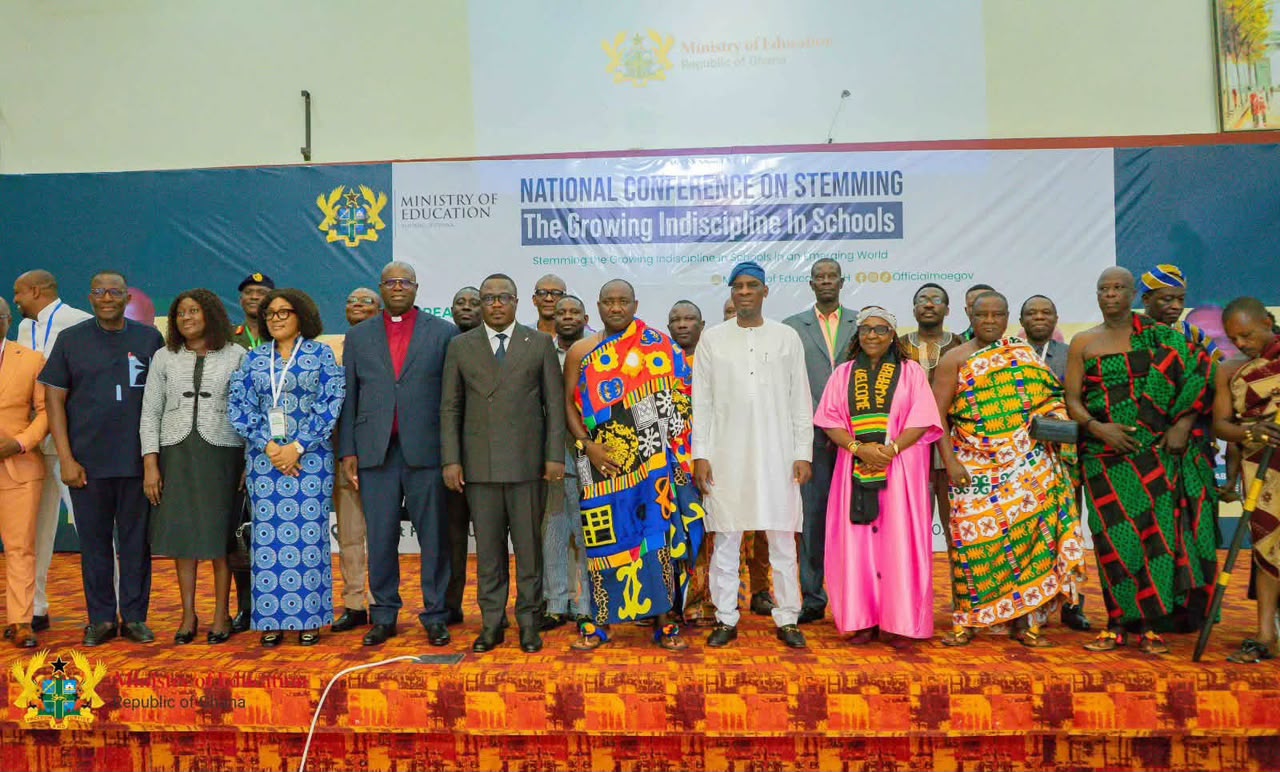
The Minister made the call while speaking at the National Conference on “Stemming Growing Indiscipline in Schools in an Emerging World,” held in Sunyani, where he stressed that addressing indiscipline requires a collective national effort rather than isolated interventions from any single institution.
Hon. Iddrisu was firm in positioning discipline as a responsibility that extends well beyond the walls of the classroom, calling on a broad coalition of stakeholders to take ownership of the challenge alongside government and school authorities.
“Discipline is a shared responsibility. Parents, teachers, school leaders, traditional and religious authorities, and communities must work together to raise responsible and disciplined citizens.”
Hon. Haruna Iddrisu, Minister of Education
By explicitly naming traditional and religious authorities alongside more conventional education stakeholders, the Minister signalled an intent to draw on Ghana’s existing social and cultural institutions as active partners in reinforcing discipline among young people, rather than relying solely on formal school-based interventions.
A Firm Stand Against Bullying and Criminal Conduct
Central to the Minister’s address was an unambiguous stance against behaviours he described as fundamentally incompatible with a functioning learning environment. He argued that schools cannot fulfil their core purpose of educating young people if students and teachers alike are exposed to bullying, violence or substance abuse within school premises.
“We must have zero tolerance for bullying, violence, substance abuse and other criminal conduct in our schools. Our educational institutions must remain safe spaces for teaching and learning.”
Hon. Haruna Iddrisu
This framing positioned the fight against indiscipline not merely as a matter of maintaining order, but as a prerequisite for the broader educational mission Ghana’s schools are meant to serve, suggesting that safety and academic achievement are inseparably linked in the Minister’s view.
A Gathering of Stakeholders From Across the Sector
The conference in Sunyani brought together a wide cross-section of participants drawn from across Ghana’s education sector, reflecting the scale of concern surrounding the growing indiscipline being reported in schools nationwide.
Deliberations at the gathering centred on identifying practical, implementable solutions rather than simply cataloguing the scope of the problem.

Discussions at the conference focused heavily on strengthening parental involvement in student discipline, expanding access to guidance and counselling services within schools, promoting values-based education, improving the effectiveness of school leadership, and deepening partnerships between schools and their surrounding communities. Each of these areas was treated as a distinct but interconnected pillar in the broader effort to restore discipline across the education system.
Preparing Learners for a Digital Age
Beyond addressing existing forms of misconduct, participants at the conference also turned their attention to the challenges posed by an increasingly digital world, recognising that indiscipline today is shaped by influences that did not feature prominently in earlier generations of Ghanaian schooling.
Stakeholders emphasised the importance of promoting self-discipline, positive values and responsible behaviour among learners navigating a media landscape saturated with digital content and social influence.
This aspect of the discussions suggested a recognition that traditional disciplinary approaches may need to evolve alongside the changing environments in which today’s students are growing up, particularly given the pervasive role of social media and online interaction in shaping youth attitudes and behaviour.
The Sunyani conference was structured not merely as a platform for discussion, but as a deliberate step toward producing concrete recommendations capable of guiding future policy and intervention strategies across Ghana’s education system.
Organisers indicated that the conference would conclude with a formal set of recommendations intended to shape how discipline is addressed nationally going forward.
This outcome-oriented approach reflects a broader recognition among stakeholders that repeated conversations about indiscipline, without accompanying policy action, have done little to reverse the troubling trends observed in schools in recent years.
By committing to a defined set of recommendations at the conference’s conclusion, organisers appear intent on ensuring the gathering produces tangible next steps rather than simply adding to an already extensive body of dialogue on the subject.
A Coordinated Push for Safer Schools
Taken together, the Minister’s remarks and the broader deliberations at the Sunyani conference point to a coordinated national push to confront indiscipline in schools through both immediate enforcement measures and longer-term structural reforms.
The emphasis on collective responsibility, spanning parents, educators, traditional leaders and communities, suggests that government views the current wave of indiscipline as too complex and deeply rooted to be resolved through school-based discipline alone.
As the conference moves toward finalising its recommendations, attention will likely turn to how quickly and effectively these proposals can be translated into concrete policy changes within Ghana’s education system.
For now, Hon. Iddrisu’s call for zero tolerance signals a clear line in the sand from government, even as the practical work of building the parental, community and institutional partnerships needed to enforce that standard remains ongoing.
READ MORE: GHS Temporarily Shuts Down Techiman Krobo Nursing Training College