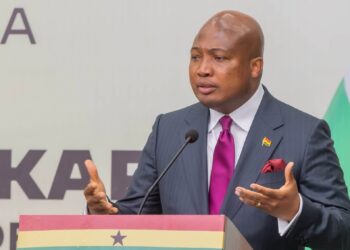
The NPP National Organiser, Henry Nana Boakye has alleged that the acquittal of Sedina Attionu Tamakloe by the Supreme Court forms part of a carefully planned effort by the governing party to secure her release. He argued that developments surrounding the case showed a deliberate pattern that resulted in the former MASLOC boss being freed.
Mr Boakye explained that his position is influenced by events leading to the court’s decision, including Sedina Attionu Tamakloe’s return to Ghana and the legal arguments presented during the proceedings. He questioned the approach adopted by the Attorney General, describing the state’s case presentation as inadequate.

The National Organiser recalled that Sedinam Attionu Tamakloe had left the country after seeking permission to receive medical attention while facing trial. He argued that her failure to return at the time created a situation where the state had to continue pursuing the matter through available legal procedures.
“The signs were there from the beginning. This was a well-planned effort to free Sedinam Tamakloe, and the Attorney General’s relaxed defence showed that they were not interested in pursuing the matter strongly.”
Henry Nana Boakye
According to Mr Boakye, the prosecution’s handling of the case raises questions about the government’s commitment to pursuing matters involving alleged financial offences. He referenced other high profile cases involving individuals who faced legal action over allegations connected to public funds.
The NPP official mentioned cases involving the former Governor of the Bank of Ghana, Ernest Addison, former Chief Executive of the Social Security and National Insurance Trust Ernest Thompson and a former Minister for Housing as examples of matters that attracted public attention. He argued that similar approaches were taken when the Attorney General discontinued some cases through legal procedures.
Furthermore, Mr Boakye claimed that several cases involving allegations of corruption and financial loss to the state were affected by the government’s decisions after assuming office. He stated that the approach taken in those matters contributed to his view that the Sedinam Attionu Tamakloe case will follow a similar pattern.

Additionally, Mr Boakye argued that criminal cases involving public funds require determined prosecution efforts because the state has a responsibility to protect national resources. He emphasised that the handling of such matters should demonstrate a strong commitment to accountability.
Legal Process Raises Questions Over Prosecution Strategy
The NPP National Organiser, Henry Nana Boakye insisted that there were no fundamental weaknesses in the original case against Sedinam Attionu Tamakloe before the Supreme Court’s decision. He explained that the former MASLOC boss was properly tried after failing to return to Ghana following approval to seek medical attention abroad.
Mr Boakye recalled that the case progressed through established legal procedures, with witnesses presenting evidence before the court. He noted that the trial continued in the absence of the accused after the court permitted proceedings to move forward under the applicable legal framework.
The National Organiser argued that the conviction obtained at the time was based on the evidence presented during the trial process. He added that the state’s responsibility in criminal matters requires prosecutors to present a strong case capable of meeting the required legal standard.
“Sedina Attionu Tamakloe was before the court, she was standing trial, and the facts were there. Witnesses came to testify, and it was a matter properly placed before the court.”
Henry Nana Boakye
Addressing the Supreme Court’s acquittal decision, Mr Boakye attributed the outcome to a weak presentation of the state’s case during the latest proceedings. He explained that criminal matters require proof beyond reasonable doubt and any gaps in prosecution can affect the final determination.
Furthermore, he argued that the Attorney General’s approach influenced the direction of the case after the change in government. The NPP official suggested that a more vigorous legal presentation could have produced a different outcome.
Analysing the wider implications of the ruling, Mr Boakye referenced previous actions taken by the Attorney General in cases involving public officials. He pointed to the use of nolle prosequi in some matters and questioned whether enough attention was given to cases involving allegations of financial wrongdoing.

The NPP National Organiser explained that his position was based on his assessment of how state prosecutions should be handled. He stressed that public confidence in the justice system depends on the seriousness attached to cases involving alleged misuse of state resources.
On the legal expectations surrounding criminal trials, Mr Boakye noted that prosecutors must present evidence that satisfies the court’s requirements. He suggested that the outcome of the case demonstrated the consequences of failing to mount a strong legal argument before the court.
Additionally, the party official maintained that the decision aligned with concerns he had previously raised about the government’s handling of certain high profile cases. He argued that the development followed a pattern involving cases connected to allegations of corruption and financial loss.
The NPP National Organiser therefore reiterated his belief that the outcome was linked to the manner in which the prosecution handled the matter. He indicated that the case would continue to attract public discussion because of its connection to accountability and the management of state resources.
READ ALSO: Maxence Lacroix “Proud” to Join “Beautiful” Chelsea Project