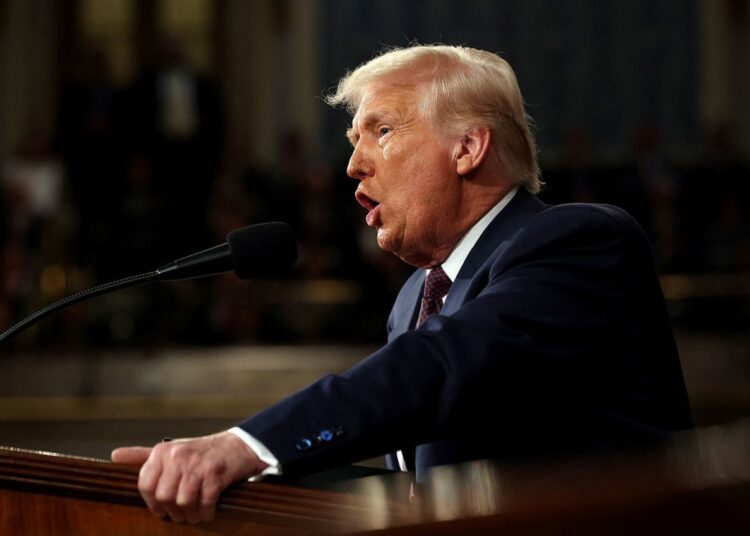
US President Donald Trump has said that an agreement with Iran is imminent, with negotiations set to begin today.
He asserted that negotiations with Tehran are set to begin today after he decided to hold off on new strikes on Iran in pursuit of a deal.
The US President did not specify where the negotiations would take place but his comments signalled growing optimism within the administration that diplomatic efforts may be nearing a conclusion.
Trump said that a plan was in place for the US to launch “the biggest attack since World War II” against Iran but that he halted it to give diplomacy a chance. He pulled back from threats of an attack after saying that the “perimeter” of a deal was in place.
He attributed his decision to hold off on ordering American forces to carry out new strikes against Iran to the urging of Gulf allies Qatar, Saudi Arabia and the United Arab Emirates.
“When the allies asked to call it off, you’ve got to sort of say, ‘Well, let’s see.’ And the reason they ask is they think there’s a deal. There’s a deal on [the Strait of] Hormuz, and then there will be a deal on the nuclear, or you might call it the denuclearisation of Iran.”
Donald Trump
He said that Saudi Arabia’s Crown Prince Mohammed bin Salman had also urged against the strikes, warning of possible unintended consequences. “I mean, will they be flooded with people pouring into their country and disaster? A lot of bad things can happen,” Trump said.
Prince Mohammed, the kingdom’s de facto leader, raised concerns about the U.S. potentially escalating the conflict when he spoke with Trump by phone. The call is said to have been “candid and constructive.” The Crown Prince conveyed that an escalation in fighting could have a severe impact on the global economy if Tehran responded to a new U.S. bombardment by targeting some of the United States’ Gulf allies.
Nonetheless, regional diplomacy intensifies as Trump’s announcement came hours after Iranian Minister of Foreign Affairs Abbas Araghchi held a second phone call with Saudi Foreign Minister Prince Faisal bin Farhan Al Saud, joined by Pakistani Army Commander Asim Munir, to discuss recent diplomatic efforts.
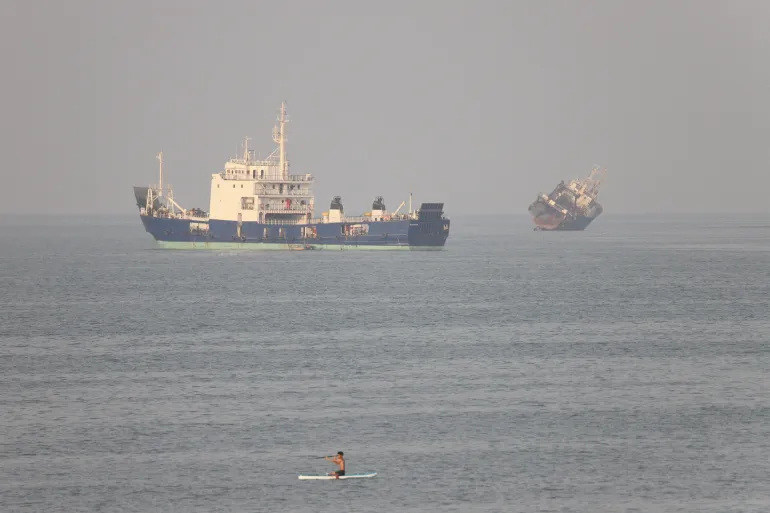
Meanwhile, Iranian Foreign Minister Abbas Araghchi noted that negotiations between Tehran and Oman on the management of the Strait of Hormuz are in their “final stages.”
Iranian Ministry of Foreign Affairs Spokesperson, Esmaeil Baghaei said that the negotiations focused on agreeing to a new route through the strait, adding that this had “no link to the Strait of Hormuz being opened or closed. That is a separate discussion.”
Baghaei said that the Strait of Hormuz “will in no way return to the status it was before February 28th,” the day the war started. On a call with Iranian state TV, he added that Iran is discussing shipping through the strait with Oman, on the other side of Hormuz, but that there’s no current talk about reopening the crucial waterway.
Another Turnabout For Trump
Trump’s latest decision was another turnabout for him, as he said a day earlier said he’s “losing faith” in negotiations with Iran and offered the ominous warning that the U.S. military “will be hitting them very hard.”
Trump has announced halts to strikes on Iran on several occasions since the United States and Israel attacked Iran on Feb. 28, only for things to unravel and fighting to resume again.
Iran’s Defense Minister said on X that the country was “neither surprised nor passive” following Trump’s announcement and said the Islamic Republic remains alert in the face of concrete threats from the U.S.
While Iran’s leaders appear united in a war strategy signaling strength and endurance, a struggle for control seems to be brewing within the theocracy’s leadership between those who oppose all negotiations with the U.S. and others who count on military pressure to win at the negotiating table.
READ ALSO: Ministry of Education Clarifies Ghanaian Languages to Lead Basic School Instruction