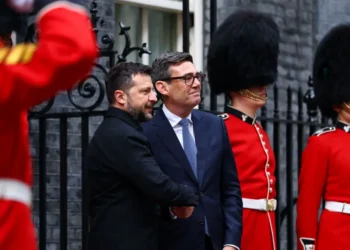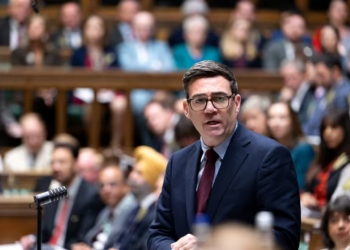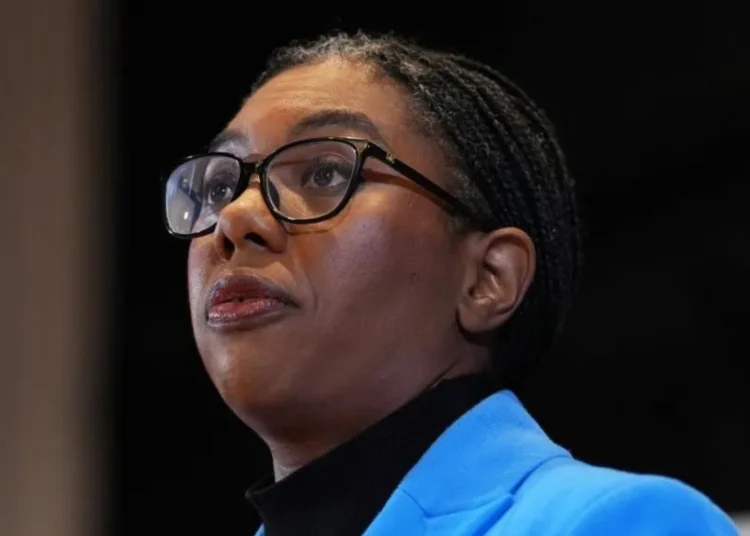
Conservative Party leader, Kemi Badenoch, has intensified pressure on Prime Minister Andy Burnham over the government’s revised early prisoner release programme, warning that some child sex offenders and other serious criminals could still leave prison before completing their sentences despite assurances that dangerous offenders would be excluded.
While the Burnham administration has revised the controversial scheme to exclude offenders convicted of rape, serious child sexual abuse and grooming offences, Badenoch argues that significant loopholes remain, potentially allowing prisoners convicted of other serious sexual crimes against children to qualify for early release.
Her intervention comes days after the government unveiled changes to the programme following a review ordered by Burnham shortly after he assumed office.
The revised policy reduced the number of inmates expected to benefit from early release from approximately 5,000, with the government insisting that the changes provide stronger safeguards for victims while still creating urgently needed prison space.
However, Badenoch has questioned whether the government’s list of excluded offences is comprehensive enough, claiming that convictions recorded under older legislation have been omitted from the protections announced this week.
In a strongly worded letter to the Prime Minister, the Conservative leader accused the government of failing to deliver on its promise to shield victims from the consequences of the release programme.
“You told the country that those convicted of grooming offences would be excluded. Your own government has now put in writing that some of these men will be released early anyway.”
Kemi Badenoch
Badenoch specifically highlighted offences prosecuted under Sections 14 and 15 of the Sexual Offences Act 1956, which dealt with indecent assault before more modern sexual offence legislation came into force in 2004.
According to the Conservative leader, numerous historical child sexual abuse cases including offences linked to the Rotherham and Rochdale exploitation scandals were prosecuted under those provisions. Because the offences do not appear on the government’s published exclusion list, she argued that some offenders convicted under the earlier legislation may remain eligible for early release.
She described the omission as a “betrayal of victims” and urged the government to publish a complete list of offences that will remain eligible for the scheme so that victims, campaigners and the wider public can fully understand its scope.
The Ministry of Justice has not yet publicly responded to Badenoch’s concerns, leaving uncertainty over whether the government intends to amend or clarify the eligibility criteria before the programme begins later this year.
The controversy comes against the backdrop of a worsening prison capacity crisis. According to official figures, prisons across England and Wales housed 86,495 inmates as of 3 August equivalent to about 97% of usable capacity. The sustained increase in prisoner numbers over recent decades has significantly outpaced the expansion of prison infrastructure, leaving successive governments struggling to maintain sufficient accommodation.
The government argues that without controlled early releases, the prison system risks reaching a point where courts and police would be unable to function effectively, potentially creating even greater risks to public safety.
Andy Burnham Defends Revised Scheme
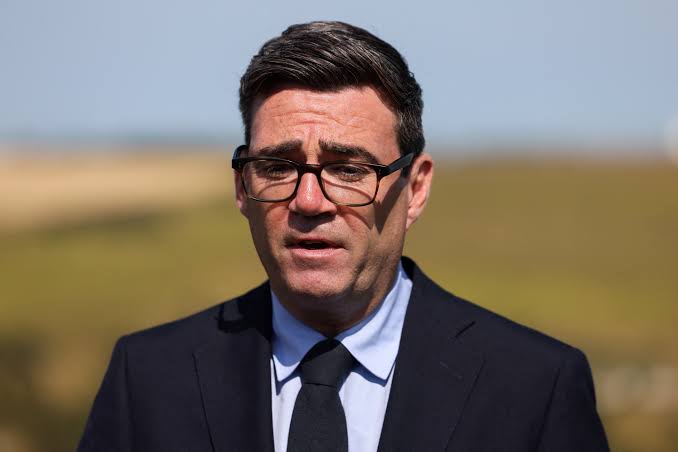
Meanwhile, Prime Minister Andy Burnham has acknowledged that he wanted to exclude a wider range of offenders from the early release programme but insisted that doing so was not currently possible because of severe pressure on the prison estate.
Speaking after announcing revisions to the scheme, Burnham stated that exempting additional categories of prisoners could push the correctional system beyond its limits.
He argued that allowing overcrowding to worsen would leave the public “at much greater risk” by undermining the ability of prisons, courts and law enforcement agencies to operate effectively.
Under the revised arrangements, prisoners convicted of rape, serious child sexual offences and grooming crimes will no longer qualify for early release from October. Nevertheless, inmates convicted of offences not specifically excluded may become eligible for release after serving one-third of their custodial sentence instead of the previous thresholds of 40 or 50 percent.
The policy will be introduced gradually in ten phases beginning in October. Initially, it will apply to offenders serving sentences of fewer than 575 days before expanding over time to include prisoners serving terms of up to 12 years or more by June 2027.
Justice Secretary Alex Norris has noted that the number of prisoners released in each phase will depend on prison population levels at the time of implementation.
As Parliament prepares to scrutinise the measures further, it is believed that ministers may publish a more complete list of eligible offences or make other adjustments in response to mounting political and public criticism.
For the Burnham government, the challenge remains balancing two competing priorities: preventing an unprecedented prison capacity crisis while assuring victims and the wider public that dangerous offenders will not be released before they have served an appropriate proportion of their sentences.
READ ALSO: Arsenal and Emirates Renew Partnership in a Long-Term Deal