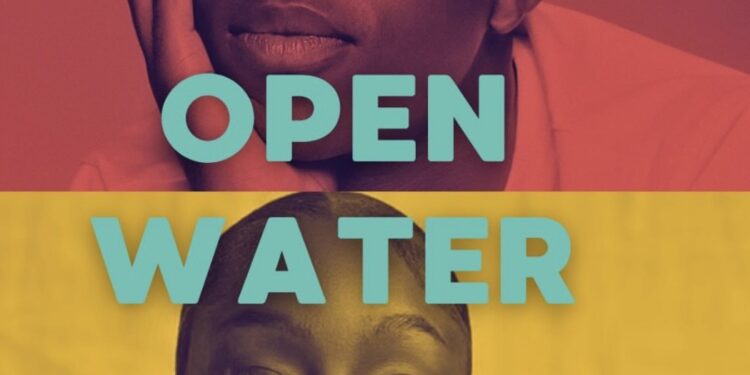
Caleb Azumah Nelson’s acclaimed debut novel Open Water is heading to the screen in an eight-part BBC series, with the author himself taking on the dual roles of writer and director. Filming is already underway across Birmingham and London, and the cast has been locked in with two rising stars at its center.
Emmy-nominated actor Toheeb Jimoh, best known for his breakout performance as Sam Obisanya in Apple TV+’s Ted Lasso, will play Marcus. Newcomer Dujonna Gift has been cast opposite him as Effie. The pair portray two young Black British artists whose tender, complicated romance forms the emotional core of Nelson’s story.

The announcement, first widely shared through literary and culture accounts, has generated immediate excitement. Open Water arrived in 2021 as a slender, lyrical novel that blended poetry, photography, and quiet observation. It followed two young people navigating love, art, racism, and the everyday textures of South London life. Critics praised its intimacy and restraint; the book went on to win the Costa First Novel Award and earned a place on multiple “best of” lists.
A circular “5 Under 35” badge and a quote from Yaa Gyasi calling it “tender poetry, a love song to Black art and thought” appeared on later editions, underscoring its cultural impact.
Author’s Note About the Adaptation
Nelson has described the adaptation process as “amazing,” highlighting how rarely stories of this particular emotional register receive mainstream screen treatment. Jimoh, who grew up in South London, has spoken of the project as a dream assignment. He noted that the material handles the specific textures of the neighborhoods he knows with unusual care and honesty.
Those comments have resonated with readers who long felt the novel’s quiet power deserved a visual counterpart that would not dilute its sensitivity.
The decision to give Nelson full creative control is significant. Many literary adaptations dilute or redirect an author’s vision once they move into production. Here, the novelist is also the director and an executive producer, a level of authorship that remains uncommon in television. The eight-part format offers breathing room that a feature film could not: space for the novel’s digressions into art, music, memory, and the small humiliations and joys that accumulate in a relationship under external pressure.
Filming locations in Birmingham as well as London suggest the series will expand the story’s geography while remaining rooted in the Black British experience the book chronicled so precisely.
Jimoh’s casting carries particular weight. After Ted Lasso made him an international name, the actor has been selective about subsequent roles. Taking on Marcus, a photographer whose internal life is rendered with unusual interiority on the page, signals a deliberate move toward more intimate, character-driven work.
Gift, less widely known before this announcement, steps into a role that demands both vulnerability and quiet strength. Early industry reaction has focused on the chemistry the two may generate and on the opportunity the series offers to center Black British creative lives without framing them solely through trauma or exceptionalism.
The novel’s style presents both opportunity and challenge for the screen. Nelson’s prose is spare, rhythmic, and often second-person; it invites the reader into the protagonists’ private space rather than explaining it. Translating that intimacy into visual language will require careful choices about voice-over, silence, and the use of still photography or gallery spaces that echo the characters’ artistic practices.
Those who loved the book’s restraint will watch closely to see whether the series preserves its emotional temperature or expands it into more conventional dramatic beats.
Production is currently active, with no official premiere date yet announced. The involvement of the BBC, combined with Nelson’s hands-on role and a cast that bridges established recognition and fresh talent, positions Open Water as one of the more closely watched literary adaptations of the coming seasons.
For readers who carried the slim volume like a private map of feeling, the prospect of seeing Marcus and Effie move, speak, and create on screen carries a particular charge.
Nelson’s dual role as writer-director also continues a quiet shift in how contemporary Black British literature reaches larger audiences. Recent years have seen more authors involved in the screen versions of their own work, but few have claimed the director’s chair as well. The result, if successful, could encourage further experiments in form and authorship.

As cameras roll in Birmingham streets and London neighborhoods, the series carries the hopes of a readership that found in Open Water something rare: a love story that refused spectacle, a portrait of young Black artists that treated their interior lives as worthy of sustained, gentle attention.
For now, the announcement itself feels like an extension of the novel’s own understated power. A story that once lived between the covers of a slim paperback is expanding into rooms, streets, and screens, carrying with it the same questions about love, visibility, and belonging that first made readers pause and linger on its pages.
READ ALSO:Korle-Bu Receives GH¢181,500 As Deliver Well Plus Honours CEO